
Sounding on Ships: How Crews Measure Tanks and the Sea Floor
Sounding means measuring depth: of liquid in a ship's tanks with a tape, or of water under the keel with an echo sounder. How both work and why they matter.
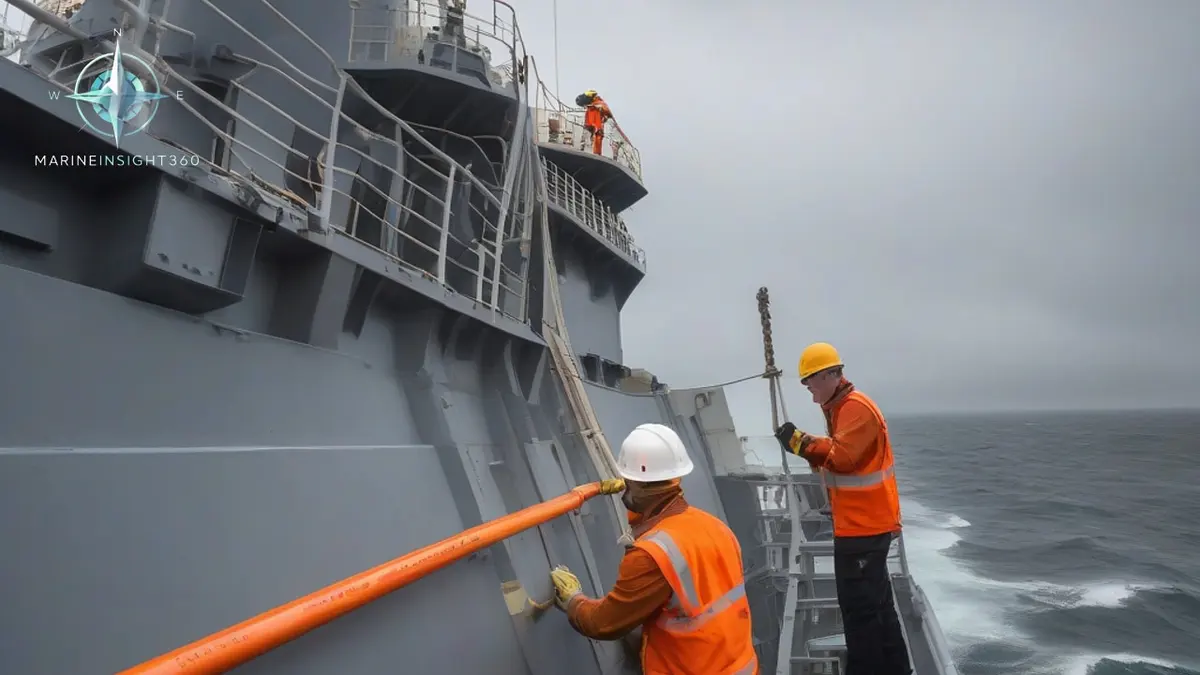
Sounding is the act of measuring depth. On a ship the word covers two different jobs. The first is measuring how much liquid sits in a tank, done with a weighted tape through a sounding pipe. The second is measuring how much water lies under the hull, done acoustically with an echo sounder. Both descend from the same ancient practice of finding depth with a weighted line.
Crews sound tanks every single day at sea. The numbers feed the ship's stability calculations, the fuel accounts and the pollution records. They also feed the early-warning system for leaks, which is why the humble sounding tape refuses to die in an age of sensors.
Tank Sounding: The Weighted Tape
Every fuel, ballast, fresh-water and cargo tank carries a sounding pipe. The pipe is a straight tube running from an accessible deck fitting down to the tank bottom. The sailor lowers a graduated steel tape with a brass bob until it touches bottom. The tape comes back up, and the sailor reads where the liquid wetted it. That wetted length is the sounding: the depth of liquid in the tank.
The opposite measurement is the ullage, the empty space from the top down to the liquid surface. It is preferred for cargo tanks, where the surveyor works from the tank top. Either number then goes through the ship's calibration tables. Those tables convert a depth into cubic meters for that specific tank shape, corrected for the vessel's trim and heel. The figure becomes tonnes once the liquid's density and temperature are applied.
Why Crews Still Sound by Hand
- Stability and stress: the daily ballast and fuel figures feed the loading computer. That computer keeps hull stress and stability inside limits.
- Fuel accounting: bunker quantities are bought, burned and disputed on these measurements. The tape settles the arguments that gauges start.
- Leak detection: water appearing in a dry space shows up first in the sounding book. So does a slow fall in a tank that should be static. Water-finding paste on the bob even reveals water sitting under fuel.
- Regulatory records: the oil record book and ballast records rest on measured figures. Port state control officers in US and European ports compare them against the tape.
- Sensor sanity checks: remote gauges drift, stick and fail. The tape through the pipe is the truth that recalibrates them.
Depth Sounding: From Lead Line to Echo Sounder
The navigational meaning of sounding is the depth of water. For most of history it was measured with the lead line. That was a marked rope swung from the bow with a lead weight, often armed with tallow to bring up a sample of the seabed. The leadsman's calls survive in the language. By the mark twain meant two fathoms of water, and it gave a Mississippi pilot's apprentice his pen name.
Modern ships carry an echo sounder, which times an acoustic pulse from the hull to the seabed and back. It then displays depth below the transducer continuously. Charted depths, printed across every nautical chart, come from hydrographic surveys and are referenced to chart datum. The navigator therefore combines the charted figure, tide height and the ship's draft to know the real clearance under the keel. Port entries, anchoring and shallow-water passages all hang on that arithmetic.
Reading Soundings Correctly
Errors cluster in known places. A kinked or blocked sounding pipe reads short. A sloshing tank in a seaway reads anything at all, so readings are timed for calm moments and repeated. On the depth side, an echo sounder reads from its transducer, not the keel. In fresh or aerated water the reading shifts as well.
Good watchkeepers know their instrument's offsets, and good deck crews log the tanks at the same times daily, so trends, the real signal, stand out.
The word also survives in ocean science. Weather balloons profile the atmosphere the same way, and survey ships run measurement lines across the seabed. The deep-ocean surveys that mapped the Mariana Trench are, in the end, the same measurement scaled up: how far down does it go. On board, though, the meaning stays practical. When the chief officer asks for the soundings, the answer is a page of figures.
Those figures say the ship is upright, tight and burning fuel at the rate the office was promised.
What to do next
Sounding threads through several shipboard routines covered in these guides:
Recommended Reading
Ballast Tanks: How Ships Use Seawater to Stay Upright and Efficient
What ballast tanks do: seawater weight that keeps an empty ship stable, trimmed and its propeller submerged, plus the treatment rules that now govern them.
Shipboard Fuel, Diesel, & Lubricant Oil Storage Tanks
Shipboard Fuel, Diesel, & Lubricant Oil Storage Tanks: ports, trade and shipping-market context for US, UK, Canada, Australia, Singapore and...
Iran retaliates with missiles and drones, defying Trump’s warning
Learn iran with practical maritime context, safety checks, operational guidance and related resources for global shipping readers.