
What Is Breadth in a Ship? Beam, Molded Width and Why It Matters
Breadth in a ship is its width at the widest point. Learn molded vs extreme breadth, how beam is measured, and why it drives stability and port access.
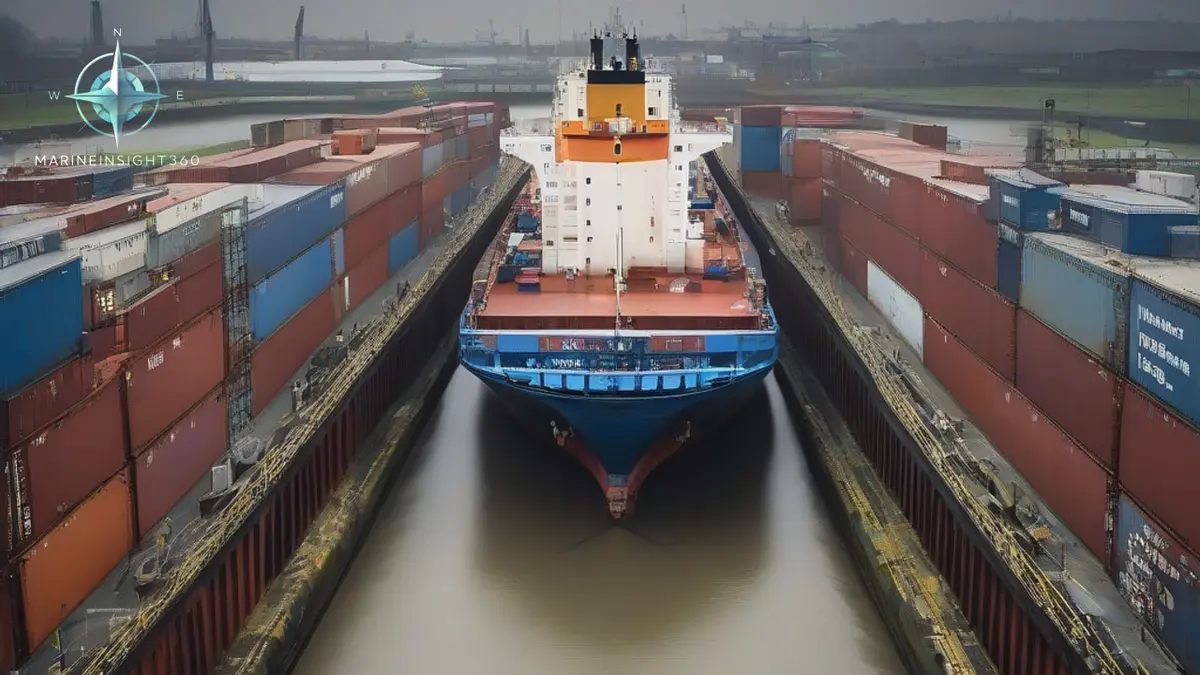
Breadth Is the Width of a Ship at Its Widest Point
What is breadth in ship design? Breadth is the width of the hull at its widest point, measured horizontally and at right angles to the fore and aft centerline. Most working mariners call it the beam. It is one of the three principal dimensions of a hull, alongside length and depth. It is printed on the tonnage certificate, the load line certificate, the pilot card and every berth application a port agent files.
The figure carries weight because breadth settles three questions at once. It sets how stiff the ship is in a seaway, how much cargo she can carry for a given length, and which locks, canals and berths she is allowed to enter. Submit the wrong version of the number to a lock booking office and the ship does not sail.
Molded Breadth Versus Extreme Breadth
Two different breadth figures exist for the same ship, and mixing them up causes real operational trouble.
- Molded breadth , written as moulded breadth in the international conventions, is measured at the midship section from the inside of the side shell plating on one side to the inside of the plating on the other. It excludes the plating thickness itself.
- Extreme breadth is the greatest width over everything. It is taken to the outside of the plating and includes permanent projections such as rubbing strakes, fender bars or ice belting.
Molded breadth is the design and regulatory value. The International Convention on Load Lines, the Tonnage Convention, SOLAS and MARPOL all key their requirements to molded dimensions, so freeboard, subdivision and tonnage calculations use that figure. Extreme breadth is the operational value. A pilot, a lock master or a dry dock superintendent needs the widest hard point on the ship, not a theoretical hull line drawn inside the plating.
On a modern steel hull the gap between the two is small, often only a few centimeters per side. That is still enough to matter when a lock chamber has been sized to the centimeter and the ship is being warped in on her lines.
Why a Wider Hull Is a Stiffer Ship
Breadth has a disproportionate effect on transverse stability. The metacentric radius depends on the second moment of area of the waterplane, which varies with the cube of the breadth. Widen a hull slightly and initial stability rises sharply.
That sounds like a free gain. It is a trade. A ship with a large metacentric height is stiff: she snaps back upright, rolls through a short period and generates high transverse accelerations. Those accelerations are what part lashings, shift bulk cargo and injure crew working on deck. A tender ship with less initial stability rolls slowly and comfortably but keeps less reserve if she is damaged or if cargo moves.
Chief officers meet this on every loading plan. Ballasting down to raise stability can push a container ship into a roll period so short that stack loads exceed the limits in the cargo securing manual. The remedy is often to accept a lower metacentric height rather than a higher one.
Length to Breadth Ratio and What It Says About a Hull
Naval architects describe hull form partly through the ratio of length to breadth. Tankers and bulk carriers sit at the low end, usually somewhere near five to six, because a full, wide hull carries the most deadweight for the steel invested. Container ships run higher, roughly six to eight, because service speed matters more than pure volume. Warships and fast ferries are slimmer still.
A wide hull creates more wave making resistance and needs more power for the same speed. A narrow hull is easily driven but gives up deck area, container rows and stability. Every commercial design lands somewhere between those two pressures, and the beam is where the compromise shows.
The Beam Limits That Decide Where a Ship Can Trade
Breadth is the dimension that most often locks a ship out of a route. The original Panama Canal locks capped beam at 32.31 meters (106 ft), which is why an entire generation of ships was built to Panamax dimensions. The Neopanamax locks that opened in 2016 raised the limit to 51.25 meters (168 ft).
The largest container ships are now wider than that, running around 61 meters with 24 container rows across the deck, and are committed to the Suez and Cape routes as a result.
Smaller versions of the same constraint appear everywhere: lock chambers on the St Lawrence Seaway and the European inland waterways, dry dock entrances, ro-ro linkspans and the outreach of a terminal ship to shore crane. A crane with insufficient outreach cannot work the outboard rows of a wide ship no matter how deep the berth is dredged.
Where the Number Comes From on Board
The registered breadth appears on the international tonnage certificate. The stability booklet, the trim and stability calculation and the loading computer all work from molded breadth. The pilot card handed over on boarding should carry extreme breadth, because that is the value a pilot needs for tug positioning, berthing clearance and passing distance in a narrow channel.
If those values ever stop matching the ship as she actually is, for example after a conversion that added belting or side sponsons, the certificates need updating before the next port call. Ports plan berth windows on the numbers submitted, and an unexpected extra half meter of beam can cost a tide.
The figures are measured and certified by someone other than the owner. The flag administration, or a recognised organisation acting for it such as DNV, Lloyd's Register, Bureau Veritas or ClassNK, measures the ship for tonnage and assigns the load line. The molded breadth recorded there becomes the reference for freeboard, subdivision and stability approval. The pilot card, by contrast, is the ship's own document.
Both numbers go astray in familiar ways. After a conversion that adds belting or side sponsons, the certificates are not always amended, and port state control officers comparing document against ship record the mismatch as a deficiency. Stack collapse investigations show the other half of it: a stiff, wide hull, a short roll period, and lashing loads beyond what the securing manual allows.
Sources and further reading
What to read next
Recommended Reading
What Is the Beam of the Boat? Width, Stability and Handling
The beam of a boat is its width at the widest point. What beam means for stability, beam-to-length ratios, and the limits set by locks and trailers.
NorthStandard ECDIS Training Assessment: What the Platform Tests and Why It Matters
What NorthStandard's ECDIS Training Assessment platform tests, the gaps 5,000 bridge team assessments exposed, and how owners should use the results.
How Wide Is the Strait of Gibraltar? Width, Depth and Currents
The Strait of Gibraltar is 14.2 km (7.7 nm) wide at its narrowest. Depths, the Camarinal Sill, the two-layer current and what watchkeepers plan for.