
NorthStandard ECDIS Training Assessment: What the Platform Tests and Why It Matters
What NorthStandard's ECDIS Training Assessment platform tests, the gaps 5,000 bridge team assessments exposed, and how owners should use the results.
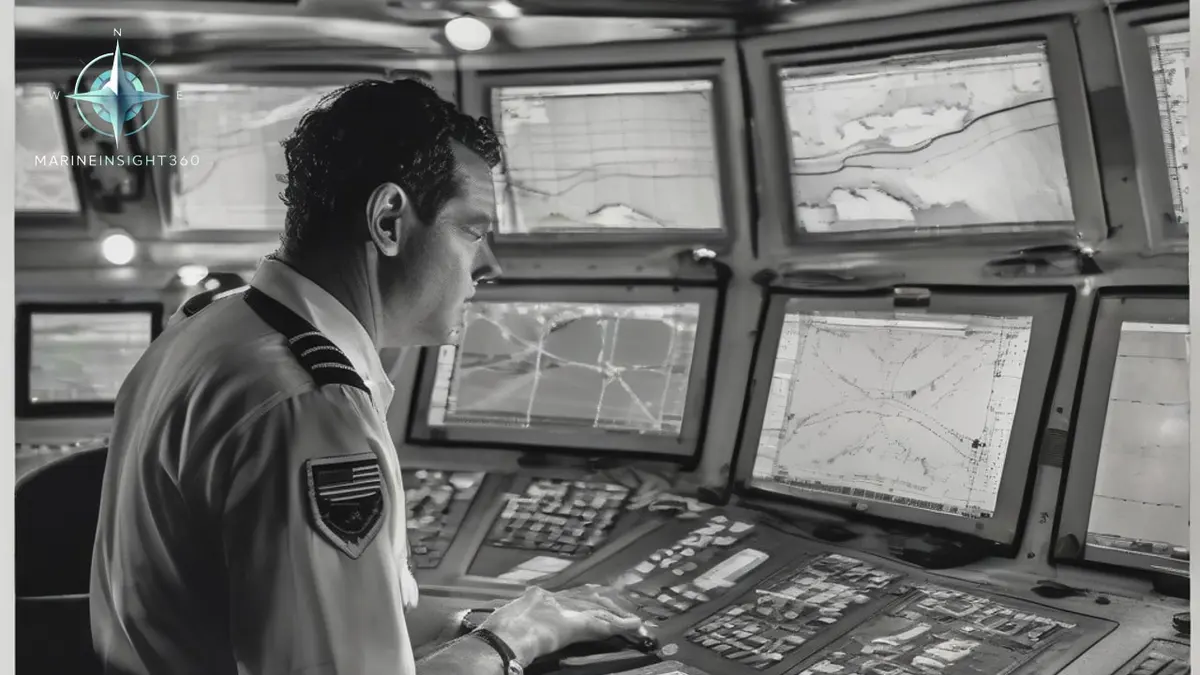
The NorthStandard ECDIS Training Assessment platform launch gave deck officers an online competency test rather than another certificate course. The insurer's loss prevention team built it with the UK Hydrographic Office as the first product in its Get SET! digital portfolio. It is a multiple-choice diagnostic that shows an officer, and that officer's company, which parts of the electronic chart system they do not actually understand.
Paris MOU and Tokyo MOU inspectors keep writing up exactly those gaps as ECDIS deficiencies on ships calling in Europe, Japan and Australia.
That distinction is the point of the product. Certification under STCW, the international convention setting minimum training standards for seafarers, proves attendance at a course. It does not prove that a second mate can spot a datum mismatch at 0300 in coastal waters. The assessment is designed to find that gap before an audit or a grounding does.
What the ECDIS Training Assessment platform measures
The tool runs online and can be completed on a personal or company device, which matters on ships with limited bandwidth and no dedicated training terminal. Questions target working knowledge rather than menu recall: chart update status, scale selection, safety settings, alarm and alert behavior, symbology and position verification.
Each officer receives an individual result. The company receives a consolidated fleet report showing where proficiency is weak across ranks and vessels. That report is what turns the exercise into a training budget decision rather than a private score.
Uptake moved quickly. NorthStandard reported more than 3,000 seafarers across over 700 ships within the first months, and its published analysis now draws on more than 5,000 assessments completed since February 2024.
The gaps the first 5,000 assessments exposed
The published findings are uncomfortable reading for anyone who assumes a type-specific certificate settles the question.
- Around two-thirds of bridge teams could not identify electronic navigational chart updates.
- Nearly half did not prioritize the correct ENC scale during passage planning.
- Half struggled to distinguish alarms from alerts and highlights.
- About a third lacked understanding of datum discrepancies and chart update status.
- Further gaps appeared around safety settings, including safety contour selection, and around key chart symbols.
Read together the pattern is consistent. Officers can drive the box. Far fewer can explain what it is doing, or identify the point where its answers stop being reliable.
Automated route check is not a passage plan
The assessment data flagged heavy reliance on automated route checking without visual verification of the planned track. This is the most transferable finding in the whole report.
Route check only tests the line against the parameters it has been given, on the chart data loaded, at the safety contour selected. Set a safety contour the system cannot find and it substitutes the next available one. Load a chart at the wrong usage band and the check runs against a chart that never contained the hazard. A visual scan at appropriate scale catches both, and takes minutes.
Why certified officers still fail these questions
Three causes come up repeatedly in loss prevention work. Generic ECDIS courses teach one manufacturer's interface, and officers then join a ship fitted with different equipment. Type-specific familiarization is often signed off as a paperwork exercise during a busy arrival. And ECDIS knowledge decays fast, because the difficult functions are the ones used least.
Continuous professional development tools address the third cause directly. A short assessment repeated at intervals surfaces decay that an annual navigation audit will never catch.
How owners should use the fleet report
- Compare results by rank. If third officers score well and masters do not, the problem is oversight culture, not entry training.
- Compare by equipment manufacturer. Weakness concentrated on one system points at familiarization quality rather than at the officers.
- Feed weak areas into the ship's own navigation audits instead of buying another generic course.
- Repeat the assessment after training and retain the before and after evidence for vetting inspections.
- Treat a low fleet-wide score on alerts as an alarm management problem, which is usually a settings and procedure issue rather than a knowledge one.
What to revise before you sit it
Officers preparing for an assessment get the best return from four areas: how chart update status is displayed and verified, how usage bands and scale change what the display shows, how safety contour and safety depth interact, and the difference between an alarm, a warning and a caution in the alert hierarchy.
Work through those on the actual ECDIS fitted to your ship rather than on a course simulator, and note the differences you find. The Marine Insight 360 Knowledge Base covers each of those functions in more detail.
Sources and further reading
- Get SET! with NorthStandard's unique ECDIS Training Assessment platform
- ECDIS knowledge gaps exposed: what 5,000 bridge team assessments reveal
- NorthStandard ECDIS Training Assessment Provides Platform For Best Practice
- Why ECDIS training remains critical for safe navigation
What to read next
Recommended Reading
IRGC Gunboats Open Fire on a Tanker Off Oman: The Crew Response That Matters
UKMTO reported IRGC gunboats firing on a tanker 20 nautical miles off Oman without a radio challenge. What crews do when a state naval unit closes in.
Why the Red Sea Matters: Its Name, Its Trade Route and Its Risks
Why the Red Sea is called red and why it matters to shipping: the Suez route, Bab el-Mandeb, and what transits mean for crews and operators.
How Are Electronic Charts Updated? ENC Corrections on ECDIS
Electronic charts are updated by weekly ENC correction files from hydrographic offices, applied in ECDIS. How the cycle works and where updates fail.