
What Submarine Can Go the Deepest? Full Ocean Depth Records Explained
The deepest diving submarines explained: DSV Limiting Factor's 10,924 m record, Trieste in 1960, China's Fendouzhe, and why navy submarines stay shallower.
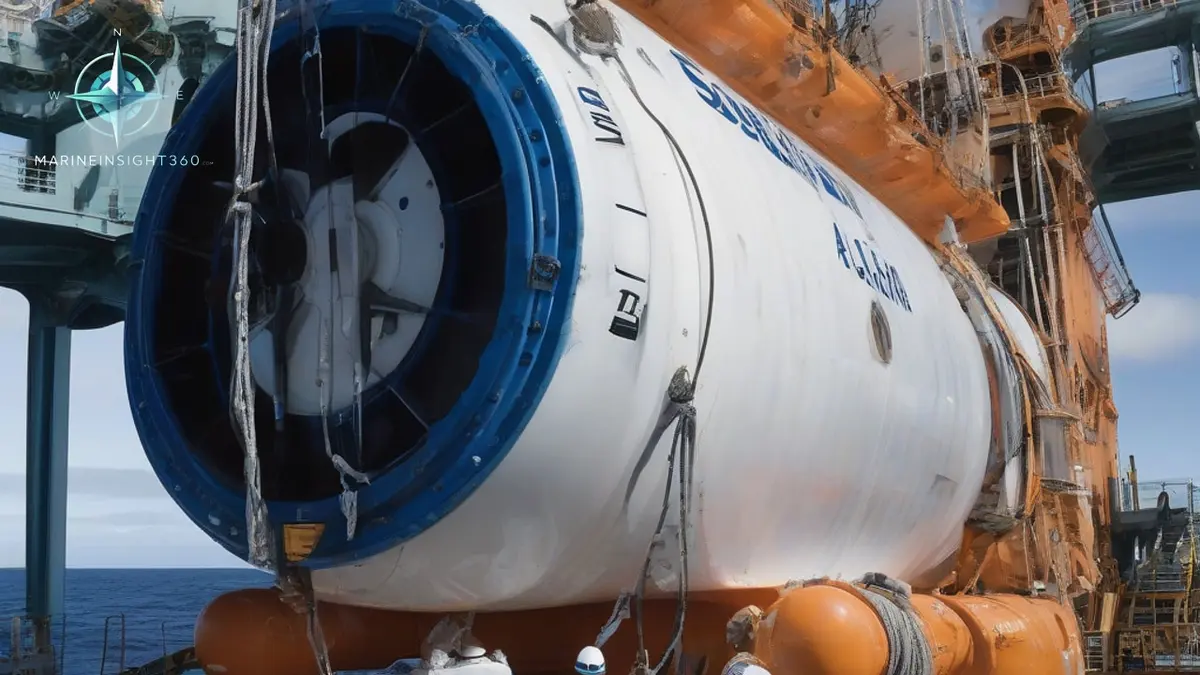
What submarine can go the deepest? DSV Limiting Factor, a two-person deep-submergence vehicle built by Triton Submarines. It reached 10,924 meters (35,853 ft) in the Challenger Deep, the lowest point of the Mariana Trench, and is classed for repeated dives to full ocean depth. No military submarine comes anywhere close to that figure.
One distinction matters up front. Crewed submersibles like Limiting Factor are research and exploration craft launched from a support ship, while military submarines are independent warships engineered for endurance and stealth rather than extreme depth.
The submarine that can go the deepest: DSV Limiting Factor
Limiting Factor was built for the investor and explorer Victor Vescovo, whose company Caladan Oceanic operated it from 2018 to 2022. During the Five Deeps Expedition it made the deepest crewed dive in each of the world's five oceans, the only vessel ever to do so.
Its record Challenger Deep dives measured 10,924 meters (35,853 ft). Pressure at that depth exceeds 1,000 times atmospheric pressure, so the crew sits inside a machined titanium sphere while buoyancy comes from syntactic foam, a rigid material that does not compress.
Certification is what separates it from earlier record-setters. The vessel was classed by DNV for repeated commercial dives to full ocean depth, so it can return to the trench floor again and again rather than make a single stunt descent.
The record dives that came before
The bathyscaphe Trieste got there first. On January 23, 1960, Jacques Piccard and US Navy lieutenant Don Walsh rode the Swiss-designed craft to the floor of the Challenger Deep, a feat not repeated for over half a century.
Trieste worked like an underwater balloon. A huge float filled with gasoline, which is lighter than water and nearly incompressible, carried a small crew sphere beneath it, and iron shot ballast was released to come home.
Filmmaker James Cameron followed in 2012 with Deepsea Challenger, making the first solo descent to the site. China's three-person submersible Fendouzhe, meaning Striver, reached 10,909 meters (35,791 ft) in November 2020 and has returned to full ocean depth repeatedly since. Robotic vehicles have also touched the bottom of the trench, though several were lost doing it.
Why military submarines stay far shallower
Navies do not publish test depths, but open estimates put most modern attack submarines in a 300 to 500 meter (984 to 1,640 ft) operating band. A warship's hull is a long cylinder packed with weapons, machinery and people, and every extra meter of depth rating costs weight, money and payload.
The extreme outlier was the Soviet titanium-hulled K-278 Komsomolets, which reported a test dive to about 1,020 meters (3,346 ft) in 1984. Even that celebrated figure is less than a tenth of what Limiting Factor does routinely.
The design goals simply differ. A combat submarine fights by hiding in the acoustic layers of the upper ocean; a submersible dives a near-vertical profile for a few hours of bottom time, then comes straight back to its mother ship.
What it takes to build a full ocean depth hull
Pressure at the bottom of the Challenger Deep works out to roughly 1.1 metric tons pressing on every square centimeter of hull. Designers answer that with a near-perfect titanium sphere for the crew, hull penetrations cut to the bare minimum, and viewports engineered as carefully as the hull itself.
Everything outside the sphere must tolerate pressure instead of resisting it. Batteries sit in oil-filled boxes, thruster housings flood freely, and electronics are potted in resin, so only the crew compartment fights the ocean.
Where the working fleet actually operates
Most crewed science happens far above the trenches. Japan's Shinkai 6500 and the US Navy-owned, WHOI-operated Alvin work the 4,500 to 6,500 meter (14,760 to 21,325 ft) band, which covers the great majority of the world's seabed, since the ocean averages only about 3,700 meters (12,140 ft) deep.
The hadal zone below 6,000 meters (19,690 ft) is the exclusive territory of full ocean depth vehicles. That is where subduction trenches, and the earthquakes they generate, begin.
Why full ocean depth capability matters beyond records
Repeatable deep access has practical uses. Limiting Factor's team surveyed historic wrecks lying below 6,000 meters, including Second World War destroyers, at depths no conventional submersible could reach.
Trench science gains the most. Instruments placed by full ocean depth vehicles are improving models of the faults that produce the Pacific's largest tsunamis, work with direct consequences for coastal ports. The Marine Insight 360 Blog follows deep-sea exploration and salvage stories as they develop.
Deep submergence hardware fails in ways that end dives. On the 1960 Trieste descent an outer window pane in the entrance tunnel cracked under pressure, and the crew went on down with the bang still ringing. Cameron's 2012 solo dive was cut short after a hydraulic leak and the loss of thrusters left him unable to work the bottom as planned.
The failure modes repeat across the fleet. Syntactic foam takes on water over hundreds of dives and quietly loses buoyancy. Penetrators and connectors leak, flooding oil-compensated housings and killing thrusters or batteries. Landing stirs a sediment cloud that ends useful observation within minutes. Robotic vehicles have imploded outright, the hybrid vehicle Nereus being lost in the Kermadec Trench in 2014 at close to 10,000 meters.
Sources and further reading
- DSV Limiting Factor - Wikipedia
- FAQ - Five Deeps Expedition
- Manned submersible breaks China's diving record - China Daily
What to read next
Recommended Reading
Container Tracking: How Shippers Actually Follow a Box Across the Ocean
How container tracking works, from free carrier lookups to visibility platforms: what each tool layer does, what it costs, and how to pick for your volume.
Typhoon Class Submarine: The Biggest Boats Ever Sent Under the Sea
The Soviet Typhoon class submarine remains the largest ever built: twin pressure hulls, 20 missile silos, and why nothing since has matched its size.
How Deep Can a Submarine Go? Test Depth, Crush Depth and Records
How deep can a sub go? Military boats work to a classified test depth set as a fraction of design depth, while submersibles reach almost 11,000 meters.