
World's Largest Wooden Ship USS Wyoming
World's Largest Wooden Ship USS Wyoming: technology, equipment and fleet context for US, UK, Canada, Australia, Singapore and European maritime readers.
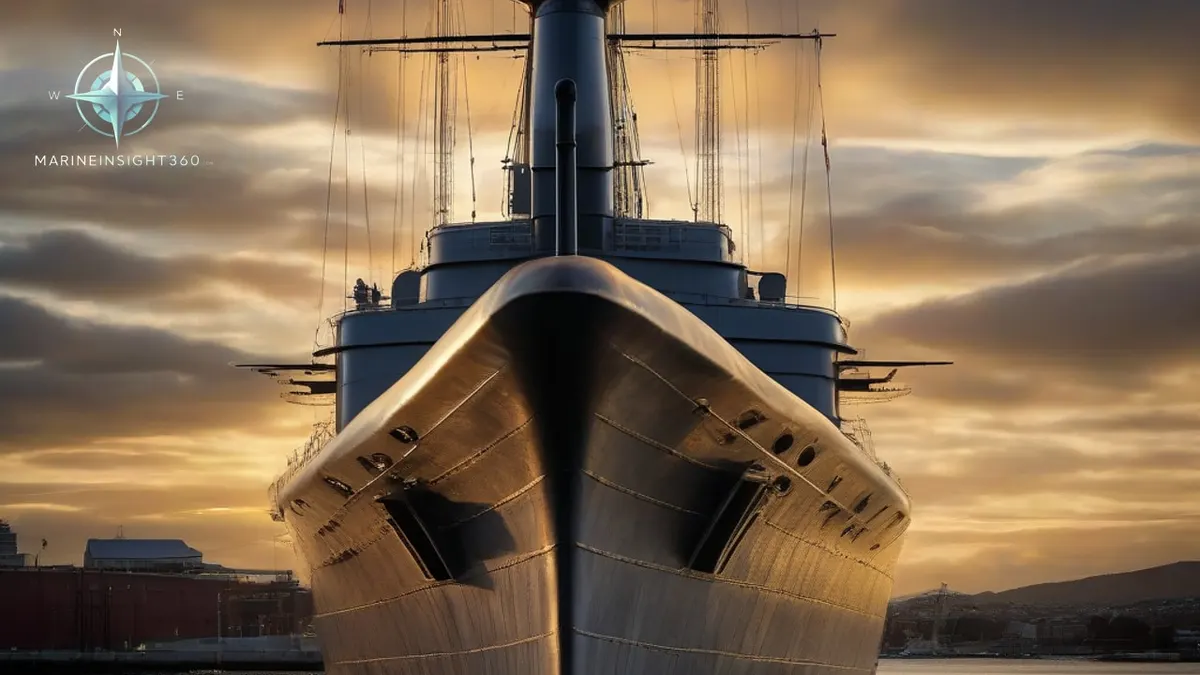
Why was building the USS Wyoming, the world's largest wooden ship, a bad idea from the start?
For nearly all human civilizations, large structures, such as buildings and ships, have been primarily constructed from wood. This makes sense, considering it's a relatively common, durable, and readily available material. We still build homes out of wood today; except for specialized vessels or expensive celebrity yachts that float on the water, wood isn't typically used in modern shipbuilding.
The infamous Spruce Goose flying boat was built of wood, but with a few exceptions, most aircraft and ships are made of steel and various composite materials. Some wooden ships, like the USS Constitution, have a rich history, but so does the largest ship ever built, the USS Wyoming. Built in 1909, the Wyoming is renowned for being the largest wooden ship ever built. Believe it or not, there are limits to how large wooden ships can be, and the Wyoming defied them.
Built in Maine to transport coal, the ship boasted six 126-foot (48-meter) masts and 22 sails, making it a massive vessel. While modern ships, including those made of steel, are larger, the Wyoming's wooden construction presented a problem. With larger hulls, water pressure increased. Although Wyoming's revenues more than covered its operating costs, it suffered significant losses during its relatively short service life. Here is the story of the ill-fated Wyoming.
Wyoming
The Wyoming was a massive vessel, 450 feet (134 meters) long and 350 feet (106 meters) wide. It was constructed using 1.5 million board feet (46 meters) of southern pine and 12,000 square yards (4,800 square meters) of canvas. Its beam was just over 50 feet (15 meters), and it displaced 10,031 tons. By comparison, the wooden warships built by the United States for World War I were only 340 feet (about 101 meters) long, making the Wyoming exceptionally large. Its cargo capacity was approximately 6,000 tons of coal, and the average price of coal in 1910 was about $12 per ton.
Given its cargo capacity, the Wyoming was initially capable of carrying approximately $72,000 worth of coal, which, after adjusting for inflation, would have been worth over $2 million. This undoubtedly made its construction and maintenance costs substantial, consistent with Wyoming's size. The ship first sailed in 1909 and served for 15 years. In 1916, it was chartered by the International Paper Company, and in 1917, it was sold to the French and Canadian Steamship Company.
- How Do Ships Survive Storms?
- MSC Irina: World’s Biggest Cargo Ship
- Electric Cargo Ship – Future of Maritime Transport
- How Much Load Can A Cargo Ship Carry?
- What Are the 7 Types Of Cargo Ships?
The Wyoming continued sailing during World War I, evading a German U-boat attack during one voyage, and continued operating until the disaster in 1924. On March 11, 1924, the USS Wyoming dropped anchor near Nantucket Sound, Massachusetts, attempting to weather a nor'easter. During the storm, the ship sank, killing all 13 crew members. The wreckage remained unidentified until 2003, when it was discovered by the U.S. Underwater Research and Survey Corporation at a depth of approximately 70 feet (21 meters).
Why was the Wyoming so large that it could not be accommodated?
Wood cannot grow taller, and the keel joints used in ship construction also limit its size, but the shipbuilders who built the Wyoming constantly pushed this limit. The taller the ship, the greater the pressure it faced as it navigated the crests and troughs of waves, causing it to sag in rough seas. This caused the wood to buckle and warp, allowing water to enter the hold, requiring pumping. This repeated occurrence in Wyoming led to the installation of large metal supports to maintain stability.
Ultimately, the ship's sheer size crippled it during a devastating nine-day storm. With 5,000 pounds of coal in her holds, the Wyoming likely sagged and buckled in the storm, ultimately buckling and breaking mid-ship, leaving her adrift or sinking to the bottom. Fortunately for the shipbuilders, the Wyoming was never intended to be the largest wooden ship ever built. At the time, the maximum size of a wooden sailing vessel was unknown.
They simply wanted the ship to carry as much coal as possible, and built it with that in mind.
Sadly, the pounding of the waves, the pliability of wood, and the limitations of its construction techniques doomed the Wyoming to its own destruction, forever buried and offering solace to those who perished. By the time of its sinking, wooden sailboats had become obsolete in the face of more durable steel vessels, while the Wyoming stood as a true masterpiece and the last of its kind.
While it ultimately sank, it was undoubtedly a financially successful sailboat, but its demise serves as a reminder of the natural limitations of what we build.
Recommended Reading

Knock Nevis – World’s Largest Supertanker
Knock Nevis – World’s Largest Supertanker: ports, trade and shipping-market context for US, UK, Canada, Australia, Singapore and European maritime readers.
Largest Ships in Maritime History
Find out which vessel holds the record for length, gross tonnage and displacement. Includes specs for Seawise Giant, Pioneering Spirit and Shell Prelude.
Largest Ship Ever Built
Find out why Seawise Giant (Knock Nevis) remains the biggest ship ever built, its dimensions, history and how it compares with modern giants.