
Largest Ships in Maritime History
Find out which vessel holds the record for length, gross tonnage and displacement. Includes specs for Seawise Giant, Pioneering Spirit and Shell Prelude.
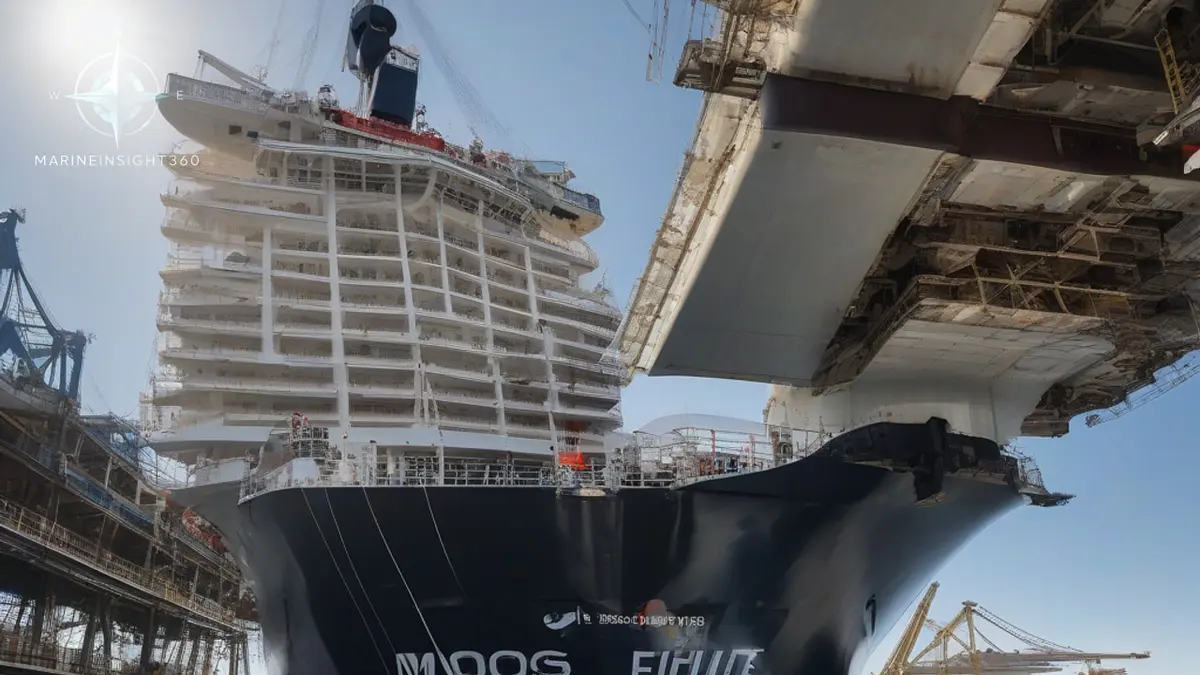
Which are the largest ships in maritime history?
The largest ships in maritime history hold their records on different measures: Seawise Giant is the longest self-propelled ship ever launched, Pioneering Spirit leads on gross tonnage and maximum displacement, and Shell Prelude is the longest floating structure. No single vessel tops every category.
Which ship is the longest self-propelled vessel ever launched?
Built in 1979 as a ULCC (ultra‑large crude carrier), the Seawise Giant was later renamed Knock Nevis . Its overall length made it the longest self‑propelled ship ever launched. The vessel’s dead‑weight capacity and displacement placed it at the top of the DWT chart for ULCCs.
Its sheer size prevented passage through the Panama and Suez Canals; it could only operate on routes that avoided these chokepoints. After a series of ownership changes and a major “jumboisation” in 1985, the ship served until it was scrapped in Alang, India, in 2010.
- Length: reported as the longest self‑propelled ship
- Dead‑weight: significant capacity for crude oil transport
- Displacement: significant for a ULCC
- Status (2026): scrapped
Pioneering Spirit – The Leader in Gross Tonnage and Displacement
Launched in 2014, the twin‑bow heavy‑lift vessel Pioneering Spirit is owned by Allseas. Its hull measures a significant length, while the overall length with the extendable bows reaches a considerable length. The ship’s gross tonnage and maximum displacement make it the largest vessel by those metrics.
Its primary role is the installation and removal of offshore oil‑and‑gas platforms. It can lift topsides weighing a significant amount, a capability that was expanded in 2021. The vessel remains in active service and is slated for future projects.
- Hull length: significant length
- Maximum length: considerable length
- Gross tonnage: significant gross tonnage
- Displacement (max draft): significant displacement
- Status (2026): in service
Shell Prelude – The Longest Floating Structure
Shell Prelude is a floating liquefied natural gas (FLNG) facility, not a self‑propelled ship, but it holds the record for the longest floating structure. At a significant length and a displacement, Prelude is anchored off the coast of Western Australia and processes gas directly at sea.
Because Prelude lacks propulsion, it relies on tug assistance for relocation and cannot transit canals. Its size reflects the trend toward offshore processing, where the plant itself becomes the “ship” that houses all production equipment.
- Length: significant length
- Displacement: significant displacement
- Function: floating LNG processing unit
- Status (2026): operational
Canal Restrictions and Operational Implications
Both Seawise Giant and Pioneering Spirit exceed the dimensional limits of the Panama Canal and the Suez Canal. Their drafts also exceed the deep‑water routes of most ports. Operators therefore plan voyages that avoid canal transits, often routing around the Cape of Good Hope or using deep‑water terminals in the Middle East and East Asia.
For crews, this means:
- Limited port options require contingency planning and familiarity with deep‑water berths.
- Higher fuel consumption and longer transit times translate into increased operating costs and freight rates.
- Training must cover navigation in restricted waters and emergency procedures for large‑displacement vessels.
Future Trends and Career Considerations
As of 2026 no vessel under construction is projected to surpass the length of Seawise Giant or the gross tonnage of Pioneering Spirit. Emerging trends focus on specialized floating production units, autonomous cargo carriers, and eco‑efficient designs rather than sheer size.
For seafarers and cadets, understanding the trade‑offs between size, route flexibility, and operational cost is essential when evaluating career opportunities on these mega‑vessels. Common mistakes include underestimating the logistical challenges of operating in restricted waters and overestimating the availability of suitable ports.
Why the records are measured differently
Length overall, deadweight, gross tonnage and displacement measure different things, and a ship can lead on one while sitting well down the list on the others. Deadweight is carrying capacity in tonnes. Gross tonnage is an enclosed volume figure calculated under the IMO tonnage convention, not a weight at all. Displacement is the mass of water the hull pushes aside. A single ranking across all four is meaningless.
That is why the ULCC size classes and the heavy lift fleet are never compared on one figure. Seawise Giant is also indexed on this site under its later name, Knock Nevis.
The dimensions that actually close a canal
Canal access is decided by published lock and channel limits, not by tonnage. The Panama Canal Authority sets the Neopanamax limit at 366 m length overall, 51.25 m beam and 15.2 m draught in tropical fresh water, and a ship over any one of the three is refused. The Suez Canal has no locks, so the Suez Canal Authority publishes a combined draught and beam table rather than a single figure.
Next Steps for Maritime Professionals
Explore the Marine Insight 360 Knowledge Base for detailed technical manuals on ULCC operations, heavy‑lift vessel safety procedures, and FLNG plant management. Those interested in crew positions on record‑holding ships should review the latest certification requirements from the U.S. Coast Guard, the UK MCA, and other flag‑state authorities.
Recommended Reading
Knock Nevis – World’s Largest Supertanker
Knock Nevis – World’s Largest Supertanker: ports, trade and shipping-market context for US, UK, Canada, Australia, Singapore and European maritime readers.
Largest Ship Ever Built
Find out why Seawise Giant (Knock Nevis) remains the biggest ship ever built, its dimensions, history and how it compares with modern giants.
Largest Ship Ever Built
Find out which vessel holds the record for length, dead‑weight and gross tonnage, why definitions differ, and what it means for seafarers and operators.