
Largest Ship Ever Built
Find out why Seawise Giant (Knock Nevis) remains the biggest ship ever built, its dimensions, history and how it compares with modern giants.
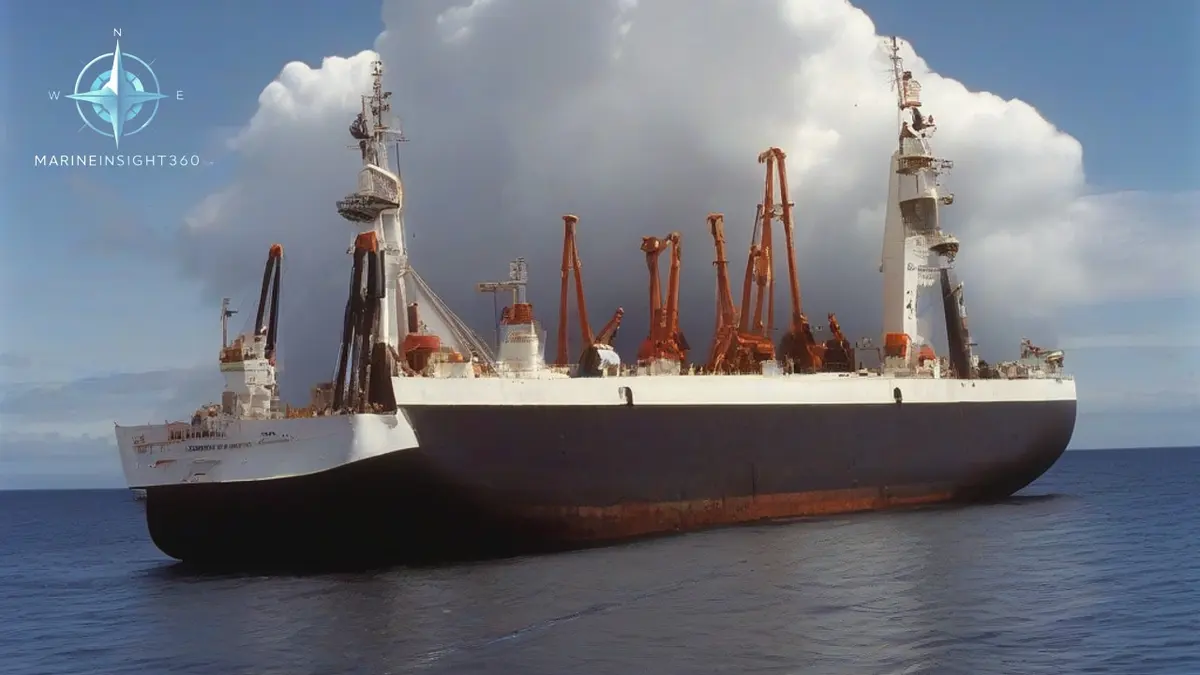
What Was the Largest Ship Ever Built?
The largest ship ever built was the Seawise Giant, later renamed Knock Nevis, an ULCC supertanker measuring about 458.45 m long and carrying a dead-weight tonnage of 564,763 t. It operated from the 1970s until the early 2000s, serving first as a crude oil carrier and later as a floating storage and off-loading unit.
What makes the Seawise Giant the record holder?
ULCCs (Ultra‑Large Crude Carriers) were designed to move the largest volumes of oil in a single voyage. The Seawise Giant’s dimensions—over 458 m in length and more than 564 000 t of DWT—exceeded every other vessel built at the time. Those figures determine a ship’s berth requirements, draft, and cargo capacity, making it the benchmark for size.
Length and Dead‑Weight Tonnage Matter to Operators
Length influences the ship’s ability to fit within port berths and canal locks. DWT tells operators how much cargo a vessel can carry, directly affecting freight rates and market competitiveness. For a ship of the Seawise Giant’s scale, a deep‑water terminal with a draft of at least 20 m is mandatory.
Operational Life: From Tanker to Floating Storage
After decades of transporting crude, the Seawise Giant was converted into a Floating Storage and Off‑loading unit (FSO). This retrofit extended its service life by turning the vessel into a stationary storage facility, reducing the need for new construction and leveraging existing hull strength.
Conversion Trade‑Offs
- Cost Savings: Refitting an existing hull is cheaper than building a new vessel of comparable capacity.
- Operational Flexibility: FSOs can be moved to new fields, but they lose the ability to travel between ports.
- Maintenance: Older hulls require more frequent inspections and repairs, increasing crew workload.
Comparing Modern Giants
While the Seawise Giant remains the largest by DWT, newer projects have pushed other dimensions.
Shell Prelude – Floating LNG Facility
The Shell Prelude is a floating‑LNG (FLNG) facility with a reported length of 488 m. Unlike the Seawise Giant, it is not self‑propelled and serves as a stationary production platform.
Pioneering Spirit – Crane Ship
The Pioneering Spirit is a crane ship with a reported length of 383 m, designed for offshore installation rather than cargo transport. Its size is optimized for lifting and positioning heavy structures.
Why ULCCs Are No Longer Built
Several market and regulatory factors have curtailed the construction of new ULCCs.
Canal Restrictions
Major canals such as the Suez and Panama have length and draft limits that ULCCs exceed, limiting their global reach.
Fuel Efficiency and Environmental Regulations
Large hulls consume more fuel per ton of cargo, and newer emissions standards (IMO RME, IMO MARPOL) increase operating costs.
Port Infrastructure Limitations
Many ports lack the berth depth or crane capacity required for ULCCs, making them economically unviable.
Practical Takeaways for Shipping Professionals
Understanding the characteristics of vessels like the Seawise Giant helps crews, operators, and shippers make informed decisions.
Decision Criteria for Vessel Selection
- Berth Depth & Length: Verify that the destination port can accommodate the vessel’s draft and length.
- Fuel Consumption: Estimate operating costs per ton of cargo to compare with smaller carriers.
- Regulatory Compliance: Ensure the vessel meets current emissions and safety standards.
- Crew Requirements: Larger ships need more personnel for navigation, engineering, and safety.
Why a single hull ended the ULCC era
Seawise Giant was single-hulled, and that is what closed the era rather than her size. After two casualties, the Erika off Brittany in 1999 and the Prestige off Galicia in 2002, the IMO accelerated the phase-out of single-hull tankers under MARPOL Annex I, and the last of them left mainstream trade around 2010. A hull with no double bottom and no wing tanks could not be carried into that regime.
The replacement fleet standardised downwards. Crude moves in VLCCs of roughly 300,000 tonnes deadweight, because that is what berth depths, terminal manifolds and normal cargo lot sizes can absorb, and because two VLCCs give a charterer flexibility that one ULCC never did. The ship's own story is told in the Knock Nevis profile.
What happens to a hull that size at the end
Scrapping a 458 m tanker is a regulated operation now. The Hong Kong Convention on ship recycling, adopted in 2009, came into force in June 2025. It requires a ship to carry an inventory of hazardous materials and to be recycled at an authorised facility working to an approved ship recycling plan. Tonnage flagged in the European Union has had a comparable duty for longer under the EU Ship Recycling Regulation.
The hazards are specific. A crude hull decades old carries asbestos lagging, PCBs in old cabling, heavy corrosion and residual cargo and sludge in tanks that must be gas freed before a torch is lit. Beaching yards in South Asia have long records of fatal accidents during that work, which is the reason the convention was written.
Recommended Reading
Largest Ship Ever Built
Find out which vessel holds the record for length, dead‑weight and gross tonnage, why definitions differ, and what it means for seafarers and operators.
Knock Nevis – World’s Largest Supertanker
Knock Nevis – World’s Largest Supertanker: ports, trade and shipping-market context for US, UK, Canada, Australia, Singapore and European maritime readers.
Typhoon Class Submarine: The Biggest Boats Ever Sent Under the Sea
The Soviet Typhoon class submarine remains the largest ever built: twin pressure hulls, 20 missile silos, and why nothing since has matched its size.