
Largest Ship Ever Built
Find out which vessel holds the record for length, dead‑weight and gross tonnage, why definitions differ, and what it means for seafarers and operators.
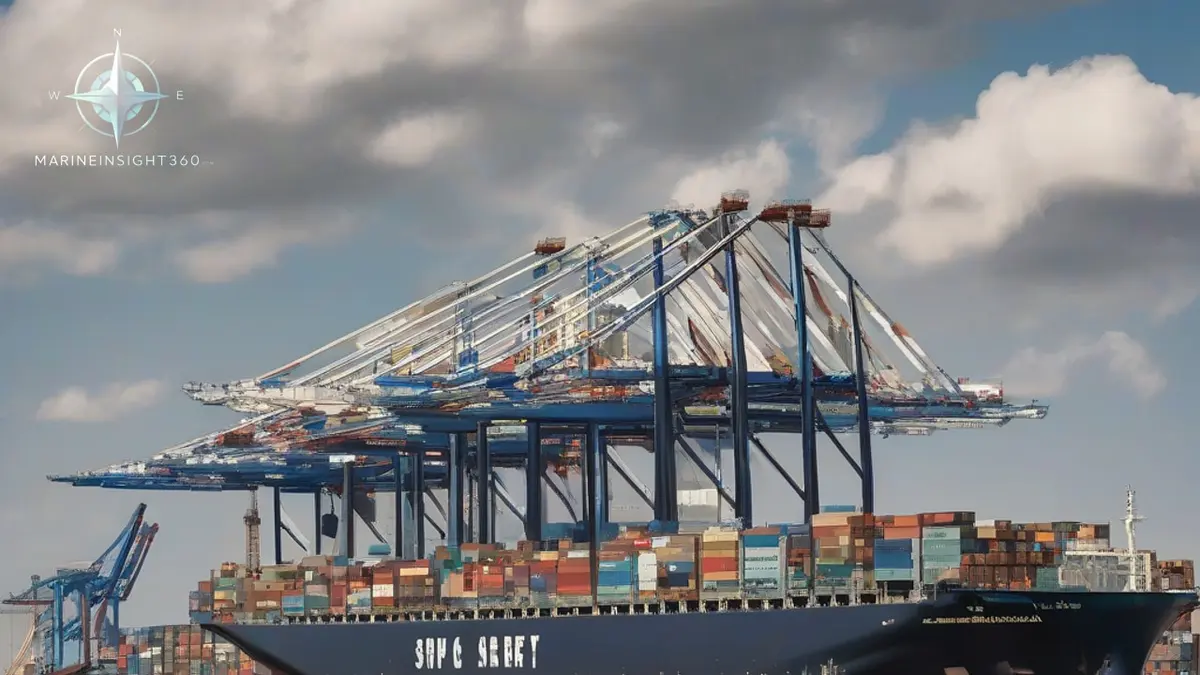
Which vessel holds the record for "largest ship" and why the answer depends on the metric
When you ask "what is the largest ship ever made?" the answer splits into three categories: overall length, dead‑weight tonnage (DWT) and gross tonnage (GT). Seawise Giant (later renamed Knock Nevis) and Pioneering Spirit are cited as the largest by different metrics. A floating LNG installation, Shell Prelude , is also considered in terms of overall length.
Length champion: Seawise Giant (Knock Nevis)
Seawise Giant was constructed between 1974 and 1979. Its size set a benchmark for ultra‑large crude carriers (ULCCs).
After a long career, the ship was scrapped in 2010.
Gross‑tonnage champion: Pioneering Spirit
Launched in 2013, the Dutch‑built Pioneering Spirit is a twin‑bow, single‑hull vessel designed for the installation and removal of offshore oil‑and‑gas platforms. It remains in active service, operating primarily in the North Sea and Gulf of Mexico.
Overall‑length record holder that isn’t a ship: Shell Prelude FLNG
In 2013 Shell introduced the Prelude floating‑LNG (FLNG) facility, a purpose‑built floating production unit. However, Prelude is a stationary production platform, not a self‑propelled vessel.
How to decide which "largest" matters for you
Maritime professionals often need to pick a metric that aligns with operational or regulatory concerns:
- Length matters for berth planning, dockside infrastructure, and canal transit.
- Dead‑weight tonnage is the key figure for cargo planners and charterers.
- Gross tonnage reflects the internal volume of a ship and is used for port fees, safety regulations and crew requirements.
Practical limits and why the biggest ships are rare
Operating a vessel of this magnitude imposes several constraints:
- Port infrastructure : Only a handful of ports worldwide have berths, cranes and water depth to handle ULCCs or mega‑installations.
- Canal restrictions : Drafts over 20 m exclude most canals.
- Maintenance costs : Larger hulls require more extensive inspections and corrosion control.
- Market demand : The global oil market’s volatility limits the number of ultra‑large carriers needed at any time.
What this means for seafarers, cadets and operators
Understanding which metric defines "largest" helps you assess career opportunities and operational planning.
What Seawise Giant actually measured
The figures are the reason she holds the record. Seawise Giant was 458.45 m long overall, with a beam of about 68.9 m and a laden draught near 24.6 m, and she carried 564,763 tonnes deadweight. She was built by Sumitomo Heavy Industries in Japan and enlarged after delivery, which is how she came to exceed every other hull afloat.
That draught decided her trading pattern. Loaded, she could use neither the Suez Canal nor the Panama Canal, and she could not work the English Channel. The route was fixed: load in the Gulf, run round the Cape of Good Hope, and discharge at one of a handful of deep water terminals or lighter cargo into smaller tankers offshore.
Hit in the Gulf, raised, and sold on
She was also a war casualty. In 1988, during the tanker war between Iran and Iraq, she was attacked from the air off Larak Island in the Strait of Hormuz, burned, and settled in shallow water. A hull that size, damaged that badly, is normally written off where it lies.
She was salvaged instead, towed away, rebuilt and returned to trade under new names, first Happy Giant and then Jahre Viking. Her last working years were spent as a floating storage and offloading unit off Qatar under the name Knock Nevis, and she was beached at Alang in India for scrapping in 2010. The class she belonged to is explained in the VLCC and ULCC guide.
Why gross tonnage is not a weight
The three metrics in this comparison are not the same kind of number. Deadweight is a mass: the cargo, fuel, stores and crew a hull can carry. Gross tonnage is a dimensionless figure derived from enclosed volume under the IMO's International Convention on Tonnage Measurement of Ships, 1969.
That distinction decides real money. Port dues, canal tolls, survey scope and minimum safe manning are set against gross tonnage, so an installation vessel with vast enclosed volume outranks a tanker that carries far more cargo. Comparing the two on a single number is bound to mislead.
Sources and further reading
- Seawise Giant
- Which is the Largest Ship Ever Built?
- Seawise Giant: The rise, rebirth, and fall of the world’s longest ship
- Knock Nevis – The World's Largest Supertanker
What to read next
Recommended Reading
Largest Ship Ever Built
Find out why Seawise Giant (Knock Nevis) remains the biggest ship ever built, its dimensions, history and how it compares with modern giants.
Knock Nevis – World’s Largest Supertanker
Knock Nevis – World’s Largest Supertanker: ports, trade and shipping-market context for US, UK, Canada, Australia, Singapore and European maritime readers.
Typhoon Class Submarine: The Biggest Boats Ever Sent Under the Sea
The Soviet Typhoon class submarine remains the largest ever built: twin pressure hulls, 20 missile silos, and why nothing since has matched its size.