
What is a Beaching Of Ships?
What is a Beaching Of Ships?: safety, training and compliance context for US, UK, Canada, Australia, Singapore and European maritime readers.
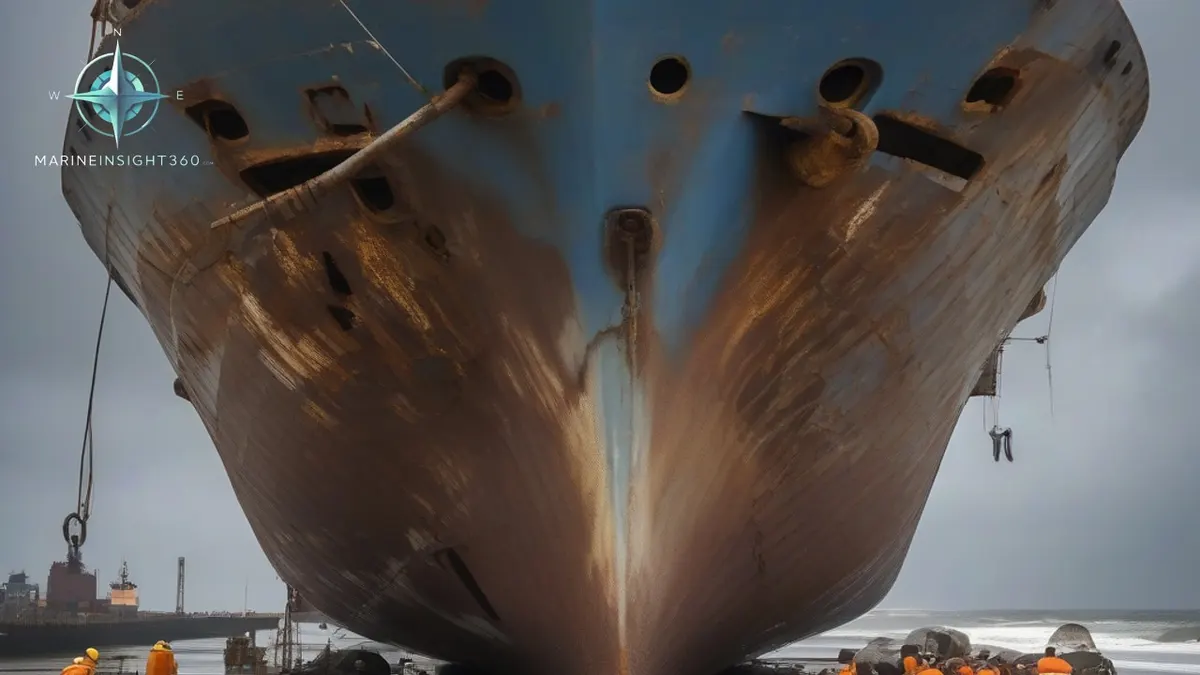

What is a Beaching Of Ships?
Ship captains are responsible for ships operating in international waters. This means they must ensure the safety of their crew and vessel. In emergencies, they must make difficult decisions, considering the consequences. A Beaching of Ships is one such decision that tests a captain's wisdom and seamanship.
A Beaching Of Ships is an emergency operation that involves intentionally pushing a ship into shallow water and causing it to run aground.
Intentional Beaching Of Ships
A ship is grounded in soft sand or mud to prevent damage to the hull, propeller, and rudder.
Why are ships beached?
The three main reasons for a Beaching Of Ships are:
- Preventing the ship from being lost due to flooding when it has severe damage below the waterline,
- Refloating the ship after repairs and restoring its seal.
- Delivering it for scrapping.
Ship Beaching Of Ships Procedures
Add ballast to the ship to its maximum capacity.
Inspect the area of greatest damage, either at the side or stern. When a ship grounds, the bow must be at a 90-degree angle to the tide.
Take all necessary measures to prevent the vessel from drifting parallel to the coast (drop the windward anchor first).
If the vessel is drifting astern due to stern damage, drop two anchors at appropriate distances to assist in steering.
The depth of all fuel tanks must be measured before and after the vessel is grounded.
Why this matters
Beaching matters because maritime decisions rarely sit in one department. A route story may affect insurance, crew planning and cargo timing. A machinery topic may affect maintenance, safety permits and spare-part planning. A career question may affect training, documents and joining readiness.
Operational context
In daily maritime work, beaching should be compared with vessel type, flag requirements, company procedures, port expectations, cargo risk and crew competence. The same topic can look different on a container ship, bulk carrier, tanker, offshore vessel, training ship or shore-side logistics desk.
Evidence and trust signals
A useful maritime article should show where the reader needs evidence, even when the page is an explainer rather than a breaking-news report. Look for dates, vessel context, source attribution, regulatory references, equipment details, route names, job requirements or operational constraints that can be verified.
Readers should also avoid comparing markets too loosely. Requirements and expectations in the United States, United Kingdom, Australia, Canada, Singapore and Europe can differ from other regions, especially in careers, port compliance, insurance and safety reporting.
How to use this guide
Use this guide to frame the right questions before going deeper. If beaching affects your vessel, crew, course, job application, port call, cargo movement or procurement decision, write down what must be verified, who owns the action and which record proves the answer.
For related reading, continue through the marine machinery knowledge base and connect this page with nearby topics. Internal linking helps readers move from background context to practical guidance without losing the thread.
Recommended Reading
Iran retaliates with missiles and drones, defying Trump’s warning
Learn iran with practical maritime context, safety checks, operational guidance and related resources for global shipping readers.
Hapag-Lloyd Invests in APM Terminals Rotterdam to Drive Growth
Hapag‑Lloyd’s new stake in APM Terminals Rotterdam aims to expand capacity, improve hinterland links and enhance crew efficiency in Europe’s busiest port.
Saildrone Completes Missile Launch Test Aboard its Sail-Powered Surveyor
Saildrone’s autonomous vessel successfully launched a missile‑type payload, showing new possibilities for armed surveyors and implications for shipping operator