
Amazon's Offshore Wind Power Deals and the Maritime Work Behind Them
Amazon has contracted most of the output of a German offshore wind farm. What corporate power deals mean for offshore vessels, ports, crews and navigation.
What Amazon has agreed to buy
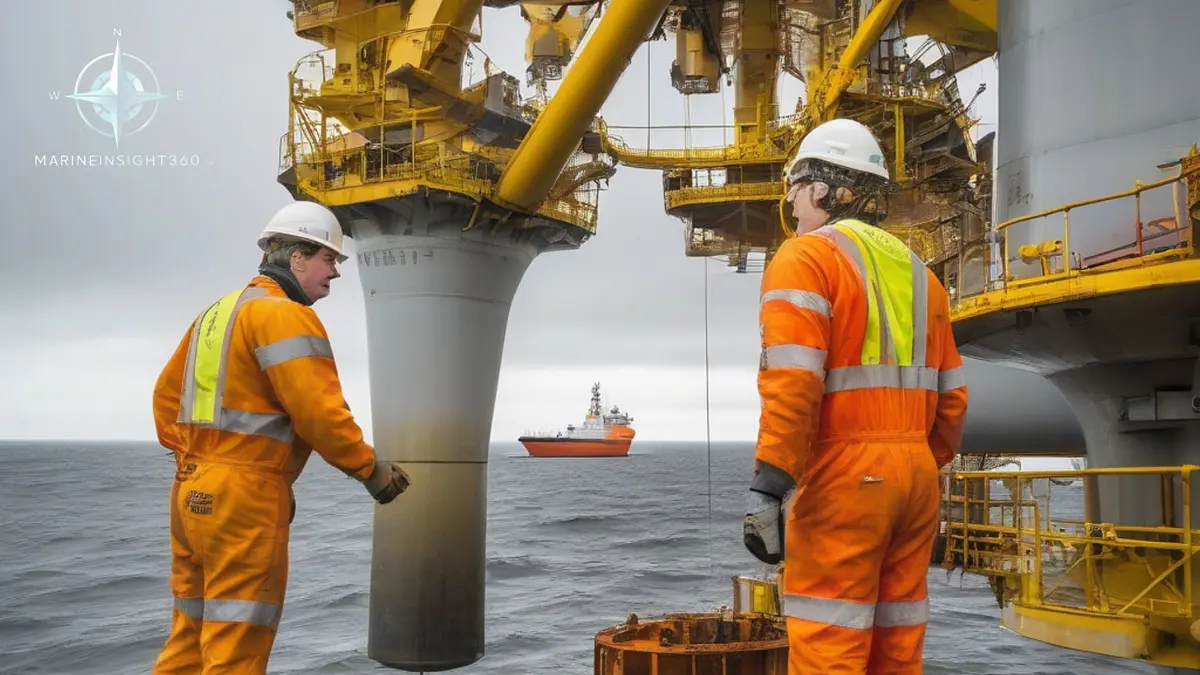
Amazon has contracted 600 MW from the Gennaker offshore wind project in the German Baltic. That is roughly six tenths of the wind farm's planned capacity, and the largest single power purchase agreement signed in Germany. A separate 110 MW deal with RWE covers Nordseecluster B in the North Sea, signed in February 2026. A third, for 159 MW, takes output from East Anglia THREE in UK waters.
Every one of those megawatts still has to be installed, cabled and maintained by vessels working under German BSH and UK MCA rules.
Taken together the company has now contracted more than 1.3 GW across a dozen German projects in support of a net zero target for 2040. For a maritime audience the interesting part is not the corporate pledge. It is that a signed offtake agreement is what unlocks the financing, and the financing is what puts vessels to work.
Why a power contract is a shipping event
An offshore wind farm is a marine construction project before it is an energy asset. A project of this size runs through a fleet that most shipowners would recognize immediately.
- Survey vessels for geophysical and geotechnical work, plus unexploded ordnance clearance, which is a significant programme in the Baltic and southern North Sea.
- Installation vessels , usually jack-up units with heavy cranes, to place monopiles or jackets and then the turbines themselves.
- Cable lay vessels for inter-array and export cables, followed by trenching and burial spreads.
- Crew transfer vessels and, on larger or more distant fields, service operation vessels with motion compensated gangways and walk to work capability.
- Tugs, guard vessels and rock placement ships supporting the whole sequence.
Construction runs a few years. Operations and maintenance runs for the design life of the field, commonly a quarter of a century, and that is the part that creates stable maritime employment rather than a project spike.
Baltic conditions make it harder than the brochure
The Baltic is shallow, brackish and seasonally icy, with a well documented legacy of dumped munitions. Those conditions shape vessel selection: shallower draught for jack-up positioning, ice class for winter access windows, and a clearance survey scope that adds cost and time before a single foundation is driven. Weather downtime is the other constant.
Crew transfer to a turbine has a wave height limit, and a field that is unreachable for days at a time changes the economics of the maintenance contract.
Why the offtake contract sets the vessel schedule
Offshore wind developers do not commit heavy vessel spreads on hope. Installation vessels are booked years ahead at day rates that run into six figures, and a yard slot for a jack-up is as scarce as a slot for an LNG carrier. Lenders release construction finance once revenue is contracted, so a signed power purchase agreement is usually the trigger for the developer to firm up options on installation and cable lay tonnage.
For vessel owners the sequence is the useful signal. A large corporate offtake announcement means survey work is close, foundation installation is roughly two to three years out, and the operations and maintenance tender will follow once commissioning is scheduled. Owners who track offtake news rather than construction news are bidding earlier and at better rates.
Ports and the jobs that stay ashore
Marshalling a wind farm needs quay strength, laydown area and heavy lift access, so German Baltic ports have invested heavily to host components that arrive by sea and leave by sea. That work supports pilotage, towage, stevedoring and port engineering as well as vessel crews. Ports that win a marshalling role for one project usually keep the operations base for the following decades.
What it means for a seafarer's career
Offshore wind has become a genuine alternative to deep sea trading for officers who want a rotation closer to home. The entry requirements differ from merchant service: alongside STCW certification, the sector expects Global Wind Organisation basic safety training, and crew transfer vessel masters need small craft handling skill of a very specific kind. Pay and rotation vary widely between construction charters and long term maintenance contracts, and the work is closer to offshore support than to liner trading.
Navigational impact for everyone else
Every new field changes the chart. Wind farms are charted areas with safety zones around installations under construction, and many states restrict or prohibit navigation and anchoring inside them. The turbines also affect marine radar performance and can degrade VHF reception in the lee of a field.
Bridge teams working the North Sea and Baltic should treat each season's new construction as a passage planning task rather than a surprise, and check notices to mariners for the guard vessel positions and cable route restrictions that come with it.
The part of an offshore wind farm that goes wrong most expensively is the cable. Inter array and export cable faults account for the largest share of insurance losses on these projects, and the damage usually starts during installation: over bending on the lay, insufficient burial depth, or movement at the J tube entry that wears the outer sheath until the conductor floods. Repair means mobilising a cable vessel and a jointing spread, with the string off line for months.
The marine side has its own failure list. Jack-up units punch through soft layers if the site investigation missed them, which is why geotechnical survey scope is not the place to save money. Grouted transition piece connections on early monopiles slipped in service and had to be reinforced across whole fleets. Scour develops around foundations and needs rock placement to arrest it. On the maintenance side, a crew transfer that exceeds the gangway limit is where injuries happen.
Sources and further reading
- Offshore Wind: Amazon Signs Largest Power Purchase Agreement in Germany for Offshore Wind
- RWE: RWE and Amazon sign Power Purchase Agreement for Nordseecluster B
- Iberdrola: New agreement with Amazon for 159 MW from East Anglia THREE
- Data Center Dynamics: Amazon signs 600MW offshore wind PPA with Skyborn in Germany
What to read next
Recommended Reading
Dogger Bank Delay and the Future of Offshore Wind Power
Dogger Bank Delay and the Future of Offshore Wind Power: ports, trade and shipping-market context for US, UK, Canada, Australia, Singapore and European...
Techano Oceanlift Secures Offshore Crane Contract for New MPSV Build
Techano Oceanlift secured the offshore crane contract for a new MPSV build. What a 70-tonne heave-compensated knuckle boom crane changes for the vessel.
Cadeler 20MW Wind Turbine Installation Vessel Keel Laid: Inside a Next-Generation WTIV
The keel laying of Cadeler's 20MW wind turbine installation vessel explained: crane capacity, deck area, jack-up limits and what the milestone means.