
Techano Oceanlift Secures Offshore Crane Contract for New MPSV Build
Techano Oceanlift secured the offshore crane contract for a new MPSV build. What a 70-tonne heave-compensated knuckle boom crane changes for the vessel.
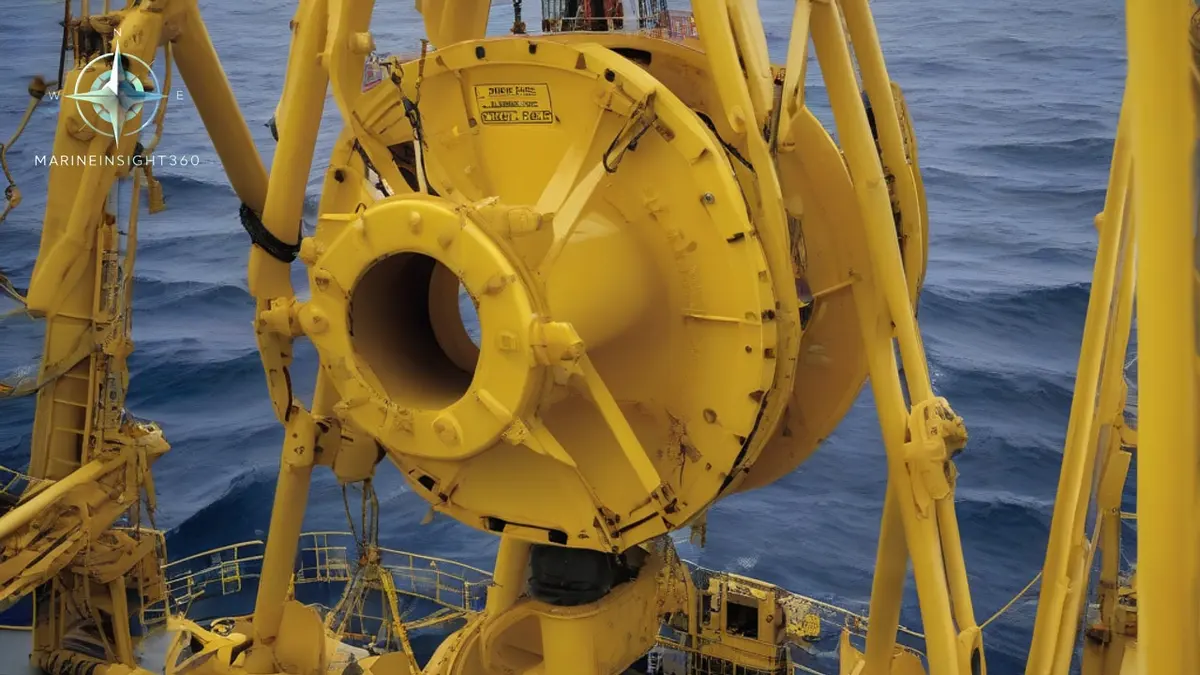
Techano Oceanlift secures an offshore crane contract for new MPSV build. On a multi-purpose support vessel the crane defines what work the ship can sell. The Nekkar subsidiary was awarded the order by Hercules Supply AS. It covers one offshore crane for a newbuild multi-purpose support vessel under construction at Fujian Mawei Shipyard. The offshore crane in the contract is a 70-tonne knuckle boom unit with an active heave compensated winch carrying 3,000 metres (9,843 ft) of wire.
Vessels in this class work for North Sea and Gulf of Mexico operators, so the crane must satisfy DNV lifting rules and charterer audits.
What the contract actually covers
The scope runs to engineering, manufacturing and commissioning of the crane, with delivery reported for July 2026. Installation is at a third-party facility in Europe rather than at the building yard in China. Splitting build and crane installation across continents is common on this class of vessel. Hull and machinery construction goes where steel is cheapest. The mission equipment is fitted where the specialist commissioning engineers are.
The crane carries a control and motion compensation system from Intellilift, another Nekkar company, and is fitted with a detachable three-dimensional compensated lifting tool called Safelift. Buying crane, control system and compensation tooling from one group avoids the classic integration argument. Otherwise a crane vendor and a controls vendor each blame the other when a lift behaves badly at depth.
What an MPSV is asked to do
A multi-purpose support vessel sits between a platform supply vessel and a dedicated construction vessel. It carries deck cargo like a supply boat. It also runs remotely operated vehicles, handles subsea structures, supports inspection, repair and maintenance campaigns, and increasingly serves offshore wind fields. Most are dynamically positioned to DP2, meaning a single failure in the positioning system will not cause loss of station.
The commercial point of the type is flexibility. One hull chases supply work when construction is quiet and construction work when it is not. The crane is the hinge: an MPSV with a small deck crane sells supply days, while an MPSV with a heave-compensated subsea crane sells construction days at a materially higher rate.
Why active heave compensation decides the weather window
Active heave compensation, usually shortened to AHC, measures vessel motion with a motion reference unit. The system drives the winch to pay out and haul in at equal speed in the opposite direction. The suspended load stays roughly still relative to the seabed while the ship moves underneath it.
The reason this matters is not comfort, it is workability. Lowering a subsea structure without compensation means the load rises and falls with the ship. Two things then go wrong. Passing through the splash zone, the load can slam and shock-load the wire as the wave surface moves against it. Near the seabed, the load can touch down hard or drag, damaging the structure or the equipment already installed.
Compensation removes both problems and directly widens the sea state in which the vessel can keep working.
For the charterer this shows up as billable days. A vessel that can hold a lift in a higher significant wave height completes campaigns in fewer weather standby days. Weather standby is usually paid at close to full rate for no productive output.
Wire length is the real depth limit
Rated capacity gets quoted in headlines, but on a subsea crane the wire tells you where the vessel can work. Three thousand metres of wire places this crane in genuine deepwater territory rather than shelf work.
There is a physical trade-off behind that number. Wire has weight, and the deeper the lift the more of the crane's rated capacity is consumed by the wire itself before the hook load is counted. That is why crane makers publish a load curve against depth rather than a single figure, and why 70 tonnes at the surface is not 70 tonnes at 3,000 metres.
Anyone assessing an MPSV for a specific campaign should ask for the depth-derated curve, not the headline rating.
Knuckle boom versus a stiff boom on a working deck
A knuckle boom crane folds at a joint mid-boom rather than extending as one rigid arm. On a congested offshore deck that geometry earns its keep. The crane can reach over and around deck cargo and place loads close to the hull. It stows compactly when not in use, freeing deck area for containers, carousels or an ROV spread.
The cost is mechanical complexity. More hydraulics, more articulation and more sensors in the control loop mean more to maintain and more to fault-find. Crews working these cranes spend real time on hydraulic hose inspection, slew bearing checks and verification of the motion reference unit. A compensation system fed a bad motion signal is more dangerous than no compensation at all.
What this signals about the MPSV market
A newbuild MPSV specified with a 3,000 metre AHC crane is not being built for routine platform supply. That specification points at subsea construction and inspection, repair and maintenance work in deepwater fields, plus offshore wind support where heavy component handling in exposed water is the daily task. Owners ordering this configuration are betting that construction-class day rates hold up.
For engineers and deck officers, crane and compensation experience on this class of vessel is the credential that moves you from supply work to construction work.
Sources and further reading
- Techano Oceanlift to Supply Offshore Crane for MPSV Newbuild (MarineLink)
- China-built MPSV to sport Techano Oceanlift crane next summer (Offshore Energy)
- Techano Oceanlift Awarded Offshore Crane Contract (Ocean News & Technology)
- Techano Oceanlift awarded offshore crane contract (Energy Global)
What to read next
Recommended Reading
Amazon's Offshore Wind Power Deals and the Maritime Work Behind Them
Amazon has contracted most of the output of a German offshore wind farm. What corporate power deals mean for offshore vessels, ports, crews and navigation.
Cruise Ship Engineer: The Role, the Plant and the Contract
A cruise ship engineer runs a floating power station and hotel. Here is the rank ladder, the certificates required and how contracts and rotations work.
Hanwha Ocean Wins Qatari LNG Carrier Orders: Inside the QatarEnergy Fleet Build
Hanwha Ocean has booked more 174,000 cbm LNG carriers for the QatarEnergy programme. What the contracts, prices and delivery slots mean for the LNG trade.