
Container Vessel Capsizes off Kochi Coast: All 24 Crew Members Rescued
MSC ELSA 3 listed heavily and sank 30 nm off Kochi with 640 containers aboard. All 24 crew were rescued. What the casualty shows about list and response.
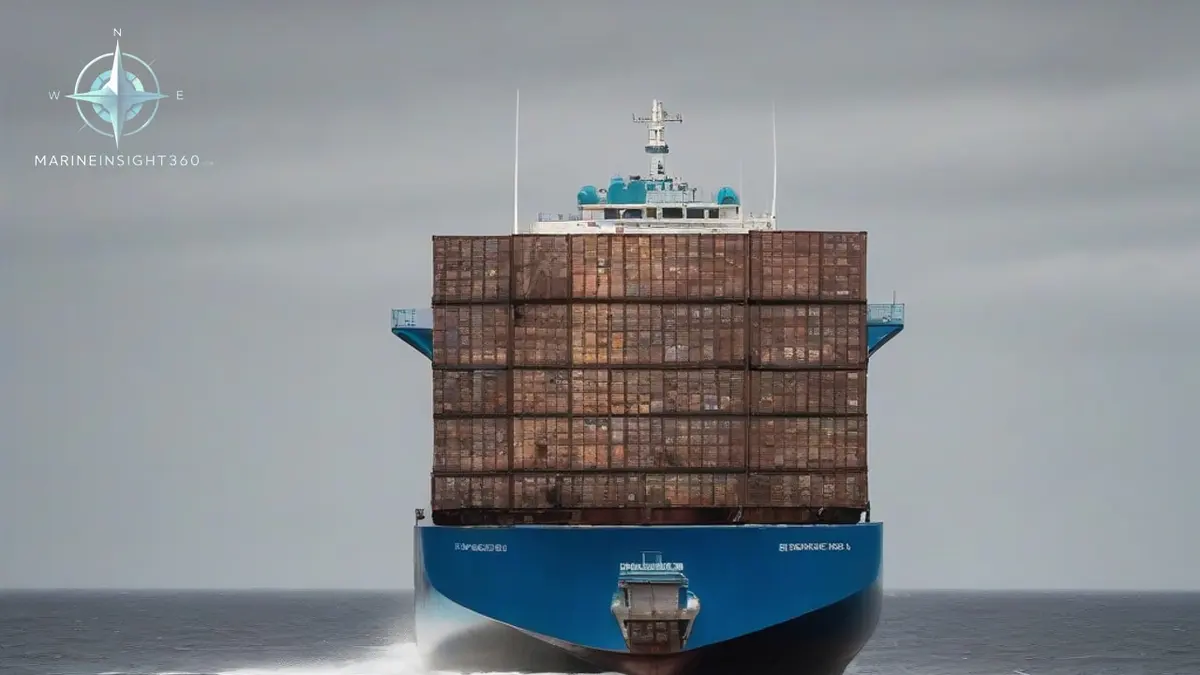
A container vessel capsized off the Kochi coast and all 24 crew members were rescued, but the casualty left roughly 100 containers in the water and a pollution response that ran for weeks. MSC ELSA 3, a Liberia-flagged feeder boxship operated by Geneva-based MSC, developed a severe starboard list on 24 May 2025 while on passage from Vizhinjam to Cochin, about 30 nautical miles southwest of the port.
The list reached around 26 degrees after flooding in one compartment, and the ship went down the following day. For European and North American owners the case is a live test of IMO container loss reporting and of IMDG stowage discipline on small feeders.
The Indian Coast Guard took off 21 crew and the naval vessel INS Sujata recovered the remaining three. Nobody was lost. The ship was carrying 640 containers, of which 13 held hazardous cargo and 12 held calcium carbide, along with 84 tonnes of diesel and 367 tonnes of furnace oil in its tanks.
Why a 26 degree list is effectively terminal
A feeder container ship carries a large deck stack with a high center of gravity, and the stability margin is thin by design. Once floodwater enters a compartment, free surface effect cuts the effective metacentric height and the ship heels. The heel shifts the deck stack, which moves the center of gravity further outboard, and the process feeds itself.
At around 26 degrees, lashing gear on the high side is close to its limit, non-watertight openings on the low side begin to submerge, and crew cannot work the deck safely. Counter-flooding options that would help a warship are rarely available on a commercial hull. The realistic decision at that angle is to prepare to abandon, which is what happened here.
The calcium carbide problem
Calcium carbide reacts with water to produce acetylene, a highly flammable gas. It is carried under IMDG Class 4.3, substances which emit flammable gases when wet, and that classification is why a sunken box of carbide is not an inert object on the seabed.
Its presence changes the response. Salvors and shoreline teams must treat drifting or stranded containers as a potential ignition hazard rather than a straightforward recovery job, and public warnings to keep clear of washed-up boxes follow from the cargo classification rather than from general caution.
Containers ashore and the coastal state response
Containers from the wreck came ashore along the Kerala coast, including at Kollam, and an oil sheen was reported over the site. The Kerala State Disaster Management Authority coordinated shoreline reporting and public warnings while the Coast Guard ran pollution monitoring offshore.
This is the part of a container casualty that lasts longest. Boxes that float can drift for weeks and become a hazard to fishing craft and coastal traffic. Boxes that sink can be crushed and release contents gradually. Neither problem ends when the ship reaches the seabed.
What the casualty reinforces for crews
- Report a developing list immediately. Early notification to the company, the coastal state and the nearest coast guard buys rescue time. The gap between a manageable list and an abandonment is measured in tens of minutes.
- Identify the ingress before pumping. Pumping a flooded space without finding the source can worsen free surface conditions and burn the remaining stability margin faster.
- Verify the dangerous goods manifest is current. Responders act on the declared cargo list. Misdeclared or undeclared dangerous goods remain one of the container trade's most persistent safety failures.
- Muster before it looks obvious. Everyone survived here because abandonment was ordered while the ship could still be left in an orderly way.
The liability chain after a container ship sinks
Several regimes engage at once, and technical superintendents should know which is which.
- Bunkers Convention: the registered owner is strictly liable for pollution damage from bunker oil and must carry insurance covering it.
- Nairobi Wreck Removal Convention: gives coastal states a framework to require removal of a wreck that constitutes a hazard, and channels the cost to the owner.
- Cargo claims and general average: lost boxes generate claims settled long after the environmental work finishes.
- Flag and coastal state investigation: the flag state leads the safety investigation, with the coastal state's pollution and wreck interests running alongside.
The trend this casualty fits
Containers lost at sea remain a small fraction of boxes shipped, but individual casualties are getting more consequential because ships carry more units and more dangerous goods per call. Feeder ships on short coastal legs are not exempt. A 30 nautical mile passage gave this crew almost no sea room and put the wreck directly into a productive fishing and tourism zone.
For anyone reviewing stability practice on board, the useful exercise is to rerun the current loaded condition with one compartment flooded and see how much reserve the stowage plan actually leaves.
Sources and further reading
- Lost Containers Wash Up on Shore After MSC Boxship Sinks off India - The Maritime Executive
- Ship Wreck - MSC ELSA 3 - Kerala State Disaster Management Authority
- Navy rescues three crew members of distressed container vessel - News On AIR
What to read next
Recommended Reading
Container Tracking: How Shippers Actually Follow a Box Across the Ocean
How container tracking works, from free carrier lookups to visibility platforms: what each tool layer does, what it costs, and how to pick for your volume.
Two Crew Members Seriously Injured in Explosion on Tanker at Ireland's Second Largest Port
An explosion aboard the chemical tanker Bow Hercules at Shannon Foynes seriously injured two crew members. What the case shows about gas cylinder safety.
Iranian Gunboat Fires at Container Ship off Oman Coast, Maritime Agency Reports
A British maritime agency reported an IRGC gunboat firing on a container ship 15 miles off Oman. What the attack profile means for ships hardening for Hormuz.