
Syncing with the Sea: The Intricate Dance of the Tide Clock
The rhythmic ebb and flow of the tides has fascinated humanity for centuries and is evidence of the interconnected dancing of the Earth, Moon, and Sun.…

A tide clock is a dial driven by the moon's cycle rather than by clock hours, and it shows when high and low water are due at one particular location.
People have watched the tides rise and fall for thousands of years and linked them to the moon long before anyone could explain why. A tide clock is the simplest device for keeping track of them. This article looks at the science behind the tide clock, how it developed, where it works and where it doesn't, and how tides are predicted today.
Understanding Tides:
The tide clock exists because tides are caused by the gravitational pull of the Moon and Sun on Earth's oceans. The Moon, being much closer, has the larger effect, and along most coasts it produces two high tides and two low tides a day. Because the Moon moves on in its orbit while the Earth turns, each high tide comes on average about 12 hours 25 minutes after the last, so high water is roughly 50 minutes later each day. The Sun's pull adds to the Moon's at new and full moon, giving the large spring tides, and partly cancels it at the quarter moons, giving the smaller neap tides.
How Tidal Clocks Work ?
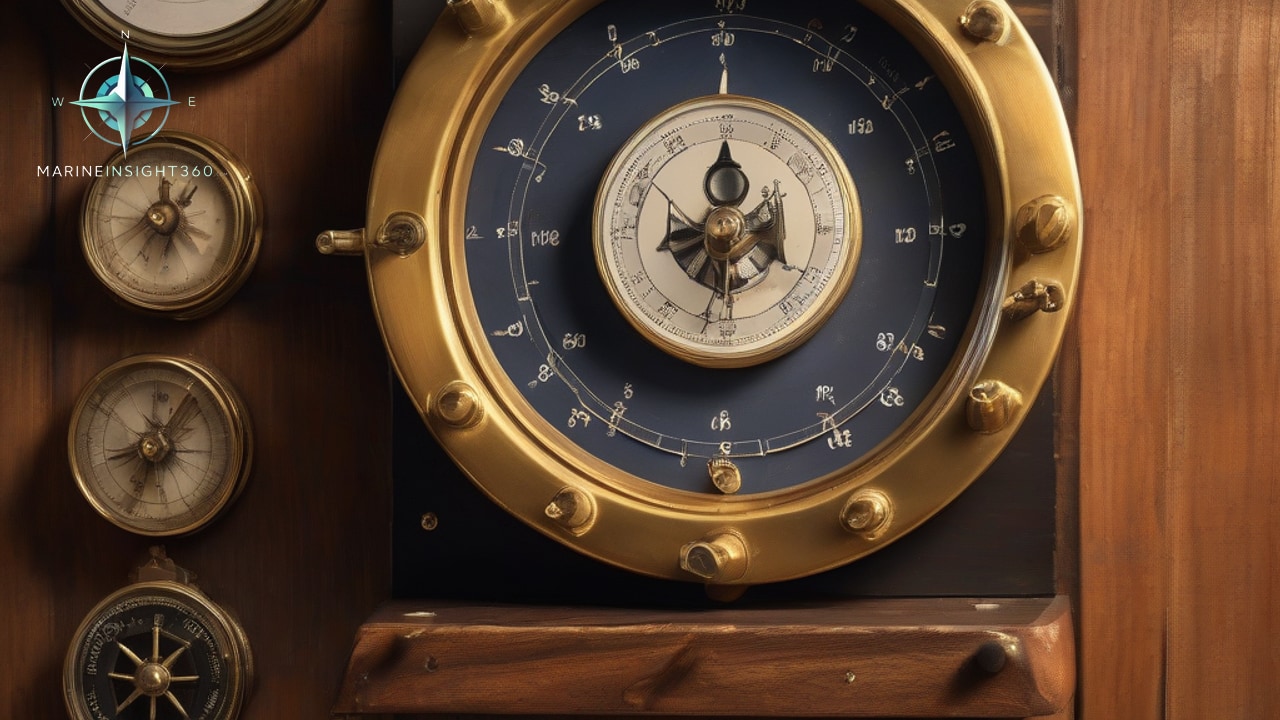
An ordinary clock's hour hand goes round twice in 24 hours. A tide clock's hand goes round once every 12 hours 25 minutes, the average interval between high tides. The dial is marked with high tide at the top and low tide at the bottom, with hours to go before each in between.
Once you set the hand to high tide at the moment of local high water, it keeps roughly in step with the tides for that location, and coastal residents, sailors and fishermen can see at a glance how long it is until the next high or low water.
Historical Development:
People in ancient times already knew that tides followed the phases of the moon, and they used that knowledge to estimate when the water would be high. Mechanical tide dials appeared on some clocks from the medieval period onward, often as an extra dial showing the age of the moon and the time of high water at a named port.
In the 19th century, Sir William Thomson (Lord Kelvin) built the first tide‑predicting machine, which used pulleys and gears to add together the separate tidal cycles and produce a year of tide tables. Those machines, and the computers that replaced them, are what produce the tide tables mariners use today. The modern domestic tide clock is a much simpler device, using a quartz movement geared to the 12 hour 25 minute cycle.
Symbiotic Connection:
For people who live and work on the coast, knowing the state of the tide decides a lot: when a boat can get over the bar, when a fishing ground is worth working, when a slipway is usable or a beach is safe. That is why tidal clocks and coastal communities go together, and why a tide clock often hangs in harbour offices, boathouses and seaside homes. A tide clock is a handy guide, but it is no substitute for tide tables when depth matters for navigation, because it does not show the height of the tide or the strength of the tidal stream.
Modern Advancements:
Today, digital tide clocks and online services do much more than the old analogue dial. Many digital tide clocks are programmed with tidal predictions for a chosen port and show the actual times, and sometimes heights, of high and low water. National hydrographic offices publish tide predictions online, and phone apps and chartplotters give tide times and heights for thousands of locations.
Environmental Impact:
Knowing the tides matters more as sea levels rise. The highest spring tides, sometimes called king tides, already bring flooding to low‑lying coastal towns, and as the sea rises these events become more frequent. Tide predictions, combined with sea level records, help coastal communities plan for them.
Cultural Significance Of Tidal Clocks:
In many fishing and harbour towns the daily rhythm still follows the tide rather than the clock, and the tide clock on the wall is a reminder of that. It is also a common gift for sailors and people who live by the sea.
Arts and Literature:
The tides have inspired a great deal of art and writing, from sea novels to marine painting and poetry, and the image of the tide waiting for no one is an old one. Antique clocks with tide dials, and early tide tables, are now collected as part of maritime heritage.
Challenges And Resilience:
A simple tide clock has real limits. It only works properly where there are two roughly equal tides a day, which is the case along much of the Atlantic coasts of Europe and North America. In places with one tide a day, such as parts of the Gulf of Mexico, or with very unequal mixed tides, such as much of the Pacific coast of North America, it will not keep time with the water.
Even where it works, wind, air pressure and the spring‑neap cycle shift the actual times, so the clock drifts and needs resetting every week or two against the tide tables.
Citizen Science And Conservation:
Volunteers in some coastal areas take part in projects that photograph or record the highest tides, adding to the record of how sea level and flooding are changing. That information, alongside official tide gauge data, helps scientists and local authorities understand how their coasts are changing.
The Future Of Tide Gauges:
A tide gauge is different from a tide clock: it measures the actual height of the water at a fixed station, while a tide clock only estimates the timing. Networks of tide gauges, many now sending data in real time by satellite, supply the long records that tide predictions and sea level studies are built on.
Better data and computer models will keep improving tide and storm‑surge forecasts, but for everyday use the simple tide clock will still do its job wherever the tides are regular.
Recommended Reading
What Is a Tide Clock and How Does It Work?
A tide clock is a simple instrument that shows the approximate stage of the tide between high water and low water.

Unveiling the Intricate Design: Exploring the Anatomy of Navy Ship Structures
The anatomy of navy ship structures is made up of the hull, superstructure, propulsion plant, weapons and defense systems, communications and sensors,…

Crossing Currents: The Intricate Dynamics of the Busiest Shipping Route
Explore the captivating world of maritime trade as we delve into the complex interplay of currents, vessels, and global commerce along the busiest…