
What Is a Tide Clock and How Does It Work?
What Is a Tide Clock and How Does It Work?: shipboard and port-operations context for US, UK, Canada, Australia, Singapore and European maritime readers.
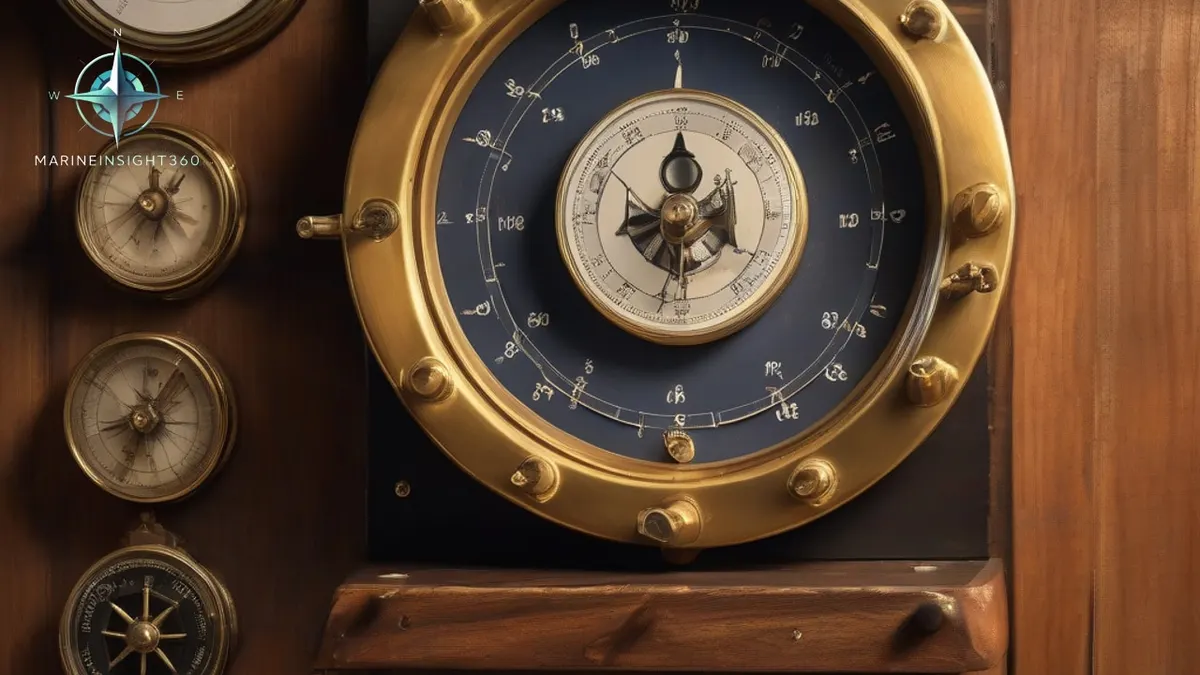
A tide clock is a simple instrument that shows the approximate stage of the tide between high water and low water. It is useful for quick awareness, especially around harbours, marinas, fishing areas and small craft operations. It should not replace official tide tables, electronic navigation systems or local port instructions.
This guide explains how a tide clock works, where it is useful and what limitations mariners should understand before relying on one.
What a tide clock shows
Most tide clocks divide the tidal cycle into rising and falling stages. Instead of showing ordinary hours only, the dial indicates whether the tide is moving toward high water, moving away from high water or approaching low water. This helps the user make a quick judgement about depth, current and access.
For seafarers, tide awareness affects under-keel clearance, mooring loads, small-boat landing, bridge clearance, anchoring and safe access to drying areas. Even a simple tide display can be helpful when used with proper navigation planning.
How the mechanism works
A standard tide clock is based on the average lunar tidal cycle, which is about 12 hours and 25 minutes between one high tide and the next. The mechanism advances more slowly than a normal clock so that the hand follows this approximate cycle.
Because real tides are influenced by coastline shape, seabed, weather, river flow and local geography, the clock must be set for a specific location. It is only an approximation. It may be reasonably useful in some semi-diurnal tide areas and much less useful where tidal patterns are irregular.
How to set a tide clock
The usual method is to check the official time of high tide for the chosen location, then set the tide clock hand to high tide at that moment. After that, the mechanism estimates the next stages of the cycle.
Mariners should reset the clock periodically and after battery changes. If the vessel changes port, the clock should be set again using tide data for the new area. A clock set for one harbour may be misleading a few nautical miles away if local tidal timing differs.
Where tide clocks are useful
Tide clocks are most useful as a quick visual reminder. They can help marina users, fishing crews, pilots, harbour staff and small-boat operators think about whether water is rising or falling before mooring, launching, landing or crossing shallow areas.
On larger commercial vessels, bridge teams should rely on approved passage plans, tide tables, port information, ECDIS data where applicable and local pilot advice. The tide clock can support awareness, but it is not a primary navigation instrument.
Limitations and risks
The biggest limitation is that tides are local. Wind, atmospheric pressure, storm surge, river discharge and shallow-water effects can change actual water levels. A tide clock may show the expected stage, while the real water level or current is different.
This matters when a vessel has limited under-keel clearance, strong tidal streams, restricted manoeuvring room or cargo operations affected by draft. For professional navigation, always check official sources and company procedures.
Common mistakes
- Using a tide clock as if it gives exact tide height.
- Forgetting to reset it when moving to another port.
- Ignoring weather effects that can raise or lower real water levels.
- Planning a passage or berth movement without checking official tide data.
Where the 12 hours 25 minutes comes from
The moon returns to the same meridian every 24 hours 50 minutes rather than every 24 hours, because it moves along its orbit while the earth turns. Two high waters fit into that lunar day on a semi-diurnal coast, so the interval the clock is geared to is half of it.
That gearing is the whole assumption. On semi-diurnal coasts such as the British Isles, the North Sea and the United States east coast, the dial tracks reasonably between resets. On diurnal coasts with one tide a day, and on mixed coasts such as the United States west coast where successive highs differ in height and spacing, it cannot represent what the water is doing.
The rule of twelfths, which needs no clock
Where a tide is roughly semi-diurnal and the rise roughly even, the range moves in a repeating pattern across the six hours. One twelfth in the first hour, two in the second, three in the third, three in the fourth, two in the fifth, one in the sixth. Half the range passes in the middle two hours.
With the height and time of high and low water from the tide table, that gives an approximate height at any hour with no dial at all. It also shows why the middle of the tide is the dangerous part for a boat sitting on a falling tide, and why a shallow berthing window closes faster than it feels.
SOLAS Chapter V Regulation 27 requires the charts and nautical publications a ship carries to be adequate and up to date, and tide tables are among them. A tide clock is not a nautical publication and does not satisfy it.
Recommended Reading

Syncing with the Sea: The Intricate Dance of the Tide Clock
The rhythmic ebb and flow of the tides has fascinated humanity for centuries and is evidence of the interconnected dancing of the Earth, Moon, and Sun.…

Iran retaliates with missiles and drones, defying Trump’s warning
Learn iran with practical maritime context, safety checks, operational guidance and related resources for global shipping readers.

Hapag-Lloyd Invests in APM Terminals Rotterdam to Drive Growth
Hapag‑Lloyd’s new stake in APM Terminals Rotterdam aims to expand capacity, improve hinterland links and enhance crew efficiency in Europe’s busiest port.