
External Explosion Off Oman: What a Waterline Blast Means for the Crew
UKMTO logged an external explosion near a tanker off Oman. What the term means, why waterline damage points to mines or drone boats, and what crews do next.
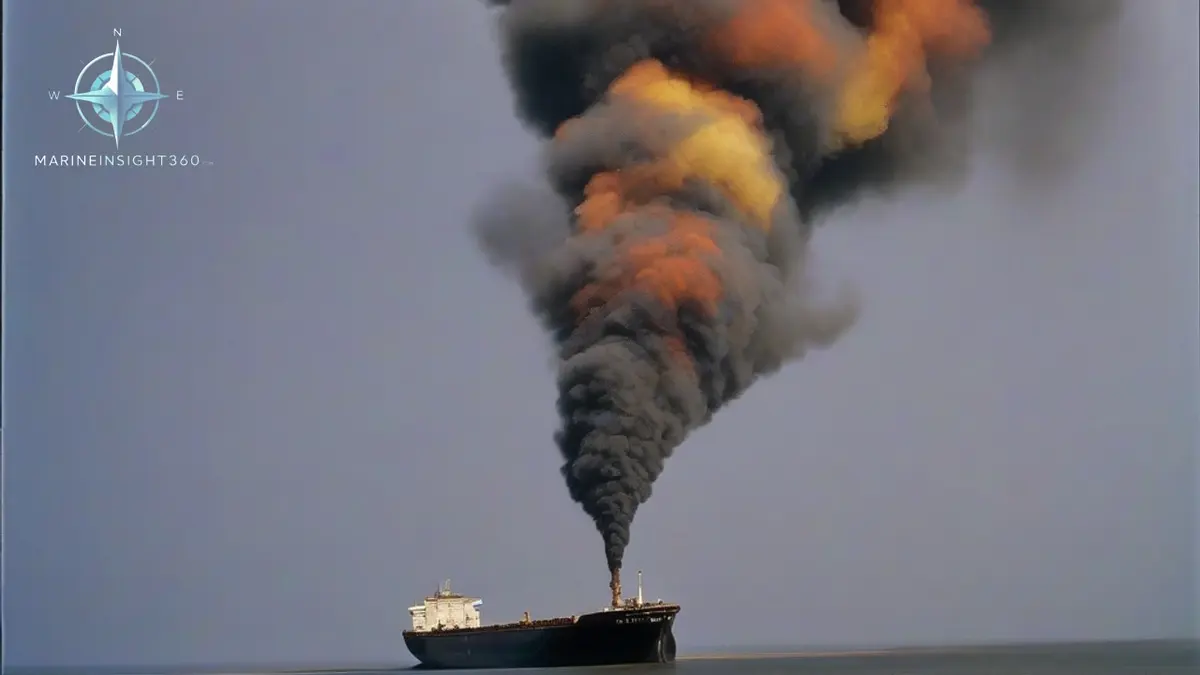
An external explosion off the Oman coast means the blast came from outside the hull. It did not start in cargo, machinery or bunkers, and the cause is not yet established. UK Maritime Trade Operations, the Royal Navy cell that takes merchant incident reports for the region, logged one on 26 May. The ship was the Marshall Islands flagged crude tanker Olympic Life.
She reported a blast on the port side close to the waterline, about 60 nautical miles east of Muscat at 0945 UTC. The crew were safe. Some bunker fuel escaped into the sea. For owners and war risk underwriters in London and Singapore, that wording matters.
The phrasing is deliberately narrow because UKMTO reports what the ship reports. It is not an attribution, and the advisories that follow are navigational warnings rather than findings.
Why damage at the waterline narrows the possibilities
Where the damage sits tells the investigation more than its size does. A blast at or just below the waterline, on one side, with the hull otherwise intact, is consistent with a charge functioning against the shell plating rather than a projectile arriving through the air. Two delivery methods produce that signature.
- A limpet mine. Attached to the hull by divers, usually while the vessel is at anchor or alongside, and timed or triggered later. The device is small, the damage is local, and the ship often gets under way before it functions.
- An uncrewed surface craft. A drone boat closes at speed and detonates on contact at the waterline. The damage pattern is broader and the approach may show on radar or CCTV if anyone was watching the right sector.
Missile and rocket strikes normally leave a different picture: entry above the waterline, a fragmentation pattern, and often fire in accommodation or on deck. That is why the reported location of the damage is the first thing an underwriter and a flag state investigator ask about.
The first thirty minutes on board
The sequence is the same whether the cause is an attack or an unexplained detonation.
- Muster and account for everyone, then check for injuries in the machinery spaces and any compartment adjacent to the damage.
- Close watertight doors and start a full round of tank and void soundings, including the double bottom and bunker tanks on the damaged side.
- Establish whether flooding is progressing, and compare the soundings against the loading condition to check stability and any developing list.
- Confirm propulsion, steering and main power, and consider reducing speed to limit water pressure on the damaged plating.
- Send the initial report to UKMTO with position, time, damage description, casualties and pollution.
Bunker escape changes the reporting picture immediately. A discharge of oil arising from damage requires a report to the nearest coastal state under Article 8 and Protocol I of MARPOL, the international convention on prevention of pollution from ships, in addition to the security report. Those are separate obligations and both have to be met.
Finding a device before it functions
The window for prevention is at anchor, not under way. Ships waiting at congested anchorages in the region should keep gangway and deck watches alert to small craft closing at night, log every unexplained approach, and consider a hull and sea chest inspection before departure where the threat assessment supports it.
Underwater inspections by divers or a remotely operated vehicle are slow and expensive, which is why most operators reserve them for vessels with a known risk profile such as regular calls at both ends of a sanctioned trade.
Who else has to be told, and in what order
After UKMTO, the chain runs to the company security officer, the flag state, the classification society, the P and I club and the war risk underwriter. Class involvement is not optional: structural damage below the waterline normally triggers a condition of class and a survey requirement before the ship can continue trading. The war risk underwriter needs early notice because cover terms in the region change on short notice and a late notification can complicate a claim.
The master should also start considering a port of refuge early. Coastal states in the region are cautious about accepting a damaged tanker with escaped bunkers, and the negotiation takes time that a ship with progressive flooding does not have.
Why this is now a recurring exposure rather than a one off
The Oman coast incident was not isolated. UKMTO has since reported explosions affecting further tankers in the same waters, and advisories for the Gulf of Oman approaches have stayed active. For operators, that turns hull search procedures, anchorage watch standards and war risk notification into routine voyage planning items rather than contingency paperwork.
Masters trading the Gulf of Oman should confirm current UKMTO advisories before entering the reporting area and brief the deck and engine watches on waterline damage response specifically. Our Maritime Safety section tracks regional advisories and damage control practice.
Sources and further reading
- Tanker reports external explosion off Oman coast, crew safe, UKMTO says, Al-Monitor
- Tanker Reports Explosion Off Oman as UKMTO Warns Ships to Use Caution, gCaptain
- UKMTO reports explosions targeting two tankers near Oman, Al Arabiya English
- JMIC Advisory Note, UK Maritime Trade Operations
What to read next
Recommended Reading
Two Crew Members Seriously Injured in Explosion on Tanker at Ireland's Second Largest Port
An explosion aboard the chemical tanker Bow Hercules at Shannon Foynes seriously injured two crew members. What the case shows about gas cylinder safety.
IRGC Gunboats Open Fire on a Tanker Off Oman: The Crew Response That Matters
UKMTO reported IRGC gunboats firing on a tanker 20 nautical miles off Oman without a radio challenge. What crews do when a state naval unit closes in.
The Arabian Sea Heat Crisis: What a Marine Heatwave Means for Ships and Coasts
A maritime minister has urged urgent action on the Arabian Sea heat crisis. What a marine heatwave is, why cyclone risk rises, and what it changes on board.