
For Gulf States, Strait of Hormuz Uncertainty Casts a Long Shadow Over Every Transit Decision
Transit counts, war risk premiums and GPS jamming in the Strait of Hormuz, and how owners and masters weigh a passage against a diversion.
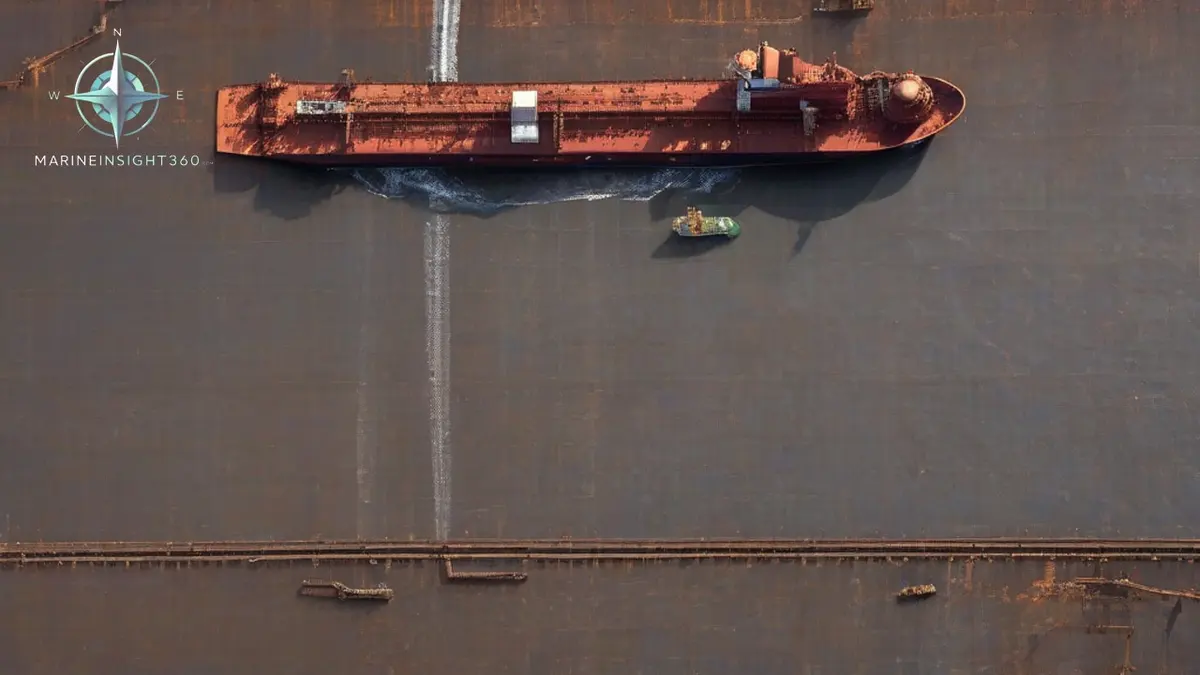
For Gulf states, Strait of Hormuz uncertainty casts a long shadow over every transit decision. A ceasefire on paper does not restore the two things shipping needs: insurable passage and a position fix you can trust. Around 20 percent of global oil supply moves through the strait, and normal traffic runs at roughly 138 vessels a day. During the worst of the recent disruption, confirmed commercial transits fell to single digits in 24 hours.
That risk is priced in London, where war risk underwriters reset Gulf premiums, and reported through UKMTO in Dubai.
The practical question for an owner is not whether the strait is open. It is whether a laden transit can be insured, navigated and paid for without voiding a policy or breaching a sanctions rule.
What a Hormuz transit costs once risk is repriced
War risk cover is the sharpest signal. Premiums have run at about 4 percent of a vessel's insured value for a seven day period, against a pre-crisis level near 0.001 percent. On a mid-size product tanker that turns a routine line item into a figure comparable to the freight itself. Several underwriters suspended quoting altogether rather than price the exposure.
Owners respond in a predictable order. They raise freight, cut quote validity to hours, demand charterer indemnities for the war risk premium, and finally decline the voyage. Charterers see the same thing as delivered cargo cost, which is why refiners far from the Gulf feel a Hormuz problem within days.
The clause that can strand a transit decision
A more awkward problem sits inside the wording. Cover can terminate if the vessel pays a fee, toll or other mandatory charge for passage through the strait. A master ordered to pay in order to proceed therefore faces a choice between the transit and the policy, with sanctions exposure sitting behind both options. That is a commercial and legal decision, not a bridge decision.
It needs to go to the office and the club before the ship is committed to the passage.
Navigating with degraded satellite positioning
GNSS interference in the Gulf and the approaches to Hormuz has affected more than a thousand ships in documented episodes, alongside AIS anomalies and vessels going dark. Jamming removes the fix, which is obvious and manageable. Spoofing is worse, because the receiver keeps producing a confident position that is wrong, and the ECDIS, the AIS transmission and the collision avoidance picture all inherit the error.
Traffic in the strait runs through a two lane traffic separation scheme inside territorial waters, with limited sea room and heavy crossing traffic. A false position there is a grounding or a collision, not an inconvenience.
Bridge practice that survives a jamming event
- Run radar parallel indexing against charted headlands continuously through the strait, so the primary position check never depends on satellites.
- Cross-check the ECDIS position against the radar overlay rather than against the AIS picture, and keep gyro and speed log as independent inputs.
- Take visual bearings and use the echo sounder against charted depth contours. Both still work when the constellation does not.
- Treat other ships' AIS positions as unverified. Acquire targets on radar before making any collision avoidance decision.
- Report interference with position, time and duration to UKMTO and to the flag state. The United States Coast Guard Navigation Center also takes GPS interference reports, and that record builds the warning picture for the ships behind you.
The diversion arithmetic
Hormuz has no practical sea alternative. Pipelines that bypass the strait exist but carry a fraction of the volume that transits it, so a closure cannot be routed around the way a Suez problem can be routed via the Cape. That asymmetry is why Gulf producers treat strait uncertainty as an existential trade question rather than a routing inconvenience.
For operators outside the Gulf, the exposure runs through bunker prices, crude and product tanker rates, and LNG delivery schedules. A sustained transit slowdown pulls tonnage out of other trades and lifts rates on routes with no direct connection to the Middle East.
What a ceasefire does and does not fix
A ceasefire reduces the chance of a direct strike on shipping. It does not immediately restore war risk pricing, because underwriters price the tail risk of resumption. It does not stop electronic interference either, which persists as a background condition long after the shooting stops.
Transit counts recover faster than premiums, and premiums recover faster than crew willingness to sign for Gulf voyages. Owners planning Gulf employment should assume degraded navigation as the baseline, confirm war risk cover in writing for the specific transit window, and give masters a written escalation route for any demand for payment to pass. Our Shipboard Operations section covers passage planning under satellite denial in more detail.
Spoofing fails in a specific sequence. The receiver keeps a confident fix, so the ECDIS raises no position alarm while the ship's own AIS broadcasts the false position to everyone around it. Track control steers to the corrupted line. The first real symptom is often a radar picture that will not line up with the chart, and by then the ship is off track.
The bridge error that follows is human. Faced with a radar and chart mismatch, watchkeepers commonly resolve it in favour of the electronic fix, because that is the display they have trusted for years. Interference episodes also produce alarm floods that mask the one alarm that mattered. Crews who practise a manual fix before entering the strait find the discrepancy earlier.
Sources and further reading
- Critical Threat Persists in Hormuz as Attacks and GPS Jamming Shake Shipping
- Ships face 4,000-times higher insurance costs to cross Strait of Hormuz
- GNSS Interference Complicates Navigation as Hormuz Shipping Disruption Deepens
- What stopping war-risk insurance in the Strait of Hormuz tells us
What to read next
Recommended Reading
What Does SS Mean on a Ship? Steamship, and Every Other Prefix Explained
SS on a ship means steamship, a vessel driven by steam engines. What the prefix tells you, why modern ships use MV instead, and what RMS, HMS and USS mean.
Washington and Tehran Trade Threats Over the Strait of Hormuz: The View From the Bridge
Washington and Tehran trade threats over the Strait of Hormuz while traffic sits at record lows. What the chokepoint looks like from a ship planning a transit.
Iran Imposes New Shipping Rules in the Strait of Hormuz: What Transit Now Requires
Iran now demands 48 hours notice, insurance proof and a 40 question form to transit the Strait of Hormuz. How the rules clash with UNCLOS transit passage.