
Washington and Tehran Trade Threats Over the Strait of Hormuz: The View From the Bridge
Washington and Tehran trade threats over the Strait of Hormuz while traffic sits at record lows. What the chokepoint looks like from a ship planning a transit.
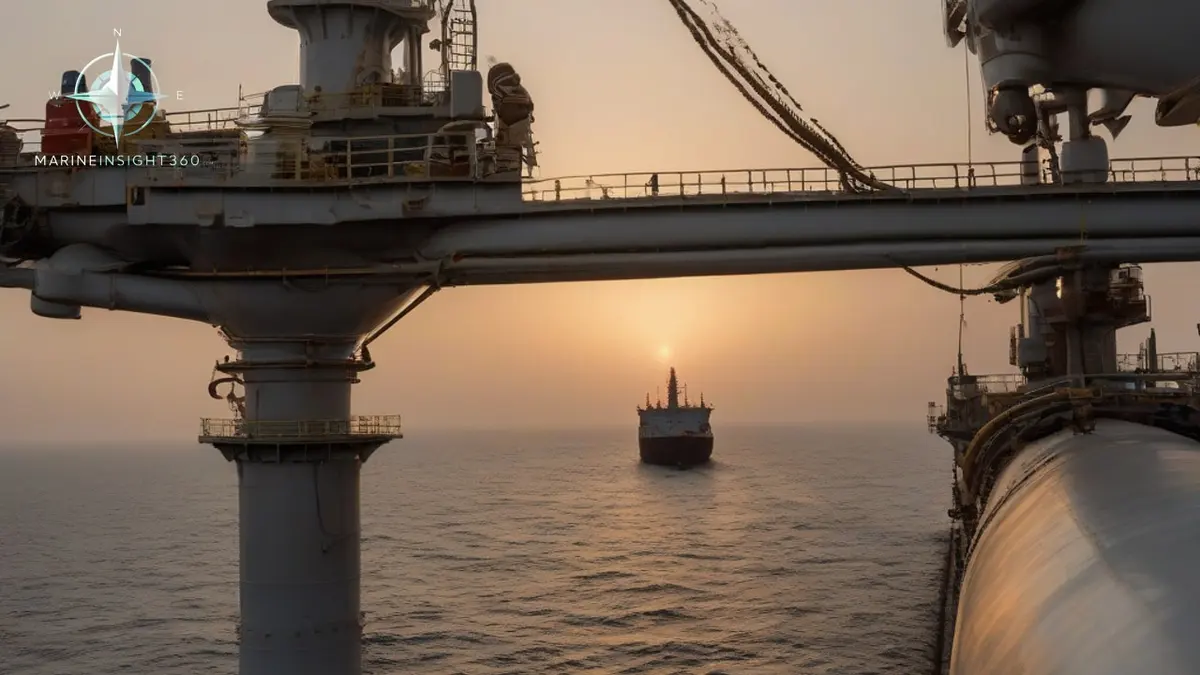
Washington and Tehran trade threats over the Strait of Hormuz because there is no way to route around it. The strait is about 21 nautical miles (39 km) wide at its narrowest point. The traffic separation scheme that carries commercial shipping lies inside Omani territorial waters off the Musandam peninsula. Inbound and outbound lanes run about two miles wide, separated by a two mile buffer. A ship on a Strait of Hormuz transit cannot open her distance from either shore.
She cannot manoeuvre freely outside the lanes, and she cannot pick a longer but safer track. That geography is the whole argument.
Since Iran largely blocked traffic on 28 February 2026, after the United States and Israel opened an air campaign against Iran, transits have collapsed. Tanker traffic initially fell by around 70 percent and more than 150 ships anchored outside the strait rather than enter it.
What the traffic numbers have done in 2026
The pattern has been closure, partial reopening, and closure again. A ceasefire in early April and a memorandum of understanding in mid-June reopened the strait toll free from around 17 June, before that arrangement broke down in early July following attacks on commercial vessels.
By late July, transits of ships with no Iranian link had dropped to 25 in a week from 108 the week before, with inbound traffic down to eight vessels and total traffic roughly 90 percent lower year on year. In mid-August traffic remained low while consuming countries drew down oil stockpiles.
Attacks on merchant ships have accompanied the political exchanges. Multiple Greek-owned Dynacom Tankers vessels were reported struck within 24 hours between 19 and 20 July, and a separate tanker was attacked near Oman, forcing the crew to abandon. War risk premiums have been reported at around 30 times normal levels.
What a transit decision now involves
The decision is no longer a navigational one made by the master alone. It is a commercial, insurance and crewing decision that arrives on the bridge already half made.
- War risk cover. Underwriters list the area and quote a premium per transit, usually as a percentage of hull value. At elevated rates, a single transit premium can exceed the freight earned on the voyage, which is what actually stops ships rather than any legal prohibition.
- Charterparty clauses. War risk clauses of the CONWARTIME and VOYWAR type give owners a right to refuse an order into a dangerous area and to deviate. Whether the charterer or the owner carries the additional premium and the crew bonus is set by the fixture, not by custom.
- Crew consent. Collective bargaining agreements covering designated warlike operations areas typically give seafarers a right to refuse the passage, repatriation at company expense, and bonus and compensation entitlements. Sailing without settling this is how a crew change turns into a dispute at the next port.
- Flag and cargo profile. Ownership, flag, previous port calls and cargo origin all shape a ship's perceived affiliation. Operators are treating that profile as a risk input, and it is one reason traffic has split between ships that keep transiting and ships that will not.
Bridge practice in a high threat strait
Where a transit does go ahead, the practices below are what experienced operators in the region apply.
- Transit at the highest safe speed the lane and traffic allow, with the engine on immediate manoeuvring notice and steering on hand.
- Double the bridge watch, post lookouts with binoculars aft as well as forward, and keep the radar tuned for small fast contacts rather than only for shipping.
- Report to UKMTO on entry to the reporting area and maintain the reporting routine, so the ship is a known track before anything happens.
- Brief the AIS policy in advance and log the master's decision and reasoning if transmission is reduced or stopped.
- Secure and light the accommodation, close and lock external doors below bridge level, and rehearse the muster and citadel routine with the whole crew, including riding staff.
- Plan the timing so the narrowest section is not transited in reduced visibility if it can be avoided, and avoid loitering in the approaches.
Why cargoes cannot simply take another route
The pipeline alternatives are real but small relative to seaborne volumes. Saudi Arabia can move crude westward across the peninsula to the Red Sea, and the UAE can move crude to Fujairah outside the strait. Neither route, nor both together, replaces the volume that normally moves through Hormuz, and neither helps the refined product, LPG and LNG trades that also rely on it.
That is why a throttled strait shows up first as tanker rates and insurance costs, then as stockpile drawdown, and only later as physical shortage.
What to watch
Three indicators tell an operator more than the political headlines. The first is the war risk premium quoted for a single transit, which is the market pricing the risk in real time. The second is the daily transit count for ships with no Iranian affiliation, which shows whether owners are actually accepting that price.
The third is whether attacks are hitting ships of a particular flag or ownership profile or are indiscriminate, because that determines whether a ship can manage the risk at all or only accept it.
For crews already fixed for the region, the immediate action is narrower: get the war risk position, the crew entitlements and the refusal rights in writing before the ship is in the approaches and the decision has to be made in an hour.
Sources and further reading
- Strait of Hormuz Brief, 21 July 2026 - Lloyd's List Intelligence
- Oil tankers face worst case scenario in Hormuz as Iran steps up attacks on ships - CNBC
- Strait of Hormuz traffic remains low as world burns through oil stockpiles - CNN
- Strait of Hormuz report, March 2026 - Howden Re
What to read next
Recommended Reading
For Gulf States, Strait of Hormuz Uncertainty Casts a Long Shadow Over Every Transit Decision
Transit counts, war risk premiums and GPS jamming in the Strait of Hormuz, and how owners and masters weigh a passage against a diversion.
Are Reports of a Strait of Hormuz Closure Overstated?
Reports of a Strait of Hormuz closure are overstated. Here is what transit data, war risk premiums and the legal position actually show for shipping.
Iran's Threat to Burn Ships in the Strait of Hormuz: What It Means at Sea
Iran has threatened to burn ships in the Strait of Hormuz and mined the corridor. What the threat means for transit planning, war risk cover and crews.