
Parts of a Boat: The Terms Every Crew Member Uses
A working guide to the parts of a boat: hull, keel, bow, stern, transom, gunwale, rudder and the direction terms that keep orders unambiguous on the water.
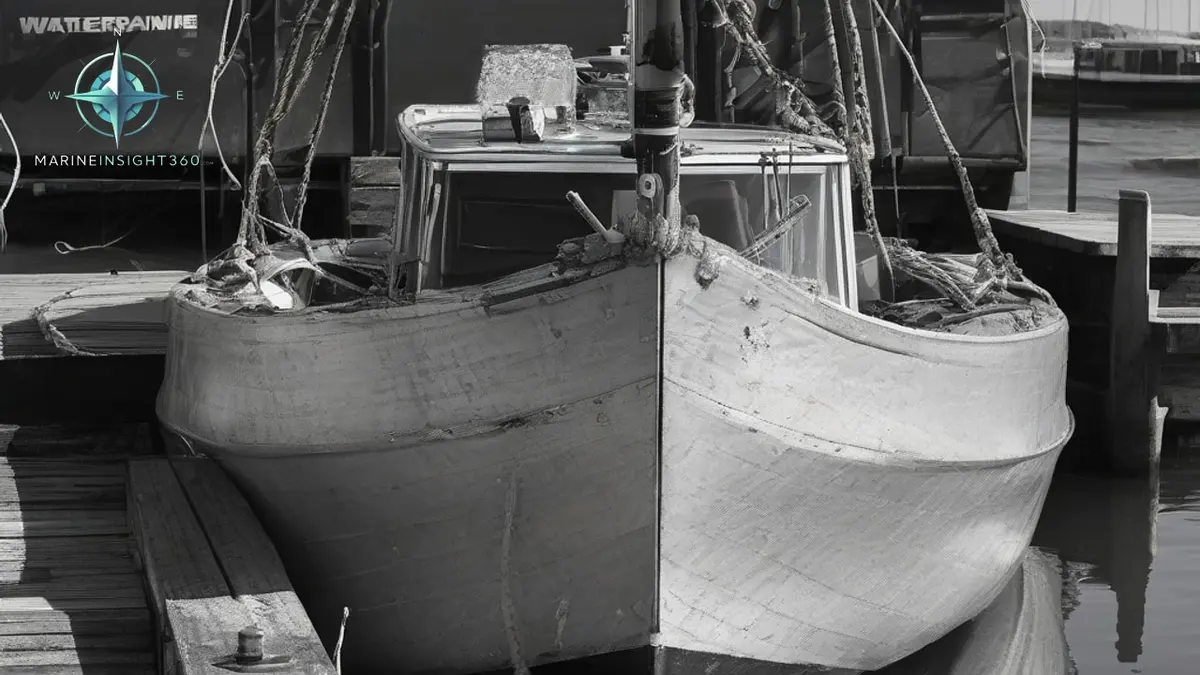
The parts of a boat divide into three groups: the structure that keeps water out and the boat upright, the fittings that let it be steered and secured, and the direction words that describe where everything is. Bow is the front, stern is the back, port is the left side looking forward and starboard is the right. Those four terms alone remove most of the ambiguity from a shouted order on a moving deck.
The vocabulary does not change with the flag. It is the same on an RYA Day Skipper course in the Solent, a USCG licence exam and a Transport Canada small vessel ticket.
Direction terms first, because they never change
Port and starboard are fixed to the boat, not to the person speaking. Left and right depend on which way someone happens to be facing, which is exactly the wrong property in an emergency. A helmsman ordered hard to starboard turns the same way whether he is facing forward, aft or sideways.
The rest of the direction set works the same way:
- Forward and aft describe movement toward the bow or the stern.
- Ahead and astern describe positions outside the boat, in front of or behind it.
- Amidships is the midpoint of the boat in the fore-and-aft sense. Said of the helm, it means the rudder is centred.
- Athwartships means across the boat, at right angles to the centerline.
- Windward is the side the wind is coming from, leeward the sheltered side.
- Inboard and outboard mean toward the centerline and away from it.
These terms carry into the collision regulations. A power-driven vessel shows a red sidelight to port and a green sidelight to starboard, each covering an arc of 112.5 degrees, with a white sternlight covering 135 degrees astern. Reading another vessel's lights at night is an exercise in the same vocabulary.
The structural parts
The hull is the watertight body of the boat. It provides buoyancy and carries every load the boat experiences. Hull shape decides the boat's behavior more than any other single factor, which is why displacement, planing and semi-displacement hulls handle so differently in a seaway.
The keel runs along the bottom centerline. On a working boat it is a structural backbone and it resists sideways slip, which is what sailors mean by tracking. On a sailing yacht it is also ballast, carrying weight low to keep the boat upright.
The stem is the forward edge of the hull at the bow, where the two sides meet. The transom is the flat surface across the stern, and on a small powerboat it carries the outboard motor and its thrust loads.
The gunwale , pronounced gunnel, is the top edge of the hull side where it meets the deck. It is the strongest longitudinal edge on a small boat and the natural place for cleats, fairleads and rowlocks.
Bulkheads are transverse partitions. They stiffen the hull and, when watertight, they limit flooding to one compartment. Frames and stringers are the transverse and longitudinal stiffeners between them.
The bilge is the lowest internal part of the hull where water collects, and the bilge pump is the fitting that removes it. Checking that the bilge is dry and the pump works is the first job of any pre-departure check.
The measurements attached to those parts
- Length overall is the extreme fore-and-aft length, used for berthing and registration.
- Beam is the maximum width, which sets initial stability and trailer legality.
- Draft is the vertical distance from the waterline to the lowest point of the hull, which decides where the boat can float.
- Air draft is the height from the waterline to the highest fixed point, which decides which bridges the boat can pass under.
- Freeboard is the distance from the waterline to the deck edge, and it is the margin before water starts coming aboard.
Steering, propulsion and deck fittings
The rudder is a movable blade at the stern. Turning it deflects the water flow and generates a sideways force that swings the stern, which is what turns the bow. On an outboard or sterndrive boat the whole leg pivots instead, so thrust is vectored directly.
The propeller , called the screw at sea, converts engine torque into thrust. The skeg is the fin ahead of or below the propeller that protects it and adds directional stability.
The helm is the steering position, whether a wheel or a tiller. On the deck, cleats are the fittings that mooring lines are made fast to, fairleads guide those lines over the gunwale without chafe, and the samson post or bow eye takes towing and anchoring loads.
Why the vocabulary is worth learning properly
Precise terms shorten instructions and reduce error under pressure. Fend off forward on the port quarter is unambiguous. Push over there on the left is not, and on a boat swinging onto a berth in wind, the difference is a damaged hull.
The same vocabulary is the entry requirement for every certificate above recreational level. Boating safety courses, national skipper tickets and the deck watchkeeping syllabus all assume it. Learn the parts on a small boat and the terms scale straight up to a ship, where the same words describe a structure a hundred times larger.
The fittings that fail are the ones nobody looks at. Cleats pull out of the deck when they were bolted through without a backing plate, and the load that finds the weakness is usually a snatch on a mooring line in a swell. Transoms on outboard boats go soft where water tracks into the core through unsealed bolt holes, and the first symptom is flexing under thrust.
Bilge equipment has its own pattern. Float switches jam on debris so the pump does not start, or the discharge hose loops below the waterline and siphons back. Below the sole, seacocks and hose clamps corrode quietly, and a failed clamp on a raw water hose sinks boats at their berths more often than heavy weather does. Check the bilge dry, then check why.
Sources and further reading
- Parts of a Boat: Boating Terminology - BOATERexam
- Learning the Different Parts of a Boat - Rightboat
- Parts of a boat: Bow and Stern, Starboard and Port - AceBoater
What to read next
Recommended Reading
What Does SS Mean on a Ship? Steamship, and Every Other Prefix Explained
SS on a ship means steamship, a vessel driven by steam engines. What the prefix tells you, why modern ships use MV instead, and what RMS, HMS and USS mean.
What Is the Largest Boat in the World? Every Record That Counts
What is the largest boat in the world? The record ships by gross tonnage, length and passenger capacity, from Pioneering Spirit to Icon of the Seas.
Two Crew Members Seriously Injured in Explosion on Tanker at Ireland's Second Largest Port
An explosion aboard the chemical tanker Bow Hercules at Shannon Foynes seriously injured two crew members. What the case shows about gas cylinder safety.