
How Deep Is the Arabian Sea? Depths, Ridges and What They Mean at Sea
The Arabian Sea reaches about 5,803 m (19,038 ft) at Wheatley Deep and averages roughly 2,734 m. Here is what its bathymetry means for ships working it.
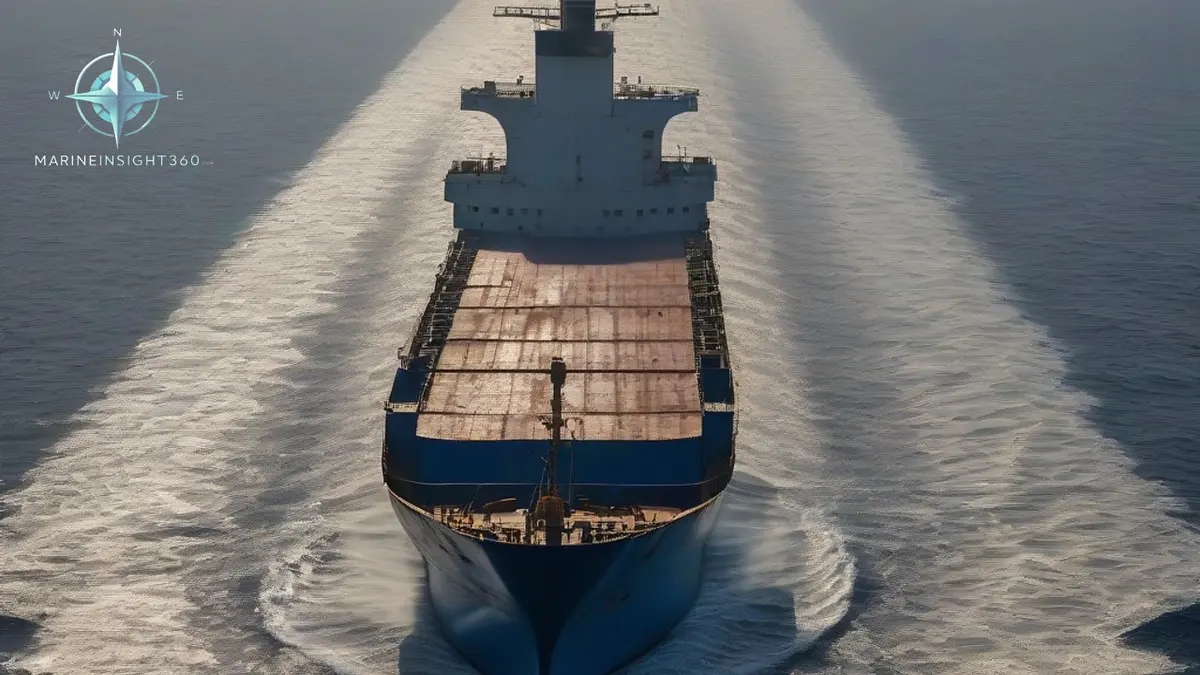
How deep is the Arabian Sea? Its maximum depth is about 5,803 meters (19,038 ft), recorded at Wheatley Deep, and its mean depth is roughly 2,734 meters (8,970 ft). Most of the basin exceeds 2,990 meters, and deep water runs close inshore around much of the margin. Published maxima vary between sources, with some citing values closer to 4,652 meters. Those differences reflect different survey vintages and different definitions of the basin's limits.
What matters more than the single deepest number is the shape of the basin. This is a deep, steep-sided sea with narrow continental shelves along most of its western and southern edges, which changes what ships can and cannot do there.
The main depth figures
- Maximum depth: approximately 5,803 m (19,038 ft) at Wheatley Deep, with lower values reported by some sources.
- Mean depth: approximately 2,734 m (8,970 ft).
- Typical basin depth: more than 2,990 m across most of the sea.
- Carlsberg Ridge central valley: around 3,600 m (11,800 ft) below the surface.
Why the deep water comes so close to shore
The Arabian Sea sits over an active spreading system. The Carlsberg Ridge runs across it from southeast to northwest, split lengthwise by a central rift valley, and the seabed drops away steeply from the coasts on either side. Deep water reaches close to the shore almost everywhere except the northeast, off India and Pakistan, where a broad shelf built from river sediment extends much further out.
That northeastern shelf is fed by the Indus, whose sediment has built one of the largest submarine fans on earth. The contrast is stark: a vessel can be in several thousand meters of water within a short distance of the Arabian peninsula and Somali coasts, then cross onto a shelf shallow enough for anchoring off the approaches to Karachi.
What the depth means operationally
Deep water close inshore has direct consequences for ships working the region.
- Anchoring is not an option in most of the sea. A vessel with engine trouble off Oman or Socotra cannot simply anchor and wait, which shapes how masters plan for machinery contingencies and drifting.
- Emergency towage is harder. Deep water means longer scope, heavier gear and slower connection, and the nearest capable salvage tugs are concentrated around Fujairah, Salalah and the Gulf.
- Submarine cable and pipeline routes follow the shallower margins and the shelf, which is why cable damage clusters near anchorages rather than in the deep basin.
- Under-keel clearance is a non-issue offshore but becomes critical the moment a vessel crosses onto the northeastern shelf or approaches the Gulf of Kutch and the Indus delta.
The oxygen minimum zone
The Arabian Sea holds one of the thickest and most intense oxygen minimum zones anywhere in the ocean, a mid-water layer where dissolved oxygen falls close to zero. It sits below the sunlit surface layer and extends over a large part of the basin.
This is not an abstract detail. It concentrates fish and marine life into the shallower oxygenated layer, drives seasonal blooms that turn the water turbid, and it matters directly to ballast water treatment. Ultraviolet-based ballast systems lose treatment capacity in bloom-affected water, and the Arabian Sea produces significant blooms during and after the monsoon transitions.
Monsoon conditions over the deep basin
Depth alone does not make a sea difficult; weather does. The southwest monsoon from roughly June to September drives sustained strong winds and heavy swell across the open Arabian Sea, with the Somali coast experiencing some of the most persistent conditions found anywhere. The northeast monsoon from about November to March is far gentler.
Deep water means long-period swell with nothing to break it, so vessels ballasting light across the basin during the southwest monsoon face slamming, propeller emergence and parametric rolling risks that a shallower sea would moderate. Cargo securing and ballast planning for a westbound light-ship passage in July is a different problem from the same passage in January.
Where the Arabian Sea fits in world trade
Roughly the entire Gulf hydrocarbon export flow crosses this basin, along with container traffic between Asia, the Suez Canal and Europe. The northwestern corner leads to the Strait of Hormuz, the western corner to the Gulf of Aden and Bab el-Mandeb, and the southern boundary opens to the Indian Ocean.
That geography is why a body of water most people cannot place on a map carries a disproportionate share of the world's tanker tonne-miles, and why its depth, weather and security conditions get planned around rather than reacted to. The Ocean and Environment section of Marine Insight 360 covers regional sea conditions and their operational effects in more detail.
Ships crossing the basin are working inside a maritime security regime as well as a weather one. The Voluntary Reporting Area administered by UKMTO covers the Arabian Sea, and vessels report their movements so that naval forces know where they are. Industry best management practice for the region is published jointly by shipowner associations and the navies operating there.
The failures the depth creates are slow ones. A main engine breakdown off Socotra leaves a ship drifting in water far too deep to anchor, with the nearest capable tug at Salalah or Fujairah and days of drift to account for. Ballast treatment suffers too: monsoon blooms clog filters and cut ultraviolet dose, and the discharge record is what an inspector reads.
Sources and further reading
What to read next
Recommended Reading
What Does SS Mean on a Ship? Steamship, and Every Other Prefix Explained
SS on a ship means steamship, a vessel driven by steam engines. What the prefix tells you, why modern ships use MV instead, and what RMS, HMS and USS mean.
Marine Scrubbers: Types, How They Work and Where the Rules Are Tightening
How marine scrubbers strip sulfur from ship exhaust, the difference between open-loop, closed-loop and hybrid systems, and where washwater discharge is banned.
10 of the World's Greatest Natural Harbors, and Why They Matter
What makes a natural harbor, and ten of the world's greatest: Sydney, San Francisco, New York, Rio, Halifax and more, with the geography that shelters them.