
How To Build A Green Supply Chain?
Green supply chains , also referred to as sustainable supply chains, have garnered increasing attention in recent years, with most large organizations…
How To Build A Green Supply Chain?
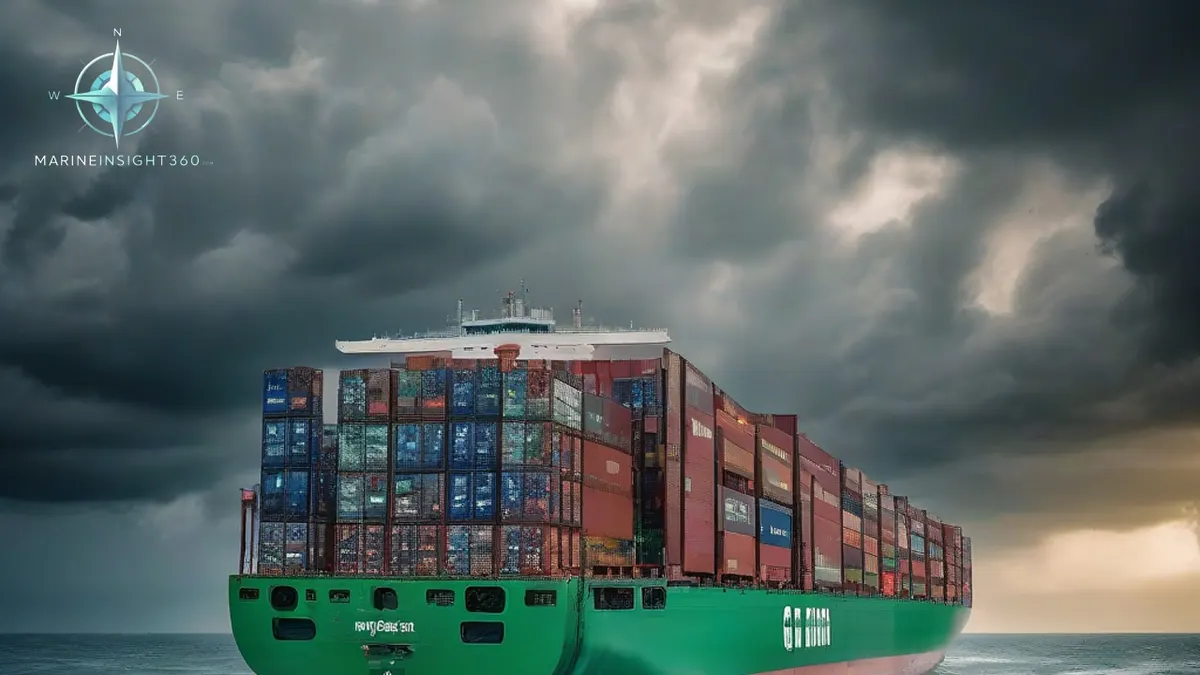
Green supply chains, also referred to as sustainable supply chains, have garnered increasing attention in recent years, with most large organizations launching ambitious green supply chain programs.
Traditional supply chains, encompassing international transportation, domestic transportation, warehousing, packaging, and other links, are crucial to international trade. Their importance, scale, and complexity are increasing with the expansion of globalization. Every activity and link in the supply chain generates emissions.
Sustainable or Green Supply Chain
The extent of emissions in each link depends on factors such as the mode of transportation, energy source, and cargo planning and transportation efficiency.
For example, air transport is the most polluting mode of transportation, while water transport is the most environmentally friendly mode of transportation. However, due to the huge volume of ship transportation, the total emissions are extremely high (if international transportation were regarded as a country, it would be the world's sixth-largest greenhouse gas emitter, surpassing Germany). Similarly, although some ships now use clean fuels, a large number of ships, trucks, and other vehicles still rely on fossil fuels.
Geopolitical factors and military conflicts have exacerbated this situation. For example, Western companies are shifting their production capacity from China. While this is a reasonable sourcing strategy, it is not optimal given that other manufacturing hubs (e.g. Vietnam, Thailand, Mexico, etc.) rely on Chinese factories for the raw materials and components needed to produce the final product.
This increases the total transportation distance as components are shipped from China to different countries, and the final product is shipped to the European and American markets. This, in turn, increases emissions. Similarly, the ongoing military conflict in the Middle East is an example where increased threat levels (e.g., attacks on commercial shipping) have forced shipping companies to reroute ships on the Asia-Europe trade route via the Cape of Good Hope.
While this route is relatively safe, it is much longer than the traditional Suez Canal route. Longer distances require greater fuel consumption, resulting in increased emissions.
Weather is also an important factor, as lower water levels in major sea passages/routes such as the Panama Canal or the Rhine River reduce ship capacity, resulting in the need to transport more cargo, which in turn increases emissions. More concerning is the shift in transportation modes, where shippers switch from sea to land (using road transport), resulting in the emission of more greenhouse gases.
Designing a green supply chain requires analyzing each link in the supply chain with the goal of reducing its attributable emissions. The ultimate goal is to reduce the carbon footprint of the entire supply chain.
Companies that design green supply chains measure the carbon footprint/emissions of each element and activity in the supply chain and then work to eliminate or reduce these emissions.
The ultimate goal is to ensure that the supply chain is designed with due consideration for the environment and greenhouse gas emissions and to minimize the carbon footprint as much as possible.
How does a green supply chain differ from a traditional supply chain?
The fundamental difference between a traditional supply chain and a green supply chain is that while a traditional supply chain focuses on operational efficiency and commercial viability, a green supply chain prioritizes environmental impact and works to reduce the carbon footprint, both overall and in specific segments, by selecting environmentally friendly options throughout the supply chain.
Supply Chain
The scope of a green, sustainable supply chain encompasses reverse logistics, refurbishment and recycling options, as well as environmentally friendly end-of-life waste disposal planning. This is also known as a circular supply chain.
Advanced Technologies That Ship Operators Can Use For Enhanced Security
Did You Know About World’s Largest Ship Graveyard?
Top 10 Best Mining Ships in the World
What is the CDC in the Merchant Navy?
Steps of Making a Green Supply Chain Steps
Supply Chain Mapping
The first step in designing a green supply chain is to map a comprehensive map of the current supply chain and then assess the carbon footprint and scope of each activity/link. After that, each activity and its associated emissions should be analyzed to identify potential opportunities for emission reduction, while ensuring the commercial feasibility of the proposed changes.
Use biodegradable or environmentally friendly packaging materials to reduce packaging and plastic waste
Packaging is an important way to reduce the carbon footprint, and using environmentally friendly or biodegradable packaging materials is a crucial step in achieving this goal. Additionally, packaging technology can be enhanced to reduce packaging waste and minimize the use of plastic.
Use less polluting modes of transportation.
Exporters and importers can also consciously choose less polluting modes of transportation. Sea transportation is the most environmentally friendly mode of transportation, while air transportation is the most polluting. Therefore, switching from air transportation to sea transportation can significantly reduce emissions.
Similarly, for domestic transportation, road and rail are the two most popular modes, with rail being the less polluting option. While the choice between road and rail transport depends on factors such as connectivity, distance, and origin/final destination, buyers and sellers can prefer rail when possible - it is not only more environmentally friendly but also more cost-effective, especially for long-distance transport.
Such decisions should take into account factors such as additional costs, impact on transit time and schedule reliability, increased road freight costs, additional inventory requirements, and availability of sufficient scheduled transportation capacity.
Using Green Transport Products to Replace Traditional Transport Products
In response to growing customer demand for environmentally friendly logistics and supply chain solutions, transport and logistics service providers are currently expanding their product lines to include green transport options (usually priced higher than standard products).
This allows them to offer customers who are concerned about their carbon footprint the option of choosing environmentally friendly products, thereby helping them reduce the carbon footprint of their supply chain.
These green transport products include:
- Sea-Air Transport: When the goods are not time-sensitive, exporters can use sea-air transport instead of full air transport.
- Inland Water Transport: When inland transport options are available, exporters and importers can choose inland transport instead of land transport.
- Green fuel: Exporters can book services or container ships that use less polluting green fuels instead of traditional high-sulfur diesel.
Work with carriers to create customized green shipping solutions.
In general, large corporations/multinationals are increasingly aware of the need to reduce the carbon footprint of their supply chains and have the resources to redesign them and bear the associated costs. The sheer scale of these manufacturers, exporters, or importers makes them key customers for transport and logistics service providers.
These large customers often work with container shipping lines, which provide customized green shipping solutions based on their customers' health, safety, and environmental priorities.
In turn, enables shipping lines to invest in sustainable innovations and design environmentally friendly products, ensuring that there are ready customers for these products. Shipping lines can then also expand their product range to serve smaller customers.
Therefore, shipping lines can benefit from reducing Scope 1 emissions without negatively affecting their profit margins. In contrast, customers/exporters/manufacturers can reduce Scope 2 and Scope 3 emissions, resulting in a win-win for both parties.
At first glance, these customized green solutions can include:
1) Using only vessels that use green fuels to carry the customer's cargo.
2) Providing intermodal options that reduce pollution.
3) Using shipping routes that bypass or avoid environmentally sensitive areas.
Use green fuels.
Shipping companies are increasingly turning to biofuels or low-sulfur fuel oil (LSFO) as a fuel alternative to traditional high-sulfur fuel oil (HSFO), which is more polluting. This shift is partly due to laws mandating the use of low-sulfur marine fuels and partly due to consumer preferences for products with a lower carbon footprint.
A powerful combination of commercial and legal considerations has led to the increasing use of clean fuels, which is also reflected in the increasing number of new ships ordered by shipping companies that are capable of using green fuels.
Green Fuel Use
Increasingly, shipping companies are choosing to use low-sulfur fuel (LSFO) as a marine fuel, rather than traditional high-sulfur fuel (HSFO), which is more polluting. This shift is partly due to legal mandates for low-sulfur marine fuels and partly due to consumer preferences for products with a lower carbon footprint.
The combination of strong commercial and legal considerations is driving the use of clean fuels, as reflected in the increasing number of new ships ordered by shipping companies that can use green fuels. In the long term, this means that the demand for traditional (polluting) fuels will steadily decline as the global fleet prepares to use alternative fuels.
Electric Vehicles and Electric Rail Networks
In inland transportation, road and inland transport providers are integrating electric vehicles into their fleets.
The rail network is also continuing to transform towards electrification and away from coal. Take the Indian Railways, for example. A large-scale electrification project has helped Indian Railways to electrify 95% of its vast railway network (as of April 2024).
Thus, we are witnessing a clear shift towards clean energy for both rail and road transport.
At the government level, countries such as Germany and Italy are funding rail infrastructure upgrade projects and imposing additional CO2 emission surcharges in the form of truck tolls to encourage the switch from road to rail.
Green Freight Corridors
A relatively new concept is the Green Freight Corridor, which connects two ports to promote emissions reductions by building a comprehensive ecosystem, including appropriate legislation, fiscal incentives, and the provision of green fuels along the way.
Despite the huge potential of the concept, its development has been relatively slow due to the fragile economic environment, market volatility, and weak industry fundamentals.
Sustainable Shipping
A recent notable example is the signing of a memorandum of understanding between Singapore and Australia to establish the Singapore-Australia Green Digital Freight Corridor.
However, green corridors are seen as having great potential, and more stakeholders are exploring this option. Therefore, as the macroeconomic situation stabilizes in the coming months and years, the development of green corridors is expected to accelerate with the support of the industry, government, and consumers.
While most manufacturers and exporters are able to control their scope 1 emissions, they face challenges in reducing their supply chain emissions, primarily because these emissions fall under scope 2 and 3 (not directly controlled by the exporter).
To address this challenge, exporters and importers are increasingly inclined to partner with supply chain partners and transportation and logistics service providers that offer “cleaner” or “greener” services and have a better track record of sustainable operations.
This requires carefully reviewing all available suppliers to find those that are as committed to environmental protection as the exporter/importer and to establish long-term partnerships with them.
From a procurement perspective, this means that manufacturers should consciously seek out and contract with suppliers that have been proven to be environmentally friendly.
Companies can look for suppliers that have green certifications or have been certified for environmentally friendly practices.
Carbon offsets
Container shipping companies have launched carbon offset programs, whereby they invest, donate, or allocate sufficient funds on behalf of their customers to offset the carbon emissions generated by shipping goods.
For example, shipping companies can work with an organization that plants a number of trees equal to the carbon footprint generated by the transportation of goods.
While this does not directly reduce the carbon footprint, it will at least offset the resulting emissions and can be used in situations where green shipping options are not yet available.
Choose components and raw materials carefully.
This is a corollary of choosing environmentally friendly suppliers. When sourcing raw materials and components, companies should consciously ensure that the inputs they select or use are relatively low in pollution.
Incorporate recycling into the company's green supply chain management.
Supply chains should be redesigned to minimize waste and maximize the recycling of as many materials as possible. Reducing waste will reduce raw material consumption, while recycling will extend the shelf life of raw materials, thereby reducing demand for new materials. Utilize technologies such as artificial intelligence, machine learning, automation, and robotics to their full potential.
Integrate recycling into your company’s green supply chain management.
Supply chains must be redesigned to minimize waste and maximize the recycling of as much material as possible. Reducing waste means consuming fewer raw materials, while recycling can extend the shelf life of raw materials and reduce demand.
Leverage technologies such as artificial intelligence, machine learning, automation, robotics, and planning tools.
Manufacturers and transportation service providers can utilize technology to enhance operational efficiency, thereby reducing waste through meticulous planning, precise forecasting, and process automation.
For example, container shipping companies utilize route optimization software to determine the most optimal routes for their ships, taking into account weather forecasts, tidal patterns, and other relevant factors. This helps reduce fuel consumption and emissions.
The future of green supply chains
Growing corporate environmental awareness and increasingly stringent regulations will help shift the market steadily toward green supply chains and environmentally friendly shipping.
While the International Maritime Organization has set a goal of achieving net-zero emissions by 2050, large container shipping companies have set even more ambitious goals.
Maersk has committed to reducing its emissions by 70% by 2030 and achieving net-zero emissions by 2040. Hapag-Lloyd aims to operate a zero-emission fleet by 2045.
By collaborating with like-minded manufacturers and exporters, these companies will gradually become more environmentally friendly, ultimately achieving a transition to sustainable, eco-friendly operations and products.
Recommended Reading
Maersk Joins Japanese Green Methanol Bunkering Network
Maersk Joins Japanese Green Methanol Bunkering Network: ports, trade and shipping-market context for US, UK, Canada, Australia, Singapore and European...

Iran retaliates with missiles and drones, defying Trump’s warning
Learn iran with practical maritime context, safety checks, operational guidance and related resources for global shipping readers.
Hapag-Lloyd Invests in APM Terminals Rotterdam to Drive Growth
Hapag‑Lloyd’s new stake in APM Terminals Rotterdam aims to expand capacity, improve hinterland links and enhance crew efficiency in Europe’s busiest port.