
Orion's Belt Stars & Their Importance
Orion's Belt is one of the most recognizable asterisms in the night sky, captivating stargazers and astronomers alike with its beauty and significance.
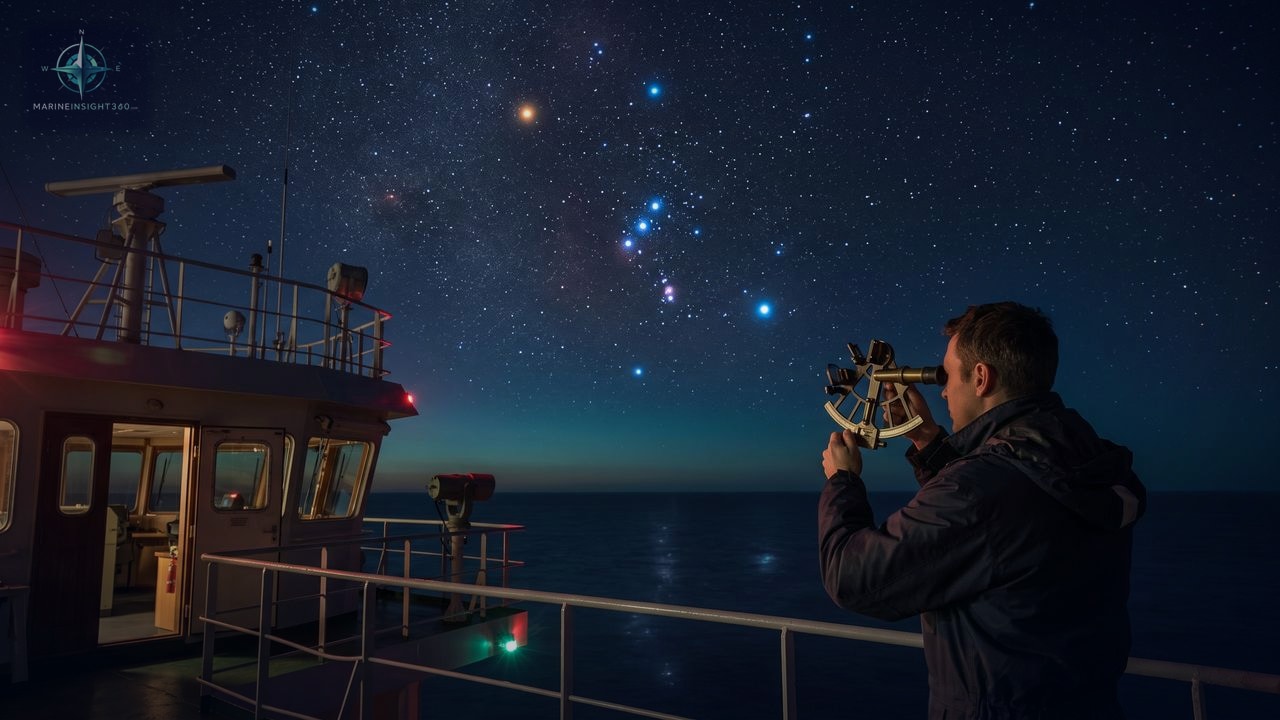
What Are Orion’s Belt Stars and Why Do They Matter?
Orion’s Belt is the short, straight line of three hot blue stars across the middle of the constellation Orion: Alnitak, Alnilam and Mintaka. All three lie roughly 1,200 to 1,300 light‑years from Earth. For a navigator the belt is one of the easiest patterns in the sky to find, and it points the way to several bright navigational stars around it.
The Three Stars That Make Up Orion’s Belt
Alnitak, the triple system
Alnitak, the eastern (left‑hand) star of the belt, is about 1,260 light‑years away. Its main star is a blue supergiant. Alnitak is a triple system: a close pair of stars, Aa and Ab, with a third star, B, that takes about 1,500 years to orbit them.
Alnilam, the brightest member
Alnilam, the middle star, is a single B0 blue supergiant about 1,250 light‑years away. It gives out roughly 375,000 times as much light as the Sun and is the brightest of the three to the naked eye.
Mintaka, the star on the equator
Mintaka, the western end of the belt, is about 1,200 light‑years away. What looks like one star is a system of several, led by an O‑type blue giant. The innermost pair orbit each other every 5.7 days and eclipse each other twice per orbit, so Mintaka dims slightly at regular intervals.
Mintaka is the bright star system closest to the celestial equator, which matters to navigators: it rises almost exactly due east and sets almost exactly due west from any latitude.
Why Belt Stars Matter to Mariners
Celestial navigation: a time‑honoured tool
Because the belt sits on the celestial equator, it can be seen from almost anywhere on Earth at some point in the year. Mariners have long used it to orient themselves and as a pointer to other stars. Follow the line of the belt to the south‑east and you reach Sirius; follow it the other way and you come to Aldebaran. Betelgeuse and Rigel, both navigational stars, sit either side of it in Orion’s shoulder and foot.
Trade‑Offs: Celestial vs. Electronic Navigation
- Celestial navigation needs no satellites or power supply, so it remains a backup when GPS is lost or jammed.
- Using the stars properly takes practice with the sextant, the almanac, accurate time and corrections for refraction and dip.
- A star sight and its reduction take far longer than reading a GPS position, so on most ships today it is done for training, for checks and as a fallback.
When working with the belt, don’t confuse its three stars with Betelgeuse or Rigel, which are much brighter and lie well off the line. Stars low on the horizon are lifted by refraction, so altitudes taken close to the horizon need care. And the belt is a pointer, not a fix on its own: a position needs sights of two or more bodies, or a body crossed with another line of position.
Practical Tips for Using Belt Stars at Sea
When to Look
In the northern hemisphere Orion is a winter constellation. From November to February it rises in the east in the evening and stands highest in the southern sky around midnight in December. South of the equator it appears in the northern sky and upside down from a northern observer’s view.
Equipment Choices
- A pair of 10×50 binoculars shows the belt and the faint stars around it.
- A small telescope of 4 to 8 inches aperture gives a good view of the Orion Nebula (M42), in the sword just below the belt.
- A camera with a telephoto lens, or a dedicated astrophotography setup, can pick up the faint glow of the Orion Nebula and the Horsehead Nebula near Alnitak.
Integrating with Modern Training
Maritime academies can use the belt in celestial navigation classes. Cadets learn to identify it and the stars it points to, take bearings and altitudes, and compare their results with GPS.
Beyond navigation: cultural and scientific significance
Historical Myths and Maritime Lore
In Greek mythology Orion is a hunter, and the three stars are his belt. A popular but disputed theory, the Orion correlation theory, claims the three pyramids of Giza were laid out to match the belt; most Egyptologists reject it. The Yolŋu people of northern Australia see Orion as Djulpan, a canoe, with the belt stars as three brothers sitting in it.
Modern astronomy: what the stars tell us
The spectra of Alnitak, Alnilam and Mintaka show their temperature, chemical make‑up and motion. Stars this massive live only a few million years and will probably end as supernovae, so astronomers study them to learn how massive stars evolve and how they enrich the gas between the stars. The Orion Nebula (M42) below the belt is a region where new stars are forming, and the Horsehead Nebula near Alnitak is a dark cloud popular with astrophotographers.
Inspiration for Space Exploration
NASA’s Orion spacecraft, built to carry crews beyond low Earth orbit, takes its name from the constellation.
Recommended Reading

The Importance of Port Security
Introduction: Why Port Security Can No Longer Be an Afterthought Every single day, more than 90% of the world's traded goods pass through ports. These...

Importance of Laying a Ship's Keel
Laying a keel is an important date in ship history as it represents the birth of a ship.

Diwali at Sea: Far from Home, Together as One Crew
What Diwali looks like on a merchant ship: a crew of different faiths and nationalities celebrating together, thousands of miles from home.