
Iran's Threat to Burn Ships in the Strait of Hormuz: What It Means at Sea
Iran has threatened to burn ships in the Strait of Hormuz and mined the corridor. What the threat means for transit planning, war risk cover and crews.
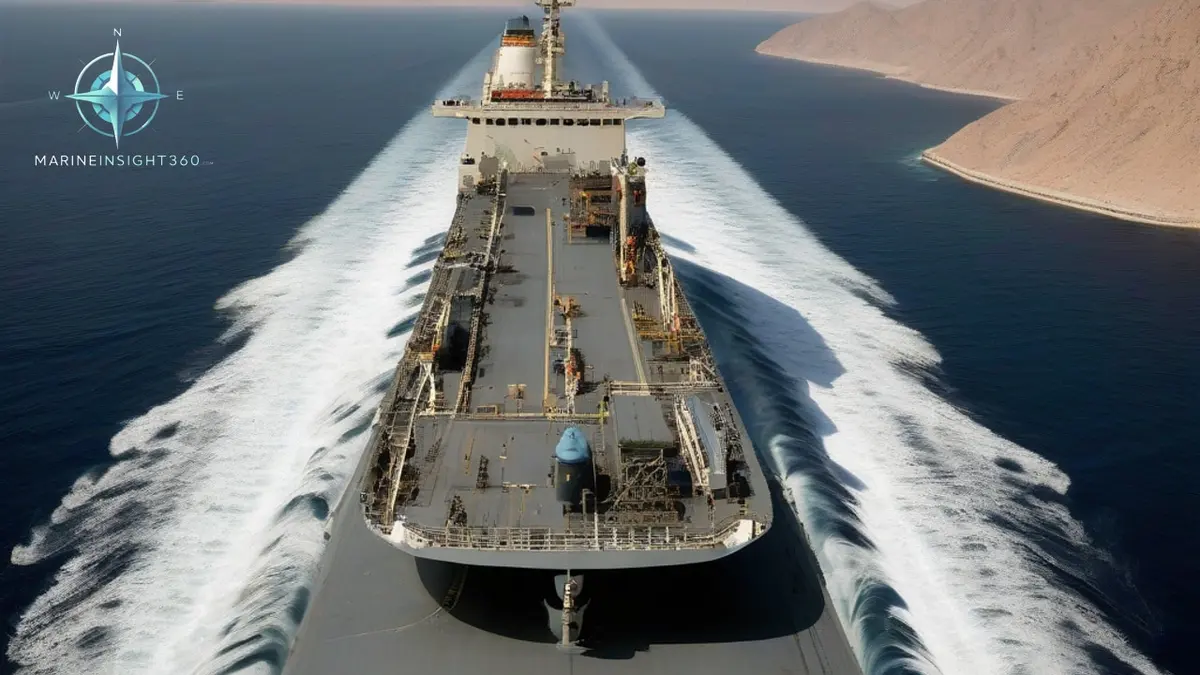
Iran threatens to set ships on fire in Strait of Hormuz transits that are not coordinated with its military. The threat has already been carried out. The Thai cargo ship Mayuree Naree was struck and set ablaze in the strait on 11 March 2026. She was one of several merchant vessels hit by projectiles in the corridor. The Islamic Revolutionary Guard Corps has declared vessels belonging to the United States, Israel or allied states legitimate targets there.
It has also boarded merchant ships and laid sea mines.
Traffic through Hormuz has been largely blocked since 28 February 2026, following the US and Israeli air campaign against Iran. The strait normally carries around 20 percent of global petroleum liquids consumption, so a corridor that stays closed does not stay a regional problem for long.
What the threat actually looks like from the bridge
The risk is layered, and each layer needs a different response. Treating it as one generic threat is how passage plans fail.
- Mines. Moored or drifting ordnance in a corridor with limited sea room and no ability to route around it.
- Standoff attack. Projectiles and drones striking hulls and accommodation, with fire as the primary consequence rather than sinking.
- Boarding and seizure. Armed parties taking control of a ship and directing it into Iranian waters.
- Electronic interference. GNSS jamming and spoofing that puts a false position on the ECDIS while the ship is inside a traffic separation scheme.
- Traffic disruption. UKMTO guidance issued in May 2026 warns of compressed and unpredictable traffic flow at varying speeds, which is a collision risk on top of everything else.
The territorial waters trap
Iran has pushed vessels to route through its territorial waters rather than the established lanes, and has threatened ships that do not coordinate with its military. That creates a genuine dilemma with no good bridge-level answer. A master who complies enters waters where the ship can be detained. A master who refuses accepts the risk of attack.
This has to be settled ashore, in writing, before the transit. The company position on whether to answer an Iranian VHF instruction, and who has authority to vary it, belongs in the voyage instructions and the ship security plan, not in a hurried satellite call off Bandar Abbas.
The advisories that belong in the passage plan
Three sources carry the operational detail, and all three are free.
- UKMTO Industry Guidance on the Safe Management of Vessel Transit through the Strait of Hormuz, issued May 2026, which sets out reporting, watchkeeping and threat conditions.
- US MARAD Maritime Security Communications with Industry advisories, including 2026-001A on military operations and potential retaliatory strikes and 2026-004 on Iranian attacks on commercial vessels.
- Joint Maritime Information Center advisory notes, which carry the current regional risk level.
MARAD advice for US-flagged vessels is a reasonable baseline for anyone: complete a pre-voyage risk assessment, build the protective measures into the ship security plan rather than bolting them on, keep continuous contact with Naval Coordination and Guidance for Shipping, and monitor VHF Channel 16 throughout.
What war risk cover now costs
Insurance has repriced the strait more sharply than any other signal. Reported war risk rates have run at roughly 7.5 to 10 percent of hull value across the tanker segment, against pre-crisis levels near 0.001 percent. On a 270,000 dwt crude tanker valued at about 210 million US dollars, the top of that range works out near 21 million US dollars for a single transit.
Other reporting has put cover at around 4 percent of ship value for a seven-day period, and one estimate described premiums as roughly 4,000 times pre-crisis levels.
Naval escort does not remove the premium. Ships crossing under a US-backed convoy have still needed war risk cover, which is why charterers have been reluctant to fix the transit even when a military window opens.
Crew rights when the area is designated warlike
Where a warlike operations area designation applies, collective agreements negotiated through the International Bargaining Forum generally give seafarers the right to refuse the transit, with repatriation at company cost, alongside an area bonus and enhanced death and disability cover. Operators should tell the crew what designation is in force and what applies before the ship is committed, because the alternative is a refusal at short notice with no relief available.
Crew change planning is the second-order problem. Ports on the Iranian side of the risk are unusable, Gulf crew change hubs are exposed, and the relief who declines the joining flight leaves an existing crew over their contract length.
Measures that still reduce the risk
- Post a dedicated mine and small craft lookout, and plan the transit for the visibility conditions that support one.
- Carry a navigation fallback independent of GNSS: radar parallel indexing on charted fixed marks, visual bearings, and an ECDIS position-check routine that will catch a spoofed fix.
- Rehearse fire response as the primary casualty, with a boundary cooling plan for the accommodation and an alternative muster station clear of the likely impact side.
- Confirm the citadel plan, the ship security alert system test, and the muster count procedure before entry, not on the day.
- Agree the AIS policy with the company in writing, including who may switch it off and how that is logged.
- Report to UKMTO on entry and exit, and keep the reporting schedule even when nothing is happening.
- Vary the timing of the transit rather than repeating a predictable pattern across sister ships.
Why this reaches ships that never go near the Gulf
Hormuz traffic remained low into August 2026 while stockpiles ran down, which means longer-haul crude and product routings, more tonne-miles, tighter tanker availability and bunker demand that shifts to different hubs. Charterers unable to lift from the Gulf are pulling barrels from the Atlantic basin, and that reprices freight on trades with no connection to Iran.
Operators planning fixtures through the region should treat the UKMTO guidance and the current JMIC risk level as live inputs to the voyage economics, not just to the safety file. Related material on chokepoint transits and vessel security sits in the Shipboard Operations section.
Sources and further reading
- UKMTO Industry Guidance on Vessel Transit through the Strait of Hormuz
- MARAD 2026-004 Iranian Attacks on Commercial Vessels
- MARAD 2026-001A Military Operations and Potential Retaliatory Strikes by Iranian Forces
- Ships face 4,000-times higher insurance costs to cross Strait of Hormuz
What to read next
Recommended Reading
Iran's New Maritime Oversight Zone Across the Strait of Hormuz: What It Means for Merchant Ships
Iran has defined a maritime oversight zone across the Strait of Hormuz. What the redrawn routing, IRGC coordination and reporting mean for merchant ships.
Iran's Controlled Maritime Zone in the Strait of Hormuz: What It Means for Merchant Ships
Iran says vessels must seek authorization to transit the Strait of Hormuz. What the controlled maritime zone means for passage rights, GNSS loss and planning.
Iran's Strait of Hormuz Maritime Zone Claim and What It Means for Shipping
Iran claims regulatory control over the Strait of Hormuz. Here is what transit passage law says, how traffic has collapsed, and what masters should do.