
Great War Vessels: What are Ironclad Ships?
Ironclad ships are steam-powered warships with iron-plated hulls that made enemy shot almost impossible to penetrate, and the American Civil War is the conflict that turned them into a standard warship type.
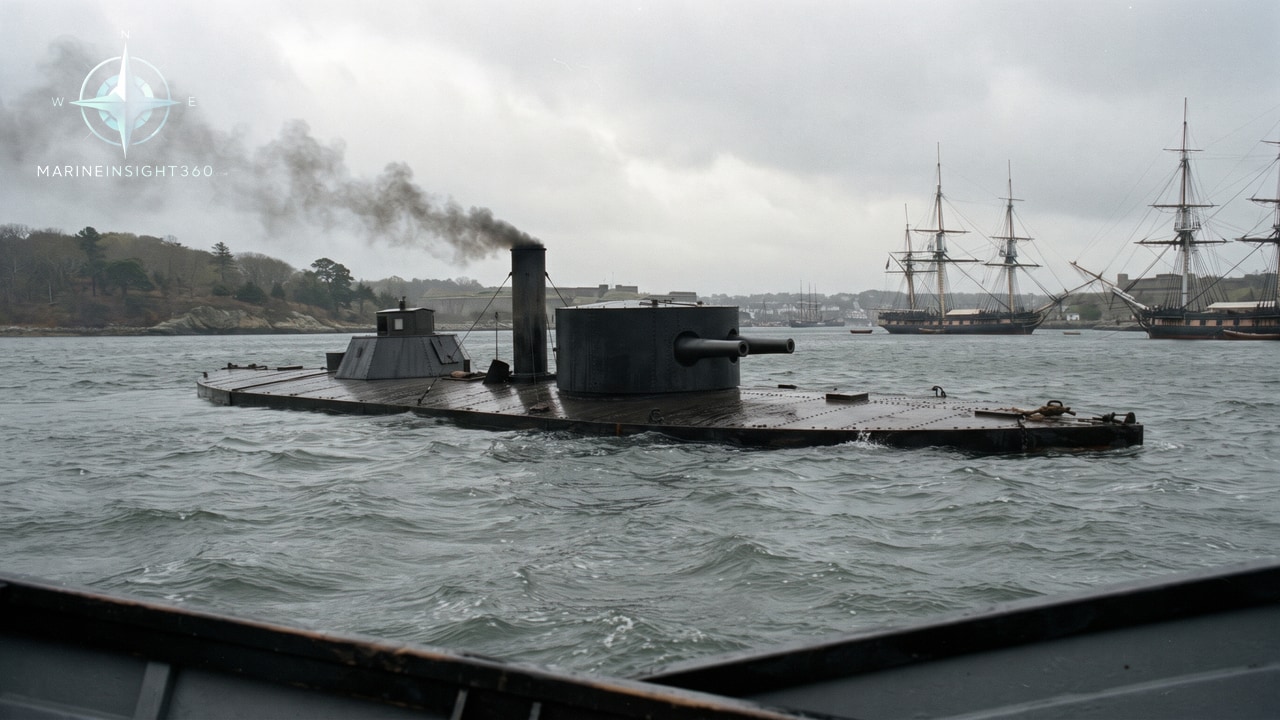
Ironclad ships are steam-powered warships protected by iron armour plates, which made them almost proof against the solid shot of their day, and the American Civil War is the conflict that turned them into a standard warship type. France built the first armoured floating batteries in the 1850s and launched the first ocean-going ironclad, Gloire, in 1859, with Britain following with HMS Warrior in 1860.
The Civil War then showed what ironclads could do in battle and set the pattern for warship construction afterwards.
Ironclad Features
Most Civil War ironclads had wooden hulls covered with iron armour plate, a few, such as USS Monitor, had iron hulls, and the armour set them apart from the unarmoured wooden warships that still made up most fleets. They were driven by steam engines, so they could manoeuvre without depending on the wind. Shot that hit the armour usually broke up or bounced off. Some were built specifically to ram and sink enemy ships.
Civil War ironclads fall into four main types:
- Conventional-hulled ironclads, as the name suggests, had the hull of a conventionally built ship of the time with armour added.
- Scow. It had a flat bottom and was used in the shallow waters of rivers. Some river ironclads were built on catamaran hulls.
- Monitor. It had a low, flat, armoured upper hull shaped like a raft, which sat only a little above the water and carried one or more revolving gun turrets, on top of a lower hull that housed the engines and ammunition. The low freeboard gave the ship stability and a small target, but it made the early monitors poor sea boats: USS Monitor herself foundered under tow off Cape Hatteras on 31 December 1862. Later monitor designs improved on this.
- Casemate. This design, used mostly by the Confederacy, put the guns inside a sloping armoured box, the casemate, built on a low hull.
Monitor & Virginia
The design of the two navies' ironclads makes more sense once you know where the United States shipyards were at the time of the Civil War. Most were in Union territory, and the Confederate states had very few shipyards or ironworks able to build warships. The Union could build ironclads quickly, while the Confederacy could not, so the Confederacy also ordered warships from builders in Britain and France.
The first ironclad the Confederacy acquired was the Merrimack. USS Merrimack was a steam frigate that Union forces burned and scuttled when they abandoned the Norfolk (Gosport) Navy Yard in April 1861. The Confederates raised her, rebuilt her as a casemate ironclad, and renamed her CSS Virginia. By the time Virginia was ready, the Union had its own ironclads, including the newly finished USS Monitor.
On 9 March 1862, Monitor and Virginia fought the first battle between ironclad warships, at Hampton Roads, Virginia. Neither ship could seriously damage the other, and the battle is remembered more for the technology it tested than for its result.
Difference
Union ironclads were used very differently from their Confederate counterparts. The Union used its ironclads to attack Confederate forts and to control the rivers, so they were constantly on the move, while the Confederacy used its few ironclads to defend rivers and harbours against Union ships and forces. The role of a Confederate ironclad was mostly that of a defender rather than an attacker.
After the Civil War
Ironclads were widely used during the Civil War, but advances in warship design soon overtook them. In the late 19th century, steel hulls, breech-loading guns and turreted battleships replaced the early ironclads, and by the early 1900s they were obsolete and part of naval history.
Frequently asked questions
What were the four main types of Civil War ironclads?
Civil War ironclads fell into four main types: conventional-hulled ironclads, flat-bottomed scows for shallow rivers, monitors with a raft-like upper hull over a lower hull holding the engines and ammunition, and the Confederate casemate ironclads.
What was the first battle between two ironclad warships?
USS Monitor and CSS Virginia fought the first battle between ironclad warships at Hampton Roads, Virginia, on 9 March 1862. The four-hour fight ended in a draw, and both sides claimed victory.
What was CSS Virginia before it became an ironclad?
CSS Virginia was the steam frigate USS Merrimack, which Union forces burned and scuttled when they abandoned the Norfolk Navy Yard in 1861. The Confederates raised her, rebuilt her as an ironclad and renamed her Virginia.
How did Union and Confederate ironclads differ?
The Union held most of the country's shipyards and built many more ironclads, which it used to attack Confederate defences along the rivers. The Confederacy, short of shipyards, used its few ironclads mainly to defend riverbanks against Union attack.
Recommended Reading
10 Great Lakes Shipwrecks: A Dive into History's Aquatic Graveyard
Storms, icebergs, and many other natural and man-made disasters have left thousands of Famous shipwrecks on the ocean floor.
10 Reasons Why Merchant Navy is a Great Career Choice
Are you considering joining the Merchant Navy? We're sure you've heard you can get paid to sail worldwide in a merchant ship, right? You may have also heard that you only need 6-8 months to get a full year's salary.

Diwali at Sea: Far from Home, Together as One Crew
What Diwali looks like on a merchant ship: a crew of different faiths and nationalities celebrating together, thousands of miles from home.