
Merchant Marine Jobs: Credentials, Routes and Who Is Hiring
Who employs US merchant mariners, how the Merchant Mariner Credential and TWIC work, and the entry-level, academy, union and Military Sealift Command routes.

Merchant marine jobs in the United States sit behind two documents and one decision. The documents are the Merchant Mariner Credential issued by the US Coast Guard, which records your rating or licence and endorsements, and the Transportation Worker Identification Credential issued by the TSA, which gets you through a port gate.
The decision is which route you take to the first job: entry-level rating, maritime academy, a union hiring hall, or a federal employer that trains you on the job.
The credential is what separates this sector from most shore employment. Nobody hires an uncredentialed mariner for a seagoing billet, and the Coast Guard evaluates your service, training and medical fitness before endorsing you for a level of responsibility. Everything else follows that file.
Who actually employs US mariners
- Jones Act domestic operators. Vessels trading between US ports must be US-flagged, US-crewed and US-built. This is the backbone of steady domestic employment: tankers and articulated tug barges, container and roll-on roll-off ships in the Puerto Rico, Alaska and Hawaii trades, and coastal tug and barge work.
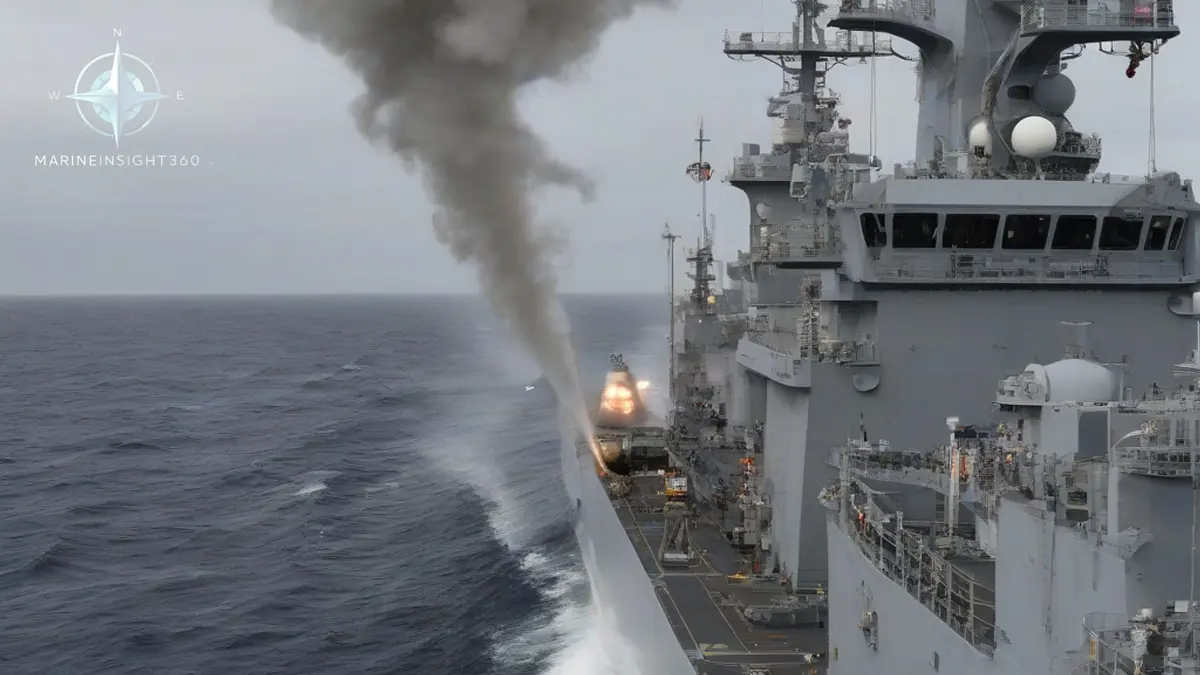
- Military Sealift Command. A civilian mariner workforce operating US Navy support ships, and one of the largest single employers of American mariners.
- Other federal fleets. NOAA operates research and survey ships, and the Army Corps of Engineers runs dredges and support vessels.
- Inland and harbour operators. Towboats on the Mississippi system, harbour tugs, ferries and passenger vessels, each with their own licence structure.
- Offshore energy. Supply vessels, crew transfer and construction support in the Gulf of Mexico and, increasingly, the offshore wind projects on the East Coast.
The credential file
Applying for an MMC means submitting a Coast Guard application with a medical certificate, a drug test result, proof of citizenship, sea service letters and course completion certificates. Two habits save months. Collect a signed sea service letter from every vessel as you leave it rather than tracking down a former employer years later, and keep a personal copy of every training certificate in a single file.
Renewals and upgrades are judged on documented service, and undocumented sea time is worth nothing.
The TWIC application is separate, runs through the TSA, and includes a background check. Apply for it early, because port access is a condition of showing up to work.
Route one: start as an entry-level rating
Entry-level unlicensed positions require no prior experience: ordinary seaman on deck, wiper in the engine room, and steward department utility. From there, documented sea time plus required courses build toward able seafarer and qualified member of the engine department, and eventually toward a licence through the hawsepipe route.
Military Sealift Command runs structured entry programmes for exactly this. Applicants enter as supply, ordinary seaman or wiper positions, receive on the job training and work experience, and become eligible for higher level certification as service accumulates. It is one of the few employers that will hire with no sea time at all and pay you while you build it.
Route two: a maritime academy
Graduates of the United States Merchant Marine Academy at Kings Point or one of the six state maritime academies sit Coast Guard examinations and, on passing, receive an unlimited Third Mate or Third Assistant Engineer licence along with a bachelor's degree. Unlimited means no tonnage or horsepower restriction, which is the credential deep sea operators recruit against.
The trade-off is time and cost against speed of progression. An academy graduate starts as a licensed officer. A hawsepipe mariner starts earning immediately but reaches the same licence over a longer period and with more documentation work.
Military to Mariner
Service members with sea time in the Navy, Coast Guard, Army watercraft or Marine Corps can convert qualifying service toward a credential through federal programmes designed for that purpose. Anyone leaving military service with time on the water should check this before assuming they need to start again as an ordinary seaman.
Route three: unions and hiring halls
A large share of US seagoing jobs is dispatched through union halls rather than advertised. The Seafarers International Union covers unlicensed ratings, the Marine Engineers Beneficial Association and American Maritime Officers cover engineers and officers, and the International Organization of Masters, Mates and Pilots covers deck officers. Halls dispatch by seniority and registration date, so the practical strategy is to register early, keep your documents current, and take the first job offered to start building seniority.
What the work is really like
Deep sea contracts typically run around four months on with paid or unpaid leave after, though rotations vary widely by employer and vessel. Inland and harbour work is often two weeks on, two weeks off, or day work with home time every night. Pay scales are set by union agreements on many vessels, which makes them relatively transparent compared with the international market.
Start with the credential application and the TWIC on the same day, because both take time and neither can be rushed later. The Merchant Navy Careers section sets out the equivalent certificate routes for the UK and other flags for anyone comparing markets.
Sources and further reading
- Military Sealift Command entry-level opportunities
- Military to Mariner (MARAD)
- How to Join the Merchant Marine (MITAGS)
What to read next
Recommended Reading
Military Sealift Command Jobs: How CIVMAR Hiring Works
What Military Sealift Command jobs involve, the credentials CIVMARs must hold before applying, entry-level routes, and how MSC compares with commercial sailing.
Fly In Fly Out Offshore Rig Jobs: Rotations, Certificates and Realistic Routes In
Fly in fly out offshore rig jobs explained: common rotations, the BOSIET and HUET tickets you cannot board without, entry roles, and how offshore pay is built.

Merchant Navy Rating Jobs: Duties and Career Path
Merchant Navy Rating Jobs: Duties and Career Path: career, certification and hiring context for US, UK, Canada, Australia, Singapore and European...