
What Is the Largest Boat in the World? Every Record That Counts
What is the largest boat in the world? The record ships by gross tonnage, length and passenger capacity, from Pioneering Spirit to Icon of the Seas.
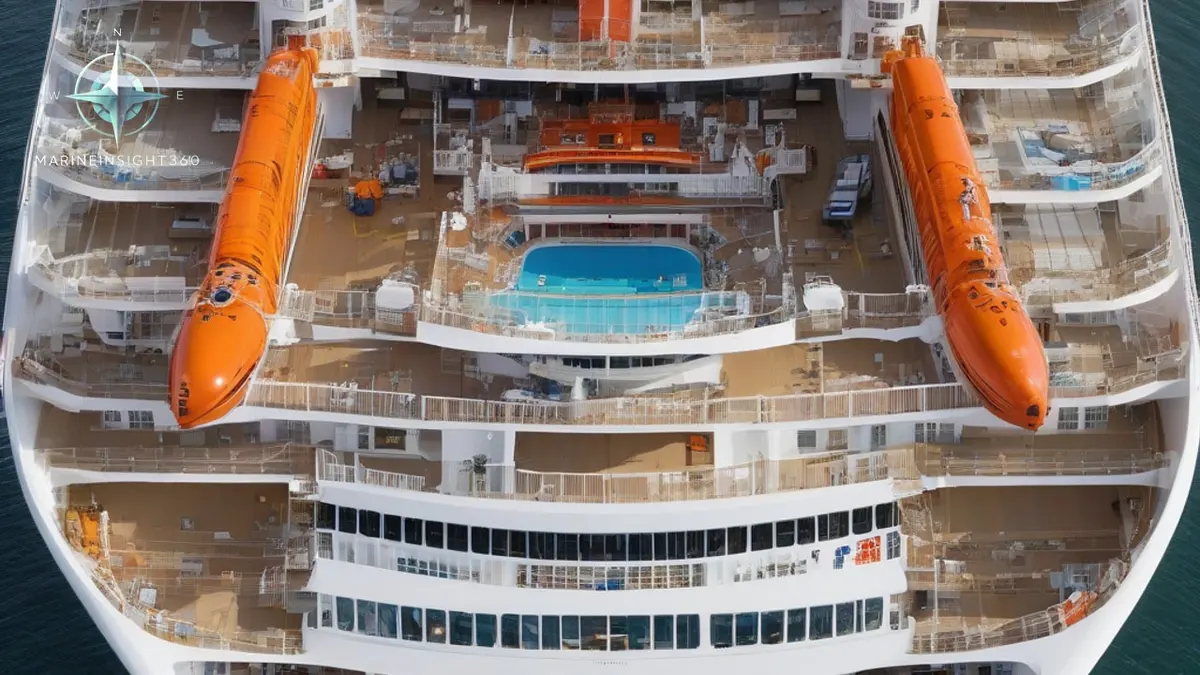
What is the largest boat in the world? The answer depends on how you measure. By enclosed volume the record holder is the offshore construction vessel Pioneering Spirit, at more than 400,000 gross tons. The largest cruise ships are Royal Caribbean's Icon-class vessels of about 250,800 gross tons, which sail from Miami. The longest ship ever built was the 458.45 meter (1,504 ft) tanker Seawise Giant.
Each record answers a different question. Volume, length, beam, deadweight and passenger capacity all crown different vessels, so the honest answer is a short list rather than a single name.
Boat or ship: what the terms mean at sea
Mariners reserve the word boat for small craft and a few traditional exceptions such as tugboats, pilot boats and submarines. Anything of ocean-going size is a ship. In everyday use the two words blur, and the question of the largest boat almost always means the largest ship, so that is what the records below cover.
Gross tonnage, deadweight and displacement are not the same thing
The rankings only make sense once the units are separated, because the three figures quoted most often measure completely different quantities.
- Gross tonnage is a dimensionless number derived from the total enclosed volume of the ship under the 1969 International Convention on Tonnage Measurement of Ships. It is not a weight, which is why a cruise ship full of air-filled cabins outranks a fully loaded tanker.
- Deadweight is the mass in tonnes of everything the ship can carry when loaded to her marks: cargo, bunkers, stores, fresh water, ballast and crew. This is the commercial number for tankers and bulkers.
- Displacement is the mass of water the hull pushes aside, equal to the mass of the ship and everything in her at that moment. This is the naval architect's number and the one that drives stability calculations.
The tonnage formula explains the league tables better than any commentary. Gross tonnage is K1 multiplied by V, where V is the total enclosed volume in cubic meters and K1 is 0.2 plus 0.02 times the base-10 logarithm of V. A ship enclosing 100,000 cubic meters gives K1 of exactly 0.3 and a gross tonnage of 30,000. Double the volume to 200,000 cubic meters and K1 climbs only to about 0.306, for roughly 61,200 gross tons.
Enclosed space is the whole measurement, so decks, atriums and cabins count while cargo weight does not.
The largest vessel afloat by volume: Pioneering Spirit
Pioneering Spirit is a twin-hulled offshore construction vessel designed to lift entire oil and gas platforms in one piece and to lay pipelines. Her beam of 124 meters (407 ft) is the widest of any vessel ever built, and her gross tonnage exceeds 400,000, more than any other ship in service.
She carries no commercial cargo, which is why she rarely appears in shipping league tables. Measured by sheer enclosed volume, though, nothing else on the water comes close.
The largest cruise ships: the Icon class
Royal Caribbean's Icon of the Seas and Star of the Seas stand at about 250,800 gross tons and 364 meters (1,196 ft) in length, with capacity for some 7,600 guests. A third sister, Legend of the Seas, joined the class in 2026 with closely similar dimensions.
Cruise ships dominate the largest-ship headlines because gross tonnage rewards enclosed space. A resort of nearly 20 decks encloses far more volume than a tanker or bulker hull of similar length, so the passenger fleet tops any ranking built on that measure.
The longest ship ever built was a tanker
Seawise Giant, an ultra large crude carrier completed in the late 1970s, measured 458.45 meters (1,504 ft) overall with a fully laden displacement of 657,019 tonnes. No vessel before or since has matched her length. After a final career as a floating storage unit, she was scrapped in 2010.
Her scale proved a commercial dead end. A loaded draft of 24.6 meters (81 ft) barred her from the Suez and Panama canals and from most ports, a lesson naval architects still quote when owners ask for records.
Cargo record holders worth knowing
- Container ships: the largest ultra large container vessels now exceed 24,000 TEU (twenty-foot equivalent units) and stretch to about 400 meters (1,312 ft).
- Ore carriers: Valemax bulk carriers load around 400,000 tonnes deadweight of iron ore, the heaviest cargoes moved by any dry cargo ship.
- Crude tankers: the four TI-class ULCCs, each just under 442,000 tonnes deadweight, are the biggest tankers still afloat.
What actually limits the size of ships
Records aside, the ceiling on ship size is set by ports, canals and cargo demand rather than by shipbuilding technique. A hull only earns money if enough berths can receive it and enough cargo exists to fill it on a schedule. Yards could weld a longer hull tomorrow; the trade to employ it profitably does not exist.
The controlling dimensions are published and rarely move. The enlarged Panama Canal locks accept roughly 366 meters length, 51.25 meters beam and about 15.2 meters draft in tropical fresh water. The Suez Canal takes far longer ships but caps laden draft in the region of 20 meters. The Strait of Malacca, the artery for Asia-Europe trade, is around 25 meters deep at its shallowest working stretch, which is where the Malaccamax label comes from.
Seawise Giant's 24.6 meter draft sat against that ceiling with nothing in hand.
Draft is usually the hardest constraint. Every extra meter of depth removes dozens of ports from the trading map, which is why the biggest modern designs grow in beam and height instead of length and draft. Beam costs nothing at sea and buys extra container rows or tank width, whereas draft has to be bought back from every dredging authority on the route.
For side-by-side profiles of the record holders and the classes behind them, see the Ships and Vessels articles in the Marine Insight 360 Knowledge Base.
Tonnage is not self-declared. The 1969 convention is an IMO instrument, and the International Tonnage Certificate is issued by the flag state or by a recognized organization acting for it. That is usually a class society such as DNV, Lloyd's Register or Bureau Veritas. Canals ignore the figure and measure their own, since Panama and Suez each run a separate tonnage system for tolls.
Scale writes its own casualty list. A 400 meter box ship in a canal sits close to both banks, where bank effect and squat can take the bow away from the helm. The Ever Given grounding closed Suez for six days in 2021 and stalled hundreds of ships behind her. Fires on the largest container ships are worse for a related reason: nobody can reach the seat of one buried in a bay.
Sources and further reading
- The World's Biggest Ship Isn't a Cruise Ship - Emma Cruises
- Inside The 11 Biggest Cruise Ships In The World - Cruise Passenger
- What are the biggest, longest, and tallest cruise ships in the world? - Royal Caribbean Blog
What to read next
Recommended Reading
What Does SS Mean on a Ship? Steamship, and Every Other Prefix Explained
SS on a ship means steamship, a vessel driven by steam engines. What the prefix tells you, why modern ships use MV instead, and what RMS, HMS and USS mean.
Parts of a Boat: The Terms Every Crew Member Uses
A working guide to the parts of a boat: hull, keel, bow, stern, transom, gunwale, rudder and the direction terms that keep orders unambiguous on the water.
World's Largest Sportsfishing Boat and Its Impact
World's Largest Sportsfishing Boat and Its Impact: career, certification and hiring context for US, UK, Canada, Australia, Singapore and European...