
Port Automation: How Automated Container Terminals Actually Work
Port automation explained: what automated stacking cranes, AGVs and remote quay cranes really change for terminal cost, berth productivity and crews.
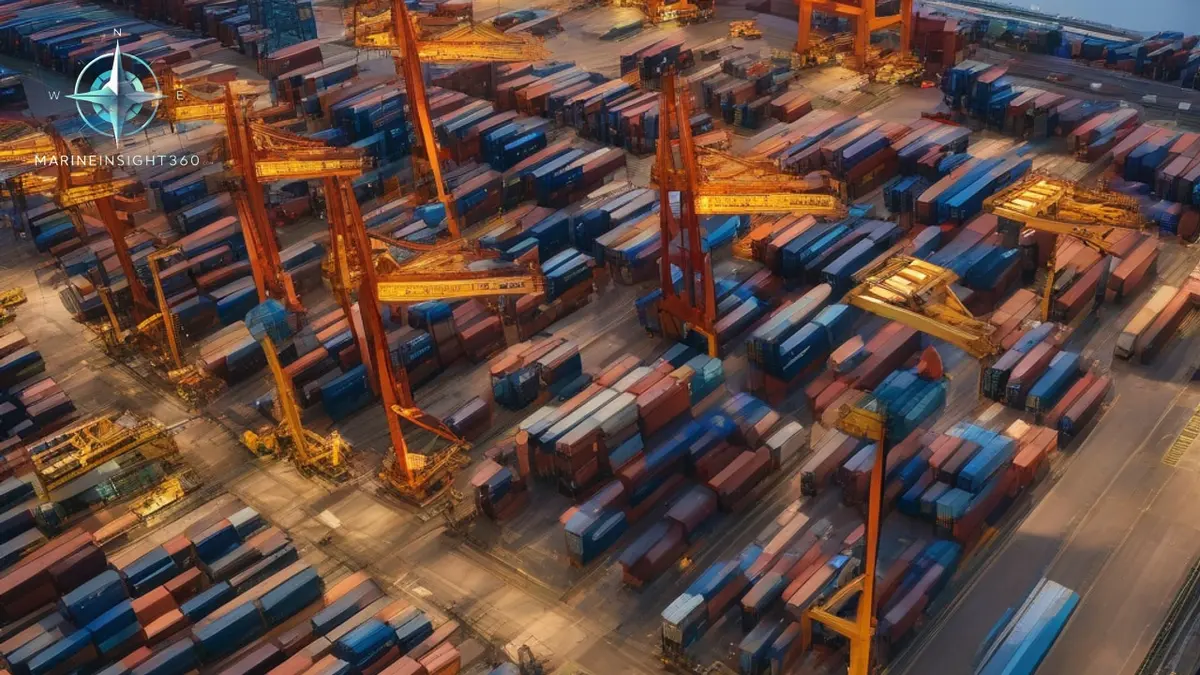
Port automation means moving containers with equipment that takes its instructions from software rather than from a driver in a cab. In practice it arrives in three layers: automated stacking cranes in the yard, driverless horizontal transport between yard and quay, and remotely operated ship-to-shore cranes. A terminal operating system plans and issues every move.
The reference sites sit in tier-one markets, among them Maasvlakte II in Rotterdam, Altenwerder in Hamburg, Middle Harbor at Long Beach and Victoria International Container Terminal in Melbourne.
That definition matters because the term is used loosely in tender documents and press releases. A terminal with remote-controlled rail cranes and human-driven straddle carriers is semi-automated. A fully automated terminal runs the yard and the horizontal transport without drivers, and still keeps a person in the loop at the quay crane. The first terminal built on this model opened in Rotterdam in the early 1990s, so the operating record now runs to roughly three decades.
The three layers of an automated container terminal
Automation is easiest to judge equipment by equipment, because each layer carries a different capital cost and a different failure mode.
- Yard automation. Automated stacking cranes run on rails over a fixed block of boxes, working the block end to end with no driver aboard. This is the most mature layer and the one that delivers most of the land savings, because containers can be stacked higher and denser than a straddle carrier yard allows.
- Horizontal transport. Automated guided vehicles carry a container between the quay and the yard but cannot lift it themselves, so a crane must load and unload them. Automated lifting vehicles can pick a box off the ground and set it down, which decouples them from crane timing at the cost of a heavier, more complex machine.
- Quayside. Ship-to-shore cranes are the least automated part of the chain. Hoist and gantry travel can run automatically, but the final landing of the spreader on a container in a moving ship is usually handed to a remote operator in a control room. Research reviews of terminals in service note that none has fully automated quay cranes, and several use double-trolley designs so the landward trolley can run unmanned.
What the productivity numbers show, and what they hide
The business case is well quantified. The International Transport Forum review of container port automation cites industry estimates that a fully automated terminal can raise productivity by 10 to 35 percent, cut operating expenditure by 25 to 55 percent, and reduce the workforce needed by at least 45 percent.
Reported results from large Asian projects sit inside that band: Qingdao commissioned two fully automated berths in 2017 with 38 automated stacking cranes and 38 AGVs, and operators at Shanghai Yangshan have reported labor input down about 70 percent with operational efficiency up about 30 percent.
Those headline figures hide an important nuance. Automated terminals rarely beat a well-run manual terminal on peak crane moves per hour. What they deliver is consistency: the same rate at 0300 as at 1500, no shift-change dip, and far tighter variance in berth productivity. For a liner operator planning a fixed weekly string, predictable berth time is worth more than an occasional record hour.
How an automated berth changes the ship's day alongside
- Access is restricted. Driverless equipment operates inside fenced exclusion zones. Crew shore leave, stores delivery, surveyor visits and bunker barge access all run through controlled routes and escorted transport, which needs arranging before arrival rather than a phone call at the gangway.
- Lashing stays manual. Twistlock removal and lashing rod work is still human work, usually in a dedicated lashing zone under the crane or on lashing platforms. This is the pacing item on many automated berths.
- Plan accuracy costs more. An automated yard executes the stowage plan literally. A misdeclared weight, an unflagged out-of-gauge box or a late reefer nomination triggers manual exception handling, and exceptions are slow.
- Communication moves into the system. A change agreed verbally with a gang foreman on a manual terminal has to be entered into the terminal operating system before it takes effect.
Where automated terminals still struggle
Exception handling remains the weak point. Reefer plugging and monitoring, out-of-gauge cargo, breakbulk, damaged boxes and customs inspections all pull equipment out of the automated cycle. Brownfield conversions are harder than greenfield builds, because an existing quay, yard layout and civil works constrain the crane rail geometry that automation depends on. Capital cost is front-loaded and the payback is sensitive to volume stability, so a terminal with lumpy or declining throughput can automate itself into a worse cost position.
Labor agreements remain a live commercial issue at many ports, and the maintenance skill set shifts from diesel mechanics toward controls, network and software engineers.
Questions worth answering before a terminal automates
- Is throughput stable enough to carry a fixed cost base for 15 to 20 years?
- Is land, rather than labor, the binding constraint? Yard automation buys density first.
- Is this a greenfield quay or a live terminal that has to keep working through the conversion?
- How much of the cargo mix falls outside standard boxes, and who handles it?
- Is the terminal operating system mature enough to plan every move, including the exceptions?
- Is the power supply, including reefer load and battery charging, secured for the full build?
For shipowners and charterers, the practical takeaway is that automation changes the shape of berth performance rather than simply raising it, and port calls should be planned around tighter, more literal terminal processes. Readers comparing terminal equipment and berth productivity can follow the equipment coverage in the Marine Insight 360 Ports section.
Automation does not lift the equipment out of the port safety regime. The ILO code of practice on safety and health in ports sets the baseline for exclusion zones, interlocked gates and the separation of people from moving machinery, and national regulators enforce it on the ground. Terminals also hold the crane test and thorough examination records that surveyors and insurers ask for after a dropped box.
Yard planning runs on declared data. Container weights arrive as the verified gross mass that IMO rules require the shipper to provide, and an automated stack is built from that figure rather than from a checker's judgement. When the number is wrong, the crane finds out at the lift and the box diverts to a manual exception lane while the paperwork is corrected.
Sources and further reading
- Container Port Automation: Impacts and Implications (ITF/OECD)
- Coordinated scheduling of quay cranes and AGVs in automated container terminals
- Joint scheduling optimization model for yard cranes and AGVs considering running routes
What to read next
Recommended Reading
Container Tracking: How Shippers Actually Follow a Box Across the Ocean
How container tracking works, from free carrier lookups to visibility platforms: what each tool layer does, what it costs, and how to pick for your volume.
Did Port of Antwerp-Bruges Surpass Rotterdam in Q1 Container Throughput?
Port of Antwerp-Bruges did not surpass Rotterdam in Q1 container throughput. The verified TEU and tonnage figures, and what drove the quarter.
Pakistan's Transshipment Hub Push: What the New Port Approvals Actually Change
Pakistan approved a unified transshipment incentive regime at Karachi and Port Qasim. Here is what the concessions cover and what really makes a hub work.