
Why ICCP Is Switched Off in Port: Overload, Stray Current and Spark Risk Explained
ICCP systems are switched off in port to prevent overload, stray-current damage and spark risk at the berth. Learn the reasons and the correct procedure.
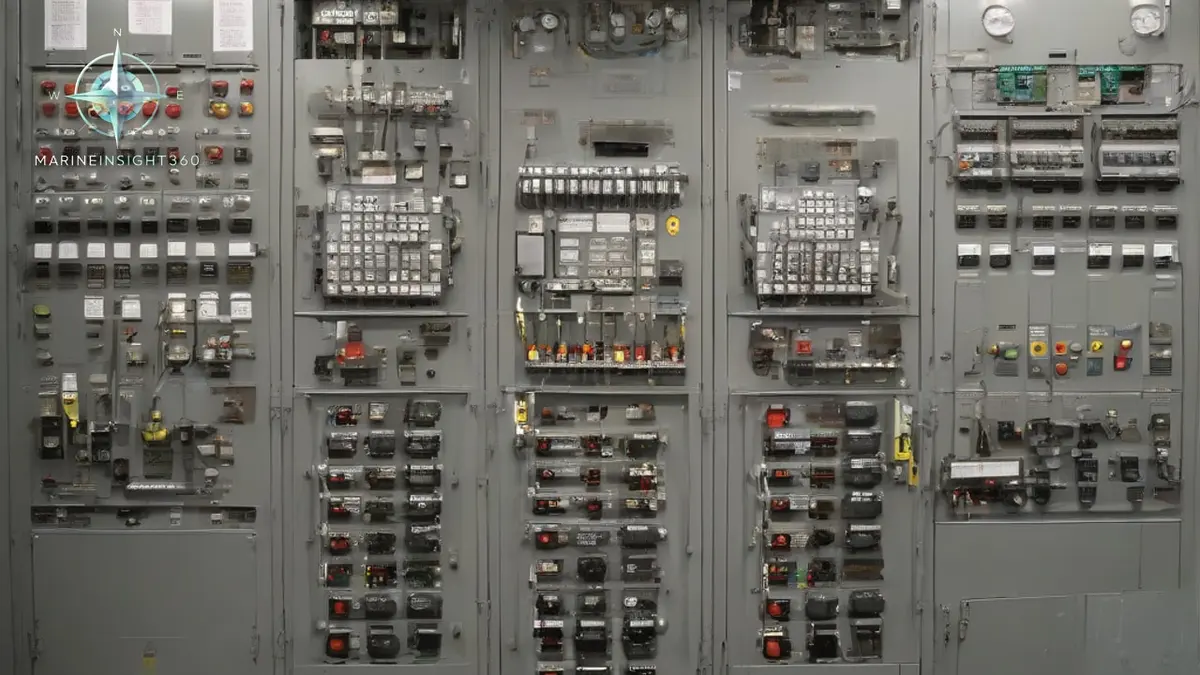
Ask why ICCP is switched off in port, and the answer is a circuit problem. An impressed current cathodic protection system works only while its output stays inside the ship's own hull circuit. Alongside a berth, that current tries to polarize the jetty structure and any craft nearby, driving the power units toward overload. It can also find return paths through mooring wires and gangways, which creates stray-current corrosion and a spark risk.
Terminals working to ISGOTT practice, from the US Gulf to Rotterdam, Milford Haven and Botany Bay, expect the system status confirmed at the ship shore safety meeting. Isolating the system removes all three hazards at once.
The practice is standard across tanker, bulk and container fleets, and many terminals ask for the system status before the ship berths. Switching off costs almost nothing in protection, for reasons covered below.
What an ICCP system does at sea
Steel immersed in seawater corrodes through an electrochemical reaction: small anodic areas of the hull give up metal while cathodic areas do not. An ICCP system stops this by making the entire wetted hull cathodic. A transformer-rectifier unit drives a controlled direct current from inert anodes fitted flush in the shell plating, through the seawater, and back into the hull. Reference electrodes measure the hull potential and the controller adjusts output automatically.
At sea the arrangement works cleanly because the circuit is simple: anode, open seawater, hull. Nothing else is in the water to divert the current.
Why ICCP is switched off in port: the overload problem
A berth changes the circuit. Jetty piles, sheet piling and neighboring hulls are large areas of steel sitting in the same electrolyte, and many jetties run their own cathodic protection systems. Part of the ship's impressed current now flows to that external steel instead of returning to the hull.
The controller reads the hull as under-protected and raises output, in effect trying to protect the jetty as well as the ship. Current demand climbs until the power units run at maximum or trip on overload. Two cathodic protection systems working against each other also distort the potential readings on both sides, so neither installation protects properly.
Stray current, mooring wires and the spark hazard
Once the ship is moored, metallic connections join her to the shore: wires, the gangway, sometimes a metal loading arm. Impressed current that has leaked into the jetty can return to the hull through these paths. A wire carrying current will arc at the moment contact is made or broken, for example when a rope is slacked, parted or let go.
At an oil, gas or chemical berth an arc in the wrong place is an ignition source, which is why terminal safety procedures treat the subject seriously. Stray current is also destructive in a slower way. Where direct current leaves immersed steel at an uncontrolled point, it strips metal rapidly, damaging jetty piles, loading arms or the ship's own fittings.
Other times the system must be isolated
- Diving operations: the system is switched off, locked out and tagged before divers work on the hull, and the diving contractor will normally require written confirmation.
- Dry docking: with no seawater there is no circuit, and the system must be off and isolated before the dock is pumped down.
- Ship-to-ship transfers and bunker barges: another hull close alongside recreates the same interaction problems as a jetty.
- Terminal instructions: some oil and gas terminals require the system off from a stated time before arrival, and the requirement is written into the operator's safety management system procedures.
Does the hull suffer while the system is off?
Not in any measurable way during a normal port stay. The coating remains the primary corrosion barrier, and the impressed current only ever handled the small fraction of steel exposed at coating defects. Polarized steel also depolarizes slowly, so protection decays over days rather than minutes. Many ships carry sacrificial anodes in sea chests, around the rudder and near the propeller as well, and those keep working regardless.
The discipline that matters is procedural. Record the switch-off time in the log, tag the panel so the system is not restored while divers or terminal restrictions apply, and switch back on once clear of the berth. After departure, confirm that output current and hull potentials return to normal values, since a system left off for weeks lets polarization fade.
For more working explanations of shipboard corrosion control and hull systems, see the Marine Machinery section on Marine Insight 360.
The requirement is a terminal one rather than a flag one, which is why it lives in the ship shore safety checklist instead of a certificate. ISGOTT is published jointly by OCIMF, ICS and IAPH, and terminals write its guidance into their own berth instructions. The hardware itself is a class item: surveyors from DNV, Lloyd's Register or ABS inspect anodes, reference cells and shell penetrations in dry dock.
The faults that turn up are mundane. Reference electrodes foul or lose their seal, so the controller reads a hull potential that is not there and drives too much current or too little. Dielectric shields around the anodes break down, and the local overprotection lifts and blisters the coating it was meant to protect. And systems isolated alongside get left off for weeks because nobody logged the switch.
Sources and further reading
- Impressed current cathodic protection (ICCP) - Wartsila Encyclopedia
- Understanding ICCP Systems - Cathodic Marine Engineering
- Impressed Current Cathodic Protection (ICCP) - MME Group
What to read next
Recommended Reading
Port Cities of Japan: Tokyo, Yokohama, Nagoya, Osaka and Kobe
The main port city of Japan options compared: container volumes at Tokyo, Yokohama, Nagoya, Osaka and Kobe, the 2010 port alliances and what crews find ashore.
Two Crew Members Seriously Injured in Explosion on Tanker at Ireland's Second Largest Port
An explosion aboard the chemical tanker Bow Hercules at Shannon Foynes seriously injured two crew members. What the case shows about gas cylinder safety.
Port and Starboard: The Ultimate Guide for Working Mariners
Port and starboard explained for working mariners: origins, sidelight colors, COLREGs crossing rules, and the errors that cause collisions.