
Tokyo and Manila Launch Intelligence Sharing and Maritime Border Talks: What Changes at Sea
Japan and the Philippines opened intelligence sharing and maritime boundary talks. Here is what the deals change for ships on Asian routes.
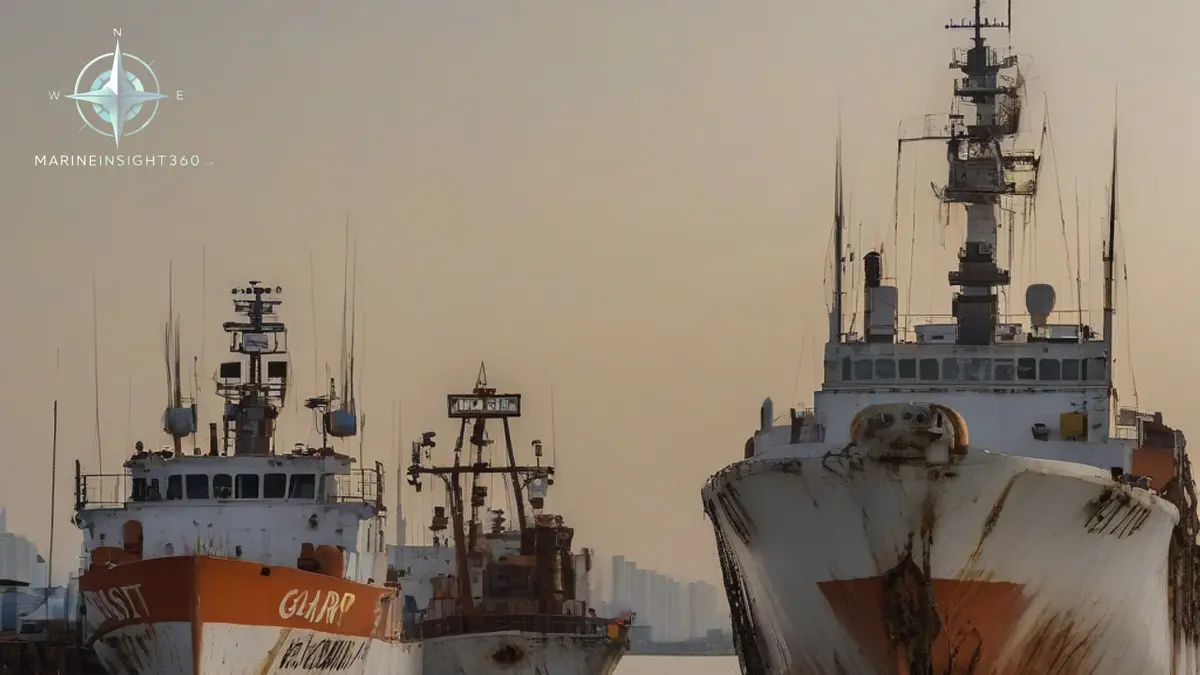
Tokyo and Manila have launched intelligence sharing and maritime border talks, opening negotiations on a General Security of Military Information Agreement, or GSOMIA, and on delimiting the maritime boundary between Japan and the Philippines. The two governments announced the move on 28 May, alongside an upgrade of their relationship to a comprehensive strategic partnership during President Ferdinand Marcos Jr's state visit to Tokyo. For commercial shipping, the boundary track matters more than the intelligence track.
A settled maritime boundary changes practical things: which coast guard answers a distress call, who issues survey and cable-laying permits, whose fisheries enforcement can board you, and which state publishes navigational warnings for a given box of water.
What the intelligence sharing agreement would cover
A GSOMIA is a handling agreement, not an alliance. It sets the protocols for how classified military information is transferred, stored, marked and destroyed by each party. Without one, useful data stops at the classification barrier. With one, Japanese maritime patrol aircraft imagery and Philippine coast guard reporting can move in something closer to real time.
The commercial read-across is indirect but real. Faster exchange of surface picture data between two states that both run large coast guards means fewer blind spots in the sea areas where merchant ships report harassment, laser illumination and unlit small craft.
Why maritime border talks matter more than they sound
Japan and the Philippines have overlapping entitlements in the Philippine Sea, where their 200 nautical mile exclusive economic zones meet. Unlike the South China Sea claims, this is a routine delimitation between two states that accept the same legal framework, so it is solvable.
Delimitation produces charted, agreed lines. Those lines drive search and rescue region limits, hydrographic survey responsibility and jurisdiction over pollution incidents. A master who suffers a casualty in a delimited area knows whose rules apply and who to call. In an undelimited area, that answer can take hours to establish.
What merchant traffic actually sees in these waters
The route network here carries a large share of Asia to North America and Asia to Europe container and bulk traffic, plus most of the LNG moving to Japan and South Korea. Crews on those routes report a consistent set of frictions.
- Radio challenges demanding identification and intentions in waters where no coastal state has an accepted claim.
- Close-quarters maneuvering by unlit fishing vessels and government craft operating without AIS.
- GNSS interference and AIS position spoofing that puts nearby targets in the wrong place on the chart.
- Exercise areas and navigation restrictions announced at short notice.
- Insurance and crew nationality questions on charters that route close to disputed features.
Practical steps for masters on these routes
- Monitor NAVAREA XI warnings, which Japan coordinates for the western Pacific, alongside Philippine coast guard notices.
- Keep a radar and visual watch that does not depend on AIS targets. Assume small craft will not transmit.
- Record radio challenges verbatim with time and position. Answer factually with flag, cargo and destination, and do not negotiate.
- Report harassment or unsafe maneuvering to the flag state and the nearest rescue coordination center, not only to the office.
- Brief the bridge team that a satellite position may be wrong, and cross-check by radar parallel indexing against charted land.
The agreements already in force
The two countries are not starting from nothing. A Reciprocal Access Agreement letting each side's forces enter the other's territory for joint drills and disaster relief took effect in September 2025. Four months later they signed an acquisition and cross-servicing agreement covering the exchange of military supplies and services. Japan has also supplied patrol vessels and coastal surveillance radar to the Philippine coast guard.
Disaster relief is the part with the clearest commercial value. Typhoon season closes Philippine ports regularly, and a legal framework that lets Japanese ships and aircraft operate from Philippine bases shortens the time it takes to reopen terminals your ships call at.
What to watch next
Watch for a published boundary line and for any change to search and rescue region limits in the Philippine Sea, because those are the outputs that reach the chart and the passage plan. Watch also how Beijing responds, since it has criticized both tracks. Operators running fixed schedules through the Luzon Strait should keep a diversion option costed and ready rather than assume the routing stays stable. Our Ports section tracks the terminals affected.
The warning system behind those broadcasts is not national. The World-Wide Navigational Warning Service is run jointly by the IMO and the International Hydrographic Organization, and it divides the ocean into NAVAREAs with one coordinator each. Japan Coast Guard coordinates NAVAREA XI, which covers these waters. That structure survives any bilateral disagreement, so it stays the reliable channel while the boundary talks run.
Search and rescue is where an undelimited boundary goes wrong in practice. Two rescue coordination centers receiving the same distress alert can each assume the other has it, and the delay is measured in hours a survivor does not have. Masters reduce that risk by transmitting position and identity in the alert itself and by confirming receipt on a second channel rather than assuming coverage.
Sources and further reading
- Tokyo and Manila launch intelligence-sharing, maritime border talks amid unease over China
- How Japan and the Philippines are building a maritime security front against China
- Philippines, Japan Pledge Further Defense Cooperation Amid South China Sea Spats
- Philippines, Japan start talks for intel-sharing deal as ties upgraded
What to read next
Recommended Reading
Port Cities of Japan: Tokyo, Yokohama, Nagoya, Osaka and Kobe
The main port city of Japan options compared: container volumes at Tokyo, Yokohama, Nagoya, Osaka and Kobe, the 2010 port alliances and what crews find ashore.
Can Compulsory Conciliation Resolve the Cambodia-Thailand Maritime Border Dispute?
Cambodia has triggered UNCLOS compulsory conciliation with Thailand over the Gulf of Thailand claims area. What the process can and cannot deliver.
NYK Launches Eco Ship Recycling in Japan: What a Dry-Dock Demolition Yard Changes
NYK is backing eco ship recycling in Japan using a dry dock rather than beaching. What the Hong Kong Convention requires and what it costs owners.