
Proper Use of ECDIS Safety Settings
Proper Use of ECDIS Safety Settings: safety, training and compliance context for US, UK, Canada, Australia, Singapore and European maritime readers.
Proper Use of ECDIS Safety Settings
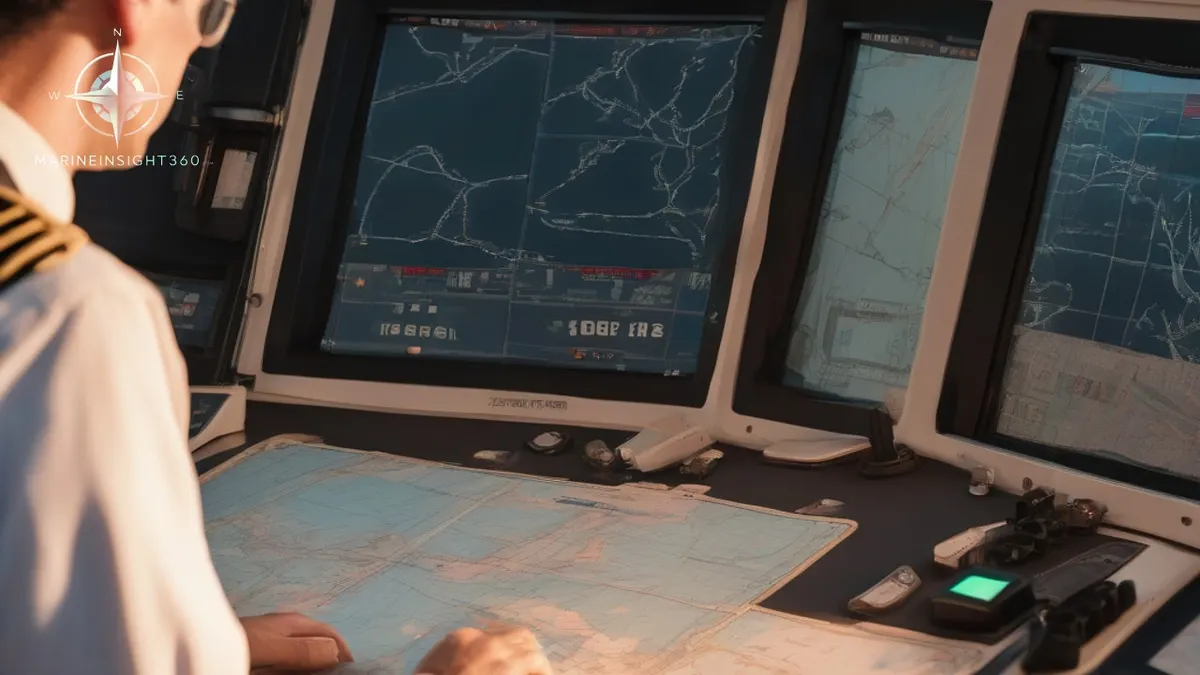
ECDIS has become a primary tool for shipboard watchkeeping personnel. Using an ECDIS is fundamentally different from using paper charts. Masters, navigators, and shipowners must understand the advantages of managing chart displays, safety settings, and alarm systems.
Numerous groundings have occurred on ECDIS-equipped vessels, which could have been avoided if not for the improper configuration and use of ECDIS safety settings and alarm systems. Improper settings can cause safety margin alarms to fail. Navigators often neglect to use ECDIS safety settings due to ignorance or lack of knowledge. Deck crew may be unfamiliar with the configuration and use of ECDIS alarms, increasing the risk of grounding in shallow waters and leading to other unforeseen situations.
Proper safety settings are crucial for ECDISdisplays. These settings control how the ECDIS system displays depth information, making it easier to distinguish safe from unsafe waters.
This article will help you understand the best practices for handling ECDIS safety settings, including safety perimeter, safety depth, shallow water perimeter, and deep water perimeter. The ECDIS systemused in the illustrations is a Furuno.
You can enter these values into a Furuno ECDIS system by following the steps below:
Safety Perimeter:
The safety perimeter is the most important parameter in all safety settings. It is used to display unsafe waters, detect isolated hazards, and trigger grounding prevention alarms. The safety perimeter is essentially a dividing line between safe and unsafe waters.
Blue indicates unsafe areas, while white or gray indicates safe areas. Unless otherwise specified by the mariner, the default safety perimeter setting is 30 meters. The blue color on traditional paper charts does not clearly indicate shallow waters. This means that for a vessel with a deeper draft, the blue portion of the paper chart may appear shallower, but safer for a vessel with a smaller draft.
Unlike paper charts, ECDIS systems allow the pilot to determine safety parameters based on static or dynamic vessel data. The safety perimeter is calculated as follows:
Safety perimeter = Vessel's draft + Sinking depth + Bow sinking depth - Tide level
For example:
Vessel's draft = 10 meters
Assume company policy requires a bow sinking depth of 10%. Please note that the calculation of bow sinking depth takes into account various factors, such as sea conditions, density, or draft increases due to rolling. This calculation must be performed according to the company's bow sinking depth calculation table.
Bow sinking depth = 1.0 meter
Assume full speed sinking depth = 1 meter
Tide level = 1 meter
Therefore, the safety perimeter value is 11 meters.
Possible safety contour values include 5, 10, 15, 20, 30, etc. If the depth contour value selected by the navigator is not available among the available depth contours, the ECDIS system will select the deepest depth contour available in the ENC system.
- What Marine Navigation Systems & Electronic Instruments Do Ship Captains Use?
- How Are Navigation Lights Maintained On A Ship?
- How Are Electronic Circuits Installed On Ships?
- How Do Ships Survive Storms?
- 10 Things to Consider While Using Auto-Pilot System on Ships
If the vessel is about to cross the safety contour within a user-defined time period, an alarm is triggered. Based on the safety contour, the ECDIS system displays isolated danger symbols for underwater features and obstacles that could pose a navigational hazard. If any underwater feature (such as a wreck, rock, or other obstruction) is less than the depth of the safety contour and located in waters beyond the safety contour, an isolated danger symbol is displayed.
Safety Depth Setting:
The sole purpose of the safety depth is to display local bathymetric data compared to the safety depth value entered by the mariner, with gray indicating deeper and black indicating shallower, highlighting potentially safe and unsafe areas. The safety depth value does not affect alarms or any other aspect of the ECDIS system. The safety depth is typically equal to the vessel's draft + the angle of inclination.
The question now arises: since the safety boundary demarcates safe and unsafe waters, why is it necessary to specify a safety depth? It is reasonable to choose a safety depth equal to the safety boundary.
Some depths on the shallower side of the safety boundary will appear gray because they are deeper than the safety depth indicated by the mariner, even if they are shallower than the safety boundary indicated by the mariner.
Some measurements on the shallower side of the safety line will appear gray because they are deeper than the safety depth specified by the mariner, even if they are shallower than the safety line selected by the ECDIS system. Depths below the safety line are not always un navigable.
For example, if the safety depth and safety line are set to 11 meters, the ECDIS system will confirm a depth line equal to or deeper than the specified line, based on the depth available in the ENC system.
Thus, we can see that waters between 11 and 20 meters are navigable, but they are below the safety line. This provides mariners with additional information on where the vessel can most safely pass (alarms will still sound) if necessary to cross the safety line. This can provide additional maneuvering space in narrow passages where a safety depth exists.
In some navigable waters, depths below the safety depth may exist. Setting a safety depth will highlight this risk.
In the image above, the safety depth is 14 meters. As shown in bold, depths are equal to or less than the safety depth value.
Katzuk Confidence Zone:
When calculating safety depth, it's crucial to consider the characteristics of the Katzuk (or confidence zone). most measurements displayed on Electronic Navigational Charts (ENCs) are based on outdated data, so their accuracy cannot be fully relied upon. The Katzuk confidence zone determines the accuracy of basic hydrographic data. This data, categorized into six categories, helps mariners make informed decisions about chart reliance when planning or conducting a voyage.
For example:
Vessel's Draft = 7.7 meters
Sinking = 1 meter
Effective Draft = 8.7 meters
The company's required Effective Draft (UKC) is 10% of the maximum draft, or 0.87 meters (approximately 0.9 meters).
Therefore, based on the company's UKC policy, the required total safety depth is 9.6 meters. The safety depth value can be set to 10 meters. However, the accuracy of the ZOC depth is not considered. Assuming the Catzoc in this area is Category B, this means there is a potential error of 1 meter + 2% depth = 1.2 meters. Therefore, if the Catzoc error is allowed, the required minimum depth is 10 meters + 1.2 meters = 11.2 meters.
Since decimal safety depths cannot be entered in ECDIS, 12 meters can be entered as the safety depth. During voyage planning, it is important to display and record the CATZOC at all stages of the voyage.
Shallow Contour:
The shallow contour highlights the slope of the seabed. It is considered the grounding depth, the depth below which the vessel will undoubtedly ground. This value can be set to the vessel's draft. For example, if the vessel's draft is 7.7 meters, the shallow contour value can be set to 8 meters.
The ECDIS system then displays the next available depth contour in the ENC system. Therefore, all areas between 0 meters and the shallow contour are completely unnavigable and displayed as shaded. As mentioned previously, the chart's colors highlight the boundary between safe and unsafe waters, with blue indicating unsafe areas and white or gray indicating safe areas.
Unsafe areas can be further defined by selecting the shallow water contour. When the 4-degree width is selected, the shallow water contour appears dark blue in shallow water and light blue between the shallow water and safe water contours. Details of the 2-degree and 4-degree widths are provided below.
Deep Water Contour Setting:
This setting is typically set to twice the ship's draft. However, mariners can use a different deep water contour value as needed.
ECDIS also offers a simple two-color shading option. In this setting, light blue and dark blue blend into a single blue, and gray and white blend into a single white. If the safety contour value changes, the boundary between the two depths also changes accordingly. These two depth levels should be used with caution at night to reduce contrast differences between adjacent depth areas.
Watchdog/Groundbreaking Prevention Transmitter Function:
The Watchdog compares the safety settings entered by the mariner with the depth information in the Electronic Navigational Chart (ENC) system and issues an indication or warning if these settings are not met. This transmitter provides warnings of danger/warnings, primarily to prevent a ship from grounding. It serves as a last resort if visual inspections or route scanning fail to identify navigational hazards.
The scanning area, sometimes displayed on the screen as a cone or cylinder, should be set to maintain an appropriate distance from the navigable waters ahead of the vessel. This value should be determined for each phase of the voyage and recorded in the voyage plan. Many mariners do not realize the importance of safety margins and do not use the Watchdog transmitter correctly.
Here's how to activate the ship's logbook in the Furuno ECDIS system:
Go to the "Chart" menu and select "Initial Settings."
Open the left-hand menu and select "Chart Alerts."
Click the "Scan Area" tab. Set a time limit or distance.
The "Around" field allows the operator to define a fixed area.
Please note that map alerts always use the maximum available map scale, but the actual scale displayed may differ from that shown on the map.
Please note that the map alert function must be activated to sound an audible alarm when safety limits are exceeded.
When commencing a new voyage, always change the previous alert settings. These settings must be adjusted throughout the voyage to ensure they are consistent with prevailing conditions and circumstances. The ECDIS system is a valuable resource for assisting seafarers and providing them with more detailed situational awareness. However, if used improperly, it can cause accidents rather than prevent them.
Further training and practical use will help deepen understanding of the ECDIS system. Trainee officers should be encouraged to understand the advantages of the ECDIS system and to fully utilize it. During route planning, map alerts should be calculated to detect any hazardous situations and adjusted as necessary. A better understanding of ECDIS safety standards and their proper use can potentially prevent groundings and other adverse situations.
Recommended Reading

Marine Fire Safety: What the FSS Code Requires on Every Ship
How marine fire safety works under the FSS Code: fire mains and pumps, fixed gas and sprinkler systems, detection, escape gear and the drills that bind it all.
Safety Management System (SMS): The Rulebook Every Ship Runs On
What a safety management system is in shipping: the ISM Code framework of procedures, drills, audits and the DPA that turns safety from intention into system.

Safety Features on LNG-Powered Ships
Safety Features on LNG-Powered Ships: safety, training and compliance context for US, UK, Canada, Australia, Singapore and European maritime readers.