
What are the 7 Major Ports in Qatar?
Qatar's seven major ports are Hamad Port, Ras Laffan, Al Ruwais, Mesaieed, Al Rayyan, Al Shaheen and Halul Island, spanning container, LNG and crude oil trade.
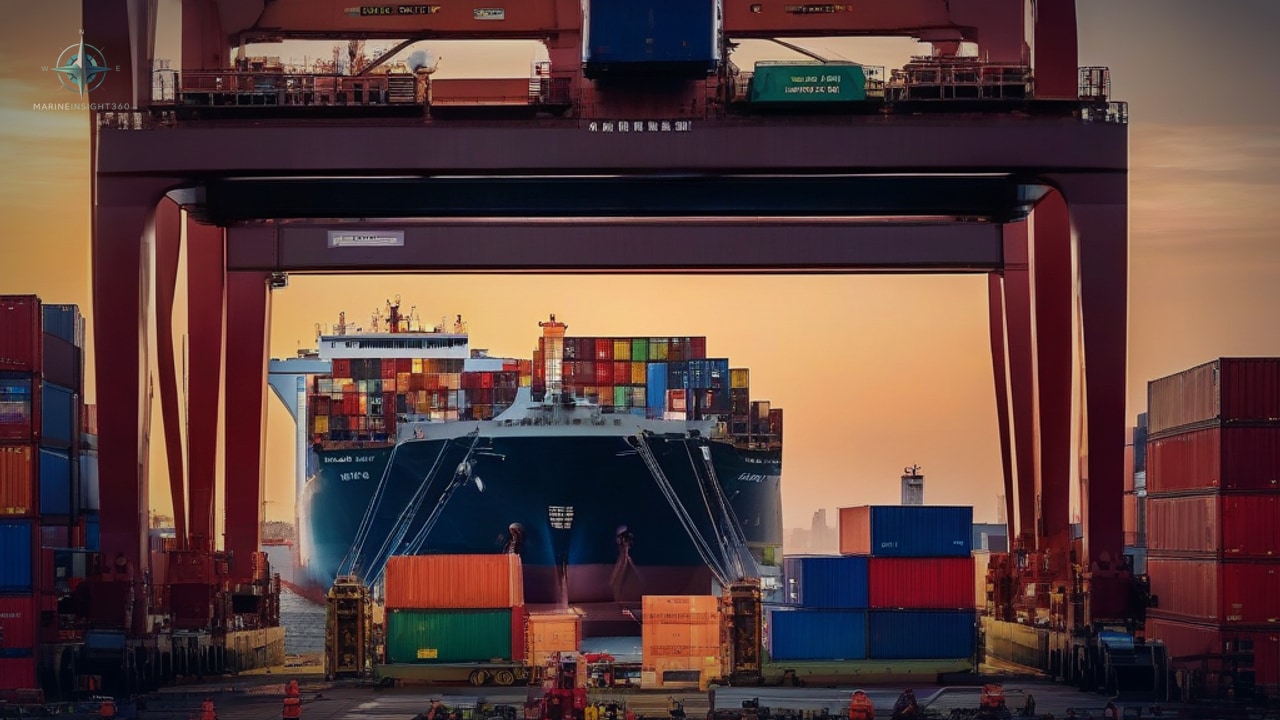
Qatar's seven major ports are Hamad Port, Ras Laffan, Al Ruwais, Mesaieed, Al Rayyan, Al Shaheen and Halul Island, spanning container, LNG and crude oil trade.
Qatar has one of the highest incomes per head in the world, built on oil and above all natural gas. It is one of the world's largest exporters of liquefied natural gas (LNG). Its main export markets are in Asia, led by China, India, Japan and South Korea, and it also trades heavily with Europe and the United States. The world's largest shipping companies call at its ports and terminals. Unemployment is close to zero, living standards are high, and low taxes attract foreign companies. With a long coastline on the Persian Gulf, Qatar has invested heavily in modern ports, and new trade routes and suppliers have greatly expanded its maritime trade.
Major Ports In Qatar
1. Hamad Port/Doha
Hamad Port is Qatar's main commercial port, south of Doha. Construction began in 2010 and the port opened fully for commercial operations in 2016, replacing the old Doha Port, which has since been redeveloped as a cruise terminal and waterfront district. Hamad Port was built on reclaimed land with dredged channels, and its basin is deep enough for the largest container ships in service. It is run by Mwani Qatar under the Ministry of Transport. Besides containers, it handles general cargo and special imports such as livestock, vehicles and grain. It is one of the largest ports in the Middle East and a central project of Qatar National Vision 2030, meant to diversify the economy, boost trade and attract foreign investment.
Container Terminals
Hamad Port is planned to have three container terminals with a combined capacity of about 7.5 million TEU a year when all are complete. The terminals use modern ship-to-shore gantry cranes and yard equipment, and container scanning systems that cut the time boxes spend in the port.
General Cargo Handling Facility
This terminal handles non-container cargo, including machinery, steel and steel products, dry bulk cargo, construction equipment, fertiliser and petroleum products. It has sheds, covered storage and refrigerated warehouses, and a capacity of about 1.6 million tonnes a year.
Multipurpose Terminal
This terminal is split into separate facilities for grain, livestock and vehicles. The grain terminal unloads ships by conveyor straight into silos with very little manual handling. The vehicle terminal has capacity for more than 450,000 vehicles a year, and the livestock terminal has gated pens that keep different animals apart. Security includes a 110-metre port control tower and a customs-controlled inspection area that can handle more than 5,500 containers a day. Hamad Port also offers ship repair, inspection and other maritime services, and an economic zone has been set up next to it to support Qatar's non-oil exports.
2. Ras Laffan Port
Ras Laffan, on Qatar's north-east coast, is the world's largest LNG export port and can take the largest gas carriers afloat. It is a deep-water port with one of the largest man-made harbours in the world, It sits on the international maritime trade routes linking the Gulf with the Far East and Europe, and from here hydrocarbons are shipped to Asia, Europe and most other major markets. The port and the industrial city around it grew up to serve the North Field, the giant offshore gas field that Qatar shares with Iran, where it is known as South Pars.
The port was built mainly for the gas industry. It covers about 850 hectares inside two breakwaters, with two entrance channels dredged to 14.5 m. Besides LNG it handles liquefied petroleum gas, refined products, sulphur and other cargo, with more than 1,000 ship calls and more than 10 million tonnes of cargo a year. It is owned and operated by QatarEnergy (formerly Qatar Petroleum).
LNG Handling Facilities
Ras Laffan has six LNG berths that can load the largest LNG carriers, including the Q-Max ships of about 266,000 cubic metres, as well as conventional carriers of around 140,000 to 220,000 cubic metres.
Liquid Bulk Goods
Six liquid bulk berths handle liquefied petroleum gas, condensate and refined products, for ships between 165 and 345 metres long.
Sulfur Terminal
A dedicated sulphur berth can take ships of more than 100,000 DWT.
Conventional Cargo Terminal
The port has four dry cargo berths, each 300 m long and able to take ships of more than 60,000 DWT. Two further berths, 150 m long, have ro-ro facilities for ships of about 20,000 DWT. Harbour craft provide bunkering, fresh water and other services. Three separate offshore berths, about 55 km from the main port, take tankers of between 90,000 and 325,000 DWT.
Ras Laffan Shipyard
The Ras Laffan shipyard, run by Nakilat, covers about 110 hectares and repairs, maintains and builds ships, including the large LNG carriers that load at the port. That makes it one of the world's most important repair bases for gas carriers. It has large dry docks, covered workshops and fabrication halls, warehouses and offices.
3. Al Ruwais Port
Al Ruwais is Qatar's second commercial port, at the northern tip of the country. It has helped grow and diversify trade in northern Qatar. Besides general cargo, it is a gateway for food, including fresh and chilled produce and meat, from neighbouring countries.
To handle that trade, Mwani Qatar has built new facilities for refrigerated containers and upgraded the port. The entrance channel has been dredged to 5 m, and a new quay has been built with 7 m of water alongside.
4. Mesaieed Port/Umm Said Mesaieed
Mesaieed Port, also known as Umm Said, is on Qatar's east coast about 45 km south of Doha, in the country's main industrial area. Mesaieed Industrial City is home to Qatar's fertiliser, petrochemical, steel and aluminium plants, and much of their output leaves through this port, along with crude oil piped from the onshore Dukhan field on the west coast. It handles around 2,800 ships, 48 million tonnes of cargo and 59,000 TEU a year. Exports include crude oil, refined products, liquefied petroleum gas, naphtha, petrochemicals, ethylene, ammonia, methanol, polyethylene pellets, urea, iron and steel, sulphur and other bulk and general cargo.
Imports include iron ore pellets, salt, cement, clinker and project cargo. The port has 29 berths for specialised cargoes. The three gabbro berths handle gabbro (crushed rock), clinker and general cargo, and can take ships of more than 90,000 DWT.
5. Al Rayyan Oil Terminal Port
The Al Rayyan marine terminal lies offshore in the southern Persian Gulf, about 35 nautical miles off Qatar's coast. Crude from the Al Rayyan field is piped to a floating storage and offloading unit (FSO), the Falcon Spirit, of about 124,000 DWT, moored at a single point. Export tankers come alongside to load from her. The terminal can take tankers of up to 320,000 DWT with a maximum draft of 21 m.
6. Al Shaheen Oil Terminal
This terminal serves the Al Shaheen oil field off Qatar's north-east coast, the country's largest offshore oil field and one of the largest in the world. The field produces about 100 million barrels of oil a year, around 45% of Qatar's oil output, from more than 30 platforms and over 300 wells. It is operated by North Oil Company, and its crude is stored in two FSOs, FSO Africa and FSO Asia, moored to single point moorings, which transfer it to export tankers.
7. Port of Halul Island
Halul Island is a small Qatari island about 50 nautical miles east of Doha. Its terminal exports crude from Qatar's offshore fields, such as Idd El Shargi, through single buoy moorings. QatarEnergy operates the facilities. The island is roughly round, ringed by coral reef, and largely covered with oil storage tanks, plant and housing for workers.
Recommended Reading
Which Are The Major UAE Ports?
Bordered by Oman and Saudi Arabia, the UAE has become a beacon of development and trade on the Arabian Peninsula. It shares seas with Qatar to the west…
What are the 5 major ports of Bahrain?
Bahrain is an island nation near the western coastline of the Arabian Gulf. It comprises 50 natural and 33 artificial islands. Bahrain is the third…
What Are The 10 Major Ports in Mexico?
Mexico is located in the southern part of the North American continent. And also, is the world's 10th most populous country. It is a developing country, classified as an upper-middle-income country by the World Bank.