
What Is a Ship Chandler? Roles and Responsibilities
What a ship chandler supplies, how a stores order is placed and delivered in port, how bonded stores and customs work, and the people who do the job.
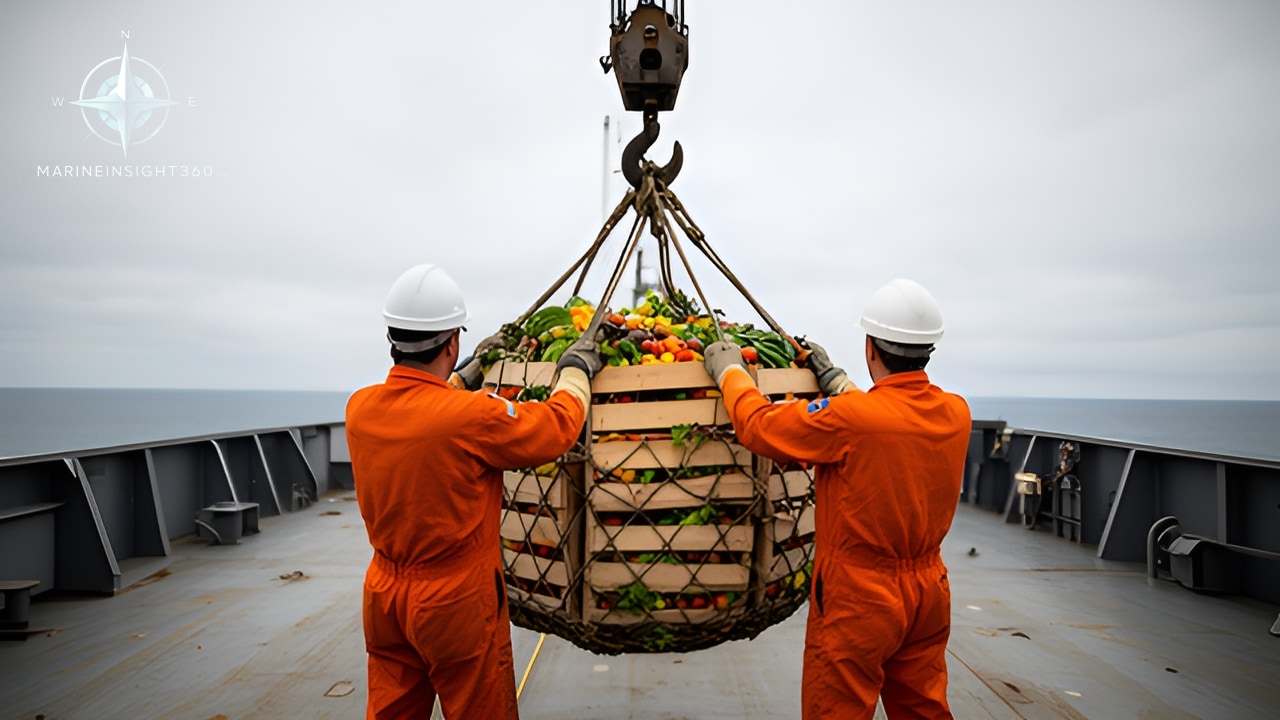
A ship chandler is a supplier that delivers food, stores and equipment to ships while they are alongside or at anchor. A typical chandler handles provisions for the galley, deck and engine stores, cabin stores and safety items, and often arranges services such as liferaft servicing, launches or waste collection through other firms.
The ship or its manager sends a requisition, the chandler quotes and sources the goods, clears them with customs where needed and brings them to the ship, often within a port stay of a day or less.
Where the name comes from
Chandler comes from the Old French word for a maker or seller of candles. In the days of sail, a chandler's shop near the harbour sold candles and tallow alongside rope, canvas, tar, lamp oil and the hundreds of small items a sailing ship used up on a voyage.
The candles have gone, but the trade is recognisably the same: one supplier who knows what ships use and can deliver it without the crew having to go ashore and find it.
What a ship chandler supplies
Chandlers usually group their goods the same way ships order them, by department.
- Provisions: fresh, frozen and dry food, bottled water and galley consumables, normally ordered by the chief cook or chief steward.
- Deck stores: mooring ropes, wire, shackles, paint, brushes, rags, cleaning chemicals, hand tools and general hardware.
- Engine stores: filters, gaskets, jointing, welding consumables, boiler and cooling water treatment chemicals, and common consumable spares.
- Cabin and hotel stores: bed linen, towels, toiletries, laundry supplies and crockery.
- Safety and medical items: personal protective equipment, restocking of the medical chest, pyrotechnics and replacement batteries or lights for lifejackets.
- Bonded stores: cigarettes, spirits and other duty-free goods, delivered under customs control and kept sealed while the ship is in port.
- Paper and navigation items: charts, nautical publications, flags and stationery, depending on the chandler.
Some things normally come from elsewhere. Bunkers and bulk lubricating oil are bought from fuel and oil suppliers, and major machinery spares usually come from the engine maker or a specialist marine spare parts supplier. A chandler may still collect and deliver those parts if they arrive at the port by courier.
Many chandlers act as the coordinator for services they do not perform themselves: the annual servicing of liferafts and fire extinguishers by approved service stations, launch hire at anchorages, collection of garbage and sludge, crew transport, laundry, and pest control or fumigation. What a particular chandler offers depends on the port and the size of the company.
How a stores order works, from the ship's side
From the crew's point of view, a chandler delivery follows much the same sequence in every port.
- Before arrival, each department lists what it needs. The cook prepares the provisions order within the company's victualling budget, which is often set as a daily rate per person on board, and the master approves it. The chief officer and chief engineer prepare the deck and engine requisitions.
- Items are identified by catalogue codes so that both sides know exactly what is meant. The two common systems are the IMPA Marine Stores Guide, which gives each item a six-digit code, and the ISSA Ship Stores Catalogue. They are separate systems, so the ship and the supplier need to agree which one an order uses.
- The manager's purchasing team, or the master on some ships, sends the enquiry to one or more chandlers in the port, often through an electronic procurement platform. The chandler quotes prices and delivery times, and the buyer confirms the order. Large shipping companies often have standing agreements with chandlers in the ports their ships call at regularly.
- The chandler works with the ship's agent on the berth, the arrival time, gate passes and the customs paperwork. At an anchorage the goods go out by launch or barge, and the ship rigs its provision crane to lift them aboard.
- On board, the cook or the duty officer checks the delivery against the delivery note, looks at the condition of fresh food and the temperature of frozen goods, and refuses anything damaged or spoiled before signing. Shortages and rejected items are written on the receipt.
- Provisions go straight into the cold rooms and dry store. Deck and engine stores are booked into the ship's inventory or planned maintenance system.
The checking on delivery has a regulatory side. Under the Maritime Labour Convention, 2006 (Regulation 3.2 and Standard A3.2), the shipowner must provide food and drinking water of appropriate quality, nutritional value and quantity, and documented inspections of the food and water supplies must be carried out at frequent intervals by or under the authority of the master.
A delivery of poor fruit or frozen meat that has thawed on the quay is a problem the ship has to record and sort out, which is why experienced cooks inspect before they sign.
Why ships use a chandler
A merchant ship's time in port is short and getting shorter. A container ship may be alongside for less than a day, and a tanker at an oil terminal works around the clock until it sails. The crew have little time ashore and no transport, and most terminals restrict who can come through the gate.
A chandler with port passes, a warehouse close to the docks and a working relationship with the agents and customs can bring everything to the gangway in one delivery.
For the ship manager, using a known chandler means one supplier and one invoice per port call, prices agreed in advance, and someone to chase when an item is missing. For the master, it means the stores arrive while the ship is still in port.
Missing a delivery is expensive: a ship that sails short of a critical filter or a fresh-water treatment chemical may have to wait for the next port, and running low on provisions on a long ocean passage is worse.
Timing is the chandler's biggest practical difficulty. Berthing times change, ships shift berth, and a delivery planned for the morning may have to wait until cargo work allows the crane to be used for stores. Chandlers in busy ports usually work around the clock for that reason, and their operations staff track ship arrivals as closely as the agents do.
Customs and bonded stores
Goods delivered to a ship bound for a foreign port are usually treated as exports, so they can often be supplied free of local duty and sales tax. The chandler handles the customs declarations for this. Alcohol and tobacco are the sensitive items: they are delivered as bonded stores, counted, and locked in the bond locker, which customs may seal while the ship is in port. The rules differ from country to country, so the chandler and agent advise the master on what may be landed, what must stay sealed and what the crew may keep for personal use. Our article on bonded goods in shipping explains the customs side in more detail.
Industry bodies
The International Shipsuppliers and Services Association (ISSA), formed in 1955, represents ship suppliers, largely through national associations, and publishes the ISSA Ship Stores Catalogue. The International Marine Purchasing Association (IMPA), founded in 1978, represents buyers and publishes the IMPA Marine Stores Guide. Membership of either is voluntary.
Working for a ship chandler
There is generally no professional licence for ship chandlers, though a chandlery typically needs port access permits for its staff and vehicles, customs registration and, to handle duty-free goods, customs approval for bonded supplies. Staff come from logistics, purchasing, warehousing and sales, and some are former seafarers, whose experience of reading a chief engineer's requisition is useful. Typical roles include account managers who deal with ship managers, buyers, warehouse and cold-store staff, delivery drivers and launch crews, and operations coordinators who track ship arrivals with the agents. Pay depends heavily on the country and the company. Because chandlers work hand in hand with agents and other port businesses, people often move between chandlers, agencies and port call service companies during a career.
Recommended Reading
Shipowner Responsibilities in Maritime Trade
A shipowner is responsible for far more than owning an asset.
5 Important Responsibilities of Ship Agents
Ship agents play a vital role in ensuring smooth and efficient port operations.
ISPS Code: Responsibilities And Security Levels
The security levels under the ISPS code clearly explain the current scenario related to the term security level. This refers to the hazard to the country and its coastal region.