
Working of Marine Boilers Explained
Working of Marine Boilers Explained: safety, training and compliance context for US, UK, Canada, Australia, Singapore and European maritime readers.
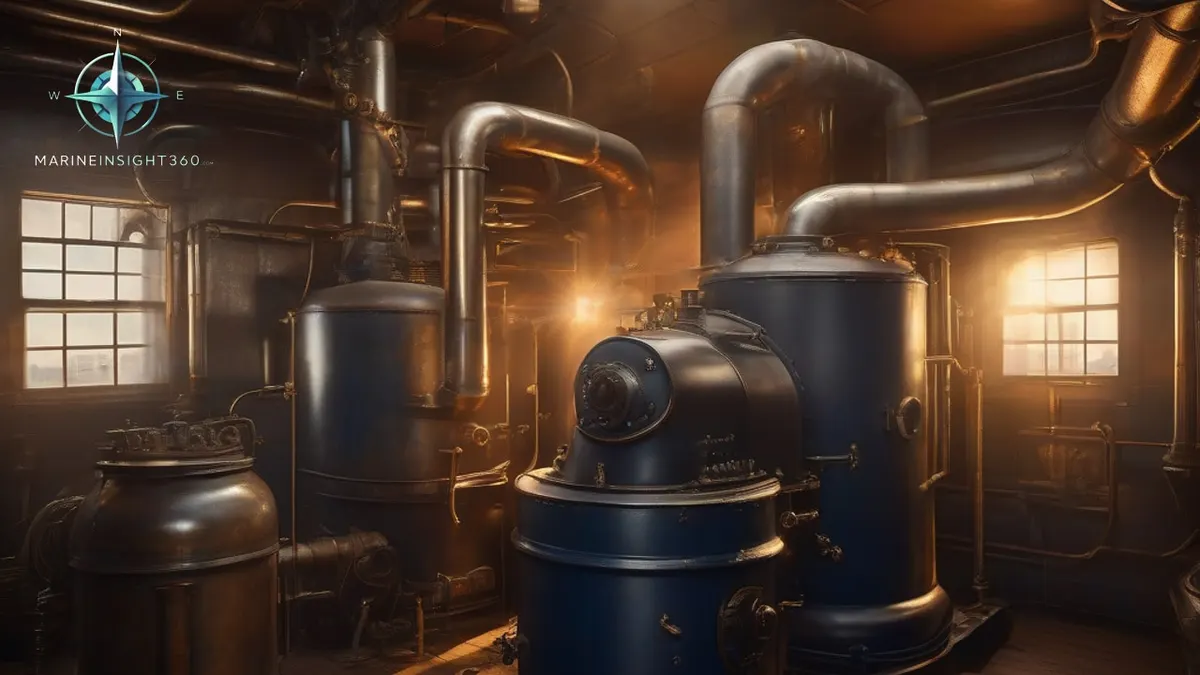
Introduction: The Heartbeat Beneath the Deck
Marine boilers are pressure vessels that burn fuel to turn feed water into steam; aboard ship that steam drives turbines and cargo pumps, heats fuel oil to the viscosity combustion needs, and warms accommodation.
Long before the era of diesel engines and electronically controlled propulsion systems, steam was the undisputed master of the seas. It drove warships into battle, powered ocean liners across the Atlantic, and fueled the industrial revolution's ambitions on water. Today, while the maritime industry has diversified enormously in its propulsion and auxiliary systems, marine boilers remain as relevant, as critical, and as technically fascinating as ever.
Modern vessels range from massive Liquefied Natural Gas (LNG) carriers and crude oil tankers to naval ships and large passenger vessels. Aboard all of them, marine boilers continue to perform essential roles. They generate the steam that drives turbines and powers cargo pumps. That steam also heats fuel oil to the viscosity required for combustion, and warms crew accommodations. It supports a vast range of auxiliary systems that keep a vessel operational at sea.
Yet despite their importance, marine boilers are frequently misunderstood — or worse, taken for granted — until something goes wrong. A boiler failure at sea is not merely an inconvenience. It can mean loss of propulsion, cargo system failure, or in the most serious cases, a catastrophic explosion that endangers crew and vessel alike.
Maritime industry professionals include marine engineers, chief officers, technical superintendents, naval architects and marine surveyors. They need a thorough understanding of how marine boilers work. They also need to know why boilers are designed the way they are, and how to maintain them to the highest standard. That understanding is not optional. It is a core professional competency.
How Marine Boilers Work
This comprehensive guide covers everything you need to know about marine boilers. It starts with the fundamental thermodynamic principles that govern their operation. It then sets out the different types found aboard modern vessels, the key components and how they function together. It closes with common operational challenges, maintenance best practices, and the emerging technologies shaping the future of marine boiler systems.
What Is a Marine Boiler? Defining the Technology
At its most fundamental level, a marine boiler is a pressure vessel designed to generate steam. It transfers heat — produced by the combustion of fuel — to water. That steam is then used to perform work: driving turbines, operating machinery, heating systems, or supporting cargo operations.
The definition sounds simple. The engineering reality is anything but.
A marine boiler must operate reliably in one of the world's most demanding environments. It is subject to constant vessel motion, corrosive saltwater atmosphere and varying fuel quality. It also faces fluctuating load demands, extreme operating pressures and temperatures. The design, construction and operation of marine boilers are governed by strict international standards and classification society rules. Those rules are strict precisely because the consequences of failure are so severe.
The Role of Steam in Maritime Operations
To appreciate why marine boilers matter, it helps to understand the breadth of applications that steam supports aboard a vessel. That breadth reaches into almost every part of the ship:
- Main propulsion — On steam powered vessels, the boiler is the primary power source for the entire ship. LNG carriers with steam turbine propulsion are the clearest example.
- Cargo pumping — On oil tankers, steam driven cargo pumps are used to discharge cargo efficiently and safely.
- Fuel oil heating — Heavy fuel oil (HFO) must be heated to 120–150°C. That temperature achieves the viscosity required for efficient atomization and combustion in main and auxiliary engines.
- Tank heating — Certain cargoes, including crude oil, molasses, and chemical products, must be maintained at specific temperatures during transit.
- Accommodation heating — Steam provides heating for crew spaces, particularly in cold water operations.
- Galley and laundry services — Steam is used for cooking, hot water generation, and laundry facilities.
- Inert gas systems — On tankers, steam boilers supply the inert gas system that protects cargo tanks from explosive atmospheres.
The Thermodynamic Principles Behind Marine Boilers
A solid understanding of marine boiler operation begins with thermodynamics — the science of heat, energy, and their transformations.
The Rankine Cycle: The Engine of Steam Power
Marine boiler systems operate on the Rankine Cycle — the thermodynamic cycle that underpins all steam power generation. The cycle consists of four fundamental stages:
- Heat addition (boiler) — Water is heated at constant pressure in the boiler, first to its boiling point (sensible heat phase). It is then converted to steam (latent heat phase). In many systems it is further heated beyond saturation to produce superheated steam.
- Expansion (turbine or engine) — The high pressure steam expands through a turbine or reciprocating engine. It performs work and loses pressure and temperature in the process.
- Heat rejection (condenser) — The expanded steam enters a condenser, where it is cooled by seawater and condensed back into liquid water (condensate).
- Pressurization (feed pump) — The condensate is pumped back up to boiler pressure by the feed pump, completing the cycle.
The efficiency of this cycle is directly influenced by the pressure and temperature at which the boiler operates. That efficiency in turn sets the fuel economy of the entire steam plant. Higher pressures and temperatures generally yield higher thermodynamic efficiency. This is why modern marine boilers operate at significantly higher parameters than their historical predecessors.
Saturated vs. Superheated Steam
The state of the steam produced by a marine boiler matters a great deal. It has profound implications for its applications and efficiency:
- Saturated steam — Steam at the boiling point corresponding to its pressure. Contains no superheat and may carry moisture droplets. Used extensively for heating applications such as fuel oil heating, accommodation heating and tank heating. In those duties the condensation of steam is actually desirable, as it releases the latent heat of vaporization directly into the substance being heated.
- Superheated steam — Steam that has been heated beyond its saturation temperature at a given pressure. Dry, higher energy, and more efficient for mechanical work. Used in main propulsion turbines and turbo generators where maximum energy extraction is the goal. Superheated steam is produced by passing saturated steam through a superheater. That superheater is a set of additional heating tubes within or downstream of the main boiler.
Types of Marine Boilers
Types of Marine Boilers: A Comprehensive Classification
Not all marine boilers are alike. The maritime industry uses several distinct types of boiler, each suited to specific operational requirements, vessel types, and applications.
Water Tube Boilers
In a water tube boiler , water flows through tubes. Those tubes are surrounded by the hot combustion gases produced in the furnace. Heat is transferred from the gases to the water inside the tubes, generating steam.
Water tube boilers are the dominant type in modern high pressure marine applications. They offer several critical advantages:
- High pressure capability — Individual tubes have a small diameter. That allows them to withstand much higher pressures than the large shells of fire tube designs. Modern marine water tube boilers operate at pressures of 60–100 bar and above.
- Rapid steam generation — The water volume in the tubes is relatively small. The boiler therefore responds quickly to changes in load demand.
- High steam output — Water tube designs can produce very large quantities of steam. That makes them suitable for main propulsion on large vessels.
- Efficient heat transfer — The arrangement of tubes provides a large heat transfer surface area relative to the overall boiler size.
Water tube boilers are found on LNG carriers and large naval vessels. They suit any application where high pressure, high temperature steam is required for propulsion or power generation.
Fire Tube Boilers
In a fire tube boiler , hot combustion gases pass through tubes. Those tubes are submerged in a large shell of water. Heat transfers from the gases inside the tubes to the surrounding water. Steam is generated in the space above the water level.
Fire tube boilers are simpler in construction and operation than water tube designs. That makes them well suited to auxiliary and heating applications:
- Scotch Marine boiler — The most common fire tube design in the maritime industry. Features one or more large cylindrical furnaces (flueways) surrounded by water. Combustion gases return through banks of smaller fire tubes. Robust, reliable, and relatively easy to maintain.
- Vertical fire tube boiler — A more compact design with the shell oriented vertically. Used in smaller vessels and for auxiliary steam generation where space is at a premium.
Fire tube boilers are limited to lower operating pressures, typically below 20 bar. That limit comes from the structural constraints of their large shell design. However, they remain highly practical and widely used for auxiliary applications. Those duties include fuel oil heating, accommodation services, and low pressure steam supply.
Exhaust Gas Boilers (Waste Heat Recovery Boilers)
One of the most energy efficient innovations in marine engineering is the exhaust gas boiler . It is also known as an economizer or waste heat recovery boiler (WHRB) . These units capture the thermal energy contained in the hot exhaust gases discharged by the main propulsion engine. They use that energy to generate steam, without consuming any additional fuel.
The operating principle is straightforward:
- Hot exhaust gases from the main engine (typically at 250–400°C) pass through the exhaust gas boiler on their way to the funnel.
- Feedwater circulates through tubes within the boiler, absorbing heat from the exhaust gases.
- Steam is generated and fed into the vessel's steam distribution system for auxiliary use.
On a large vessel operating at sea speed, the exhaust gas boiler can meet the majority of the vessel's auxiliary steam demand entirely from waste heat. That reduces fuel consumption, operating costs and emissions simultaneously. It makes exhaust gas boilers an essential component of modern energy management strategies in the maritime industry.
Composite Boilers
A composite boiler combines both an oil fired furnace and an exhaust gas heating section within a single unit. This design offers maximum operational flexibility:
- At sea, with the main engine running, the exhaust gas section provides steam from waste heat recovery.
- In port, at anchor, or during maneuvering, the main engine is not running at full power. The oil fired section then takes over to maintain steam supply.
- The two sections can operate simultaneously during periods of high steam demand.
Composite boilers are particularly common on vessels with significant auxiliary steam requirements. Product tankers and chemical carriers are typical examples. On those ships, reliable steam availability in all operating conditions is critical.
Key Boiler System Components
Key Components of a Marine Boiler System
Understanding how a marine boiler works requires familiarity with its major components. It also requires knowing how they interact as an integrated system.
The Boiler Drum
The steam drum is the primary pressure vessel of a water tube boiler. It serves as the collection point for steam generated in the waterwall and generating tubes. It also houses critical internal fittings. These include the steam water separator, chemical dosing connections, and water level gauges.
The water drum (or mud drum) is located at the bottom of the water tube circuit. It collects sediment and provides a connection point for the lower ends of the generating tubes.
Burner and Combustion System
The burner is responsible for atomizing and igniting the fuel oil to produce a stable, efficient flame in the furnace. Key components include:
- Fuel oil atomizer — Breaks the fuel into a fine mist for efficient combustion. Steam atomizing, mechanical atomizing, and rotary cup designs are all used in marine applications.
- Air register — Controls the flow and swirl of combustion air around the burner. This promotes thorough mixing with the fuel mist.
- Ignition system — Spark ignitors or pilot burners that initiate combustion during light off.
- Flame detection system — Ultraviolet or infrared sensors that confirm flame presence. They trigger safety shutdowns if flame failure occurs.
Superheater
The superheater is a bank of tubes positioned in the high temperature gas path within the boiler. Saturated steam from the steam drum passes through the superheater tubes and absorbs additional heat. That raises its temperature above the saturation point without increasing its pressure. The result is dry, superheated steam with higher energy content for turbine drive applications.
Economizer
The economizer is positioned in the cooler gas path downstream of the main heat exchange surfaces. It preheats the feedwater before it enters the boiler drum. That recovers additional heat from exhaust gases and improves overall thermal efficiency. Even a modest increase in feedwater temperature through economizer heating can yield measurable fuel savings over the course of a voyage.
Feed Water System
The feed water system is responsible for maintaining a continuous, controlled supply of treated water to the boiler. Its key components include:
- Feed pumps — High pressure pumps that deliver feedwater from the feed tank to the boiler drum. They work at a pressure exceeding boiler operating pressure.
- Feed water regulators — Automatic control valves that maintain the correct water level in the boiler drum.
- De aerator — Removes dissolved oxygen and other gases from the feedwater. Those gases are a primary cause of corrosion in boiler tubes and drums.
- Feed water heater — Preheats the feedwater using extracted steam, improving efficiency and reducing thermal shock to the boiler.
Safety Valves
Safety valves are the last line of defense against catastrophic over pressure in a marine boiler. They are spring loaded devices that automatically open to release steam when boiler pressure exceeds the set maximum. This prevents structural failure. Classification society rules require that every boiler is fitted with at least two independent safety valves. Those valves are sized to discharge the full steaming capacity of the boiler.
Safety valves must be tested and certified at regular intervals — their correct operation is non negotiable from a safety standpoint.
Steam Distribution System
Generated steam is distributed throughout the vessel via an insulated pipe network to the various consumers. Key elements include:
- Main steam stop valve — The primary isolation valve between the boiler and the distribution system.
- Steam manifolds and headers — Distribution points that route steam to multiple consumers simultaneously.
- Pressure reducing valves (PRVs) — Reduce high pressure steam to the lower pressures required by heating and auxiliary applications.
- Steam traps — Automatically drain condensate from steam lines without releasing live steam. They maintain system efficiency and prevent water hammer.
Marine Boiler Maintenance Essentials
Marine Boiler Water Treatment: The Silent Guardian
Water quality is arguably the single most important factor in marine boiler reliability and longevity. Untreated or improperly treated water causes two primary forms of damage. Between them they are responsible for the majority of boiler failures in the maritime industry.
Scale Formation
Dissolved minerals, primarily calcium and magnesium salts, may be present in boiler feedwater. At high temperatures they precipitate out of solution. They then deposit on tube internal surfaces as scale . Scale is an extraordinarily effective thermal insulator:
- A scale deposit just 1mm thick can reduce heat transfer efficiency by up to 10%.
- Reduced heat transfer causes tube metal temperatures to rise dramatically.
- Overheated tubes lose strength, leading to tube bulging, cracking, and ultimately catastrophic tube failure.
Corrosion
Dissolved oxygen and carbon dioxide in feedwater are highly corrosive to steel boiler components. Oxygen pitting is characterized by small, deep pits in tube walls and drum surfaces. It is a particularly insidious form of damage. It can cause tube failures without obvious external warning signs.
Water Treatment Program Components
An effective marine boiler water treatment program typically includes:
- Mechanical de aeration — Removing dissolved gases through the de aerator. This happens before feedwater enters the boiler.
- Chemical oxygen scavenging — Adding chemicals such as hydrazine (on older vessels) or sodium sulphite. These chemically remove residual dissolved oxygen.
- pH control — Maintaining boiler water at an alkaline pH (typically 10.5–11.5) to inhibit corrosion.
- Scale inhibition — Dosing with phosphate or polymer based chemicals to prevent scale deposition.
- Regular blowdown — Periodically discharging a portion of boiler water. This removes accumulated dissolved solids and maintains water quality within specification.
- Regular water testing — Monitoring pH, chloride levels, dissolved oxygen, phosphate reserve, and total dissolved solids at defined intervals.
Common Marine Boiler Failures and How to Prevent Them
Even with the best maintenance practices, marine boilers are subject to a range of failure modes. Understanding these failures is essential knowledge for any marine engineer. That means knowing their causes, symptoms, and prevention strategies.
Tube Failures
Tube failures are the most common serious failure mode in marine boilers. Causes include:
- Scale buildup leading to overheating and tube burn out.
- Oxygen corrosion pitting weakening tube walls.
- Erosion from high velocity steam or water flow.
- Thermal fatigue from repeated heating and cooling cycles.
- Mechanical damage from water hammer events.
Prevention: Rigorous water treatment, plus regular internal inspections using endoscopy or ultrasonic thickness testing. Prompt action is also needed when water quality parameters fall out of specification.
Priming and Foaming
Priming occurs when water droplets are carried over with the steam into the distribution system. Foaming is caused by high levels of dissolved solids or contamination with oil. It creates a frothy water surface in the drum that promotes priming. Both conditions can cause serious damage to turbines, valves, and other steam consumers.
Prevention: Maintaining boiler water quality within specification, regular blowdown, and ensuring no oil contamination of the feed water system.
Furnace Explosion
A furnace explosion can occur when unburned fuel accumulates in the furnace and is then ignited. The cause may be a delayed ignition during light off. It may also be a flame failure that allows fuel to continue flowing. The resulting deflagration can cause severe structural damage.
Prevention: Strict adherence to boiler light off procedures, and proper pre purge of the furnace before ignition. Functional flame detection systems are also required, along with regular maintenance of the burner management system.
Future Marine Boiler Technologies
Marine Boiler Maintenance: Best Practices for Maritime Professionals
Proactive, systematic maintenance is the foundation of reliable marine boiler operation. The following framework reflects industry best practices. It also reflects classification society requirements.
Daily Operational Checks
- Monitor steam pressure and temperature against set parameters.
- Check water level in the boiler drum. Verify gauge glass readings against independent level indicators.
- Test low water level alarms and automatic shutdowns.
- Check combustion quality visually, looking at smoke color and flame appearance. Confirm it through flue gas analysis.
- Perform boiler water tests and adjust chemical dosing as required.
- Carry out surface blowdown to maintain water quality.
- Inspect for any unusual noises, vibrations, or steam leaks.
Periodic and Planned Maintenance
- Bottom blowdown at defined intervals to remove accumulated sludge.
- Burner tip cleaning and inspection.
- Safety valve testing (lift testing at operating pressure).
- Flame detector cleaning and functional testing.
- Feed pump maintenance and performance checks.
- Steam trap testing and replacement of failed traps.
- Internal inspection during dry dock or planned maintenance periods. This covers tube condition assessment, drum inspection and refractory condition.
The Future of Marine Boilers: Innovation and Evolution
The marine boiler is not standing still. Several important trends are shaping the evolution of boiler technology in the maritime industry.
LNG Fired Boilers
As the maritime industry transitions toward lower emission fuels, LNG fired boilers are becoming increasingly important. That is particularly true on LNG carriers, where boil off gas from the cargo is used as fuel. These systems offer significantly lower NOx, SOx, and particulate emissions. Conventional HFO fired boilers cannot match them.
Enhanced Waste Heat Recovery
Advances in exhaust gas boiler design are being combined with organic Rankine cycle (ORC) systems and turbo compound arrangements. Together they are pushing waste heat recovery efficiencies to new levels. They extract more useful energy from exhaust streams and reduce the overall fuel consumption of vessels.
Digitalization and Predictive Maintenance
The integration of IoT sensors, digital twins and AI driven predictive maintenance platforms into marine boiler systems is transforming how boilers are monitored and managed. Real time monitoring covers tube temperatures, flue gas composition, water chemistry and burner performance. It allows engineers to identify developing problems before they become failures. Maintenance shifts from a reactive to a predictive model.
Hydrogen Compatible Boiler Designs
As the maritime industry explores hydrogen as a zero carbon fuel, boiler manufacturers are developing hydrogen compatible combustion systems . These must handle the unique characteristics of hydrogen flame behavior. They must also meet its safety requirements and materials compatibility challenges.
Summary: Marine Boilers — Engineering Excellence at the Heart of Maritime Operations
Marine boilers represent one of the most enduring and essential technologies in the maritime industry. Their roles run from steam propulsion and cargo operations to fuel heating, accommodation services and energy recovery. Boilers are woven deeply into the operational fabric of modern vessels.
The key takeaways from this comprehensive guide are:
- Marine boilers operate on well established thermodynamic principles — understanding the Rankine cycle and the behavior of steam is fundamental. That knowledge underpins operating and maintaining these systems effectively.
- Multiple boiler types serve different purposes — water tube boilers carry high pressure propulsion steam. Fire tube designs cover auxiliary applications, and exhaust gas boilers provide energy efficient waste heat recovery.
- Water treatment is non negotiable — the majority of serious boiler failures trace back to inadequate water treatment. A rigorous, consistent program is the single most impactful maintenance investment an operator can make.
- Systematic maintenance prevents catastrophic failure — daily checks and periodic inspections keep boilers operating safely and efficiently. So does adherence to manufacturer and classification society requirements.
- The future is digital and cleaner — LNG firing and advanced waste heat recovery are shaping the next generation of marine boiler technology. So are AI driven predictive maintenance and hydrogen compatibility.
- Marine engineers are the guardians of boiler integrity — the technology is only as reliable as the professionals who operate and maintain it.
Margins are tight, environmental regulations are tightening and operational reliability is paramount. In that industry, marine boilers deserve every bit of the professional attention, technical expertise, and maintenance investment they require. They are not relics of a steam powered past. They are active, vital contributors to the maritime operations of today and tomorrow.
Recommended Reading
Why Boilers Are Used on Ships?
Why Boilers Are Used on Ships?: ports, trade and shipping-market context for US, UK, Canada, Australia, Singapore and European maritime readers.
Selection Of Marine Boilers During Ship Design
Selection Of Marine Boilers During Ship Design: technology, equipment and fleet context for US, UK, Canada, Australia, Singapore and European maritime...
How Does The Marine Boilers Works?
How Does The Marine Boilers Works?: technology, equipment and fleet context for US, UK, Canada, Australia, Singapore and European maritime readers.