
What is the Impact Clearance in an Air Compressor?
What is the Impact Clearance in an Air Compressor?: technology, equipment and fleet context for US, UK, Canada, Australia, Singapore and European...
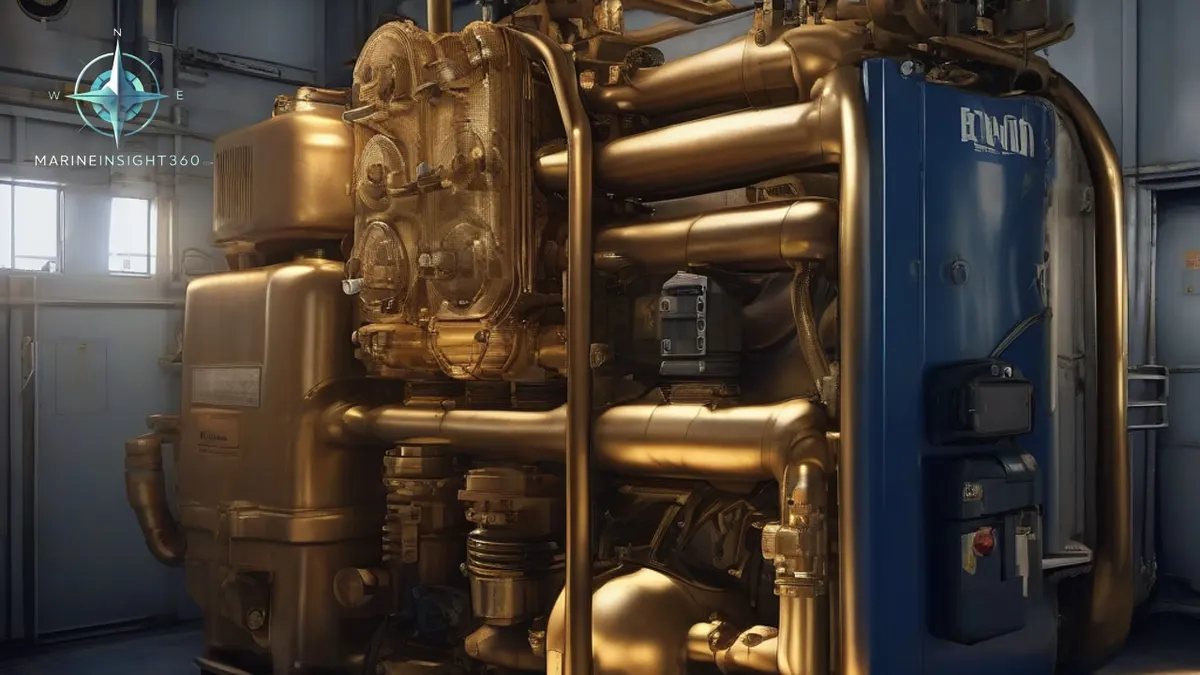
What is the impact clearance in an air compressor?
The impact clearance refers to the distance between the top of the piston and the cylinder head of an air compressor. This clearance is a critical aspect of the compressor and should be kept as small as possible to maximize its volumetric efficiency. It should be neither too small nor too large. Furthermore, the clearance affects the efficiency of the machine and should be checked regularly.
The Importance and Impact of the Impact Clearance
In anair compressor, when the discharge valve closes at the end of the compression cycle, a small amount of high-pressure air is trapped in the impact clearance.
Before intake can resume, the air trapped in the impact clearance must expand to below the intake pressure, that is, below atmospheric pressure.
The expansion of the air trapped in the impact clearance causes stroke loss, which reduces the volumetric efficiency of the compressor. Therefore, the impact of the impact clearance can significantly affect the efficiency of the compressor.
What happens when impact clearance is too low?
Low impact clearance can cause the piston to collide or bang with the cylinder head. This situation is particularly dangerous when the compressor is operating unloaded and the piston is moving unresisted.
Excessive impact clearance delays vacuum formation during the intake stroke, reducing the air pull required for compression. Therefore, the weight of the intake air decreases proportionally with the impact clearance size. The compressor must run longer to deliver the required compression pressure.
Reasons for Changing Clearances
During air compressor repair, if the shims installed between the cylinder head gaskets are incorrect, excessive clearance can increase, leading to bearing wear or improper bearing installation.
- Compressed Air Line on Ships – A General Overview
- How To Inspect And Maintain Ship Busbars?
- Why Is Dry Ice Used in Packaging?
- How To Inspect And Maintain Ship Busbars?
How to Check Excess Clearance?
To check for excessive clearance, place alead ball or plastic gauge on the piston and rotate the compressor by hand once.
This compresses the lead ball, and the resulting thickness is the clearance.
Use a vernier caliper or micrometer to measure this thickness and compare it to the manufacturer's value. If any deviation is found, adjustments are necessary.
Adjusting the Impact Clearance
Impact clearance can be adjusted by inserting shims (thin metal plates) into the lower bearing. Inserting shims alters the clearance between the connecting rod and piston.
What is the appropriate impact clearance?
The impact clearance typically depends on the manufacturer, but generally speaking, it should be between 0.5% and 1% of the cylinder diameter.
Reading interstage pressure when the compressor will not make air
On a two stage machine the intermediate pressure is the first diagnostic, and it costs nothing to read. A leaking low pressure stage valve sends less air to the intercooler, and the interstage gauge sits below its normal figure.
A leaking high pressure stage suction valve does the opposite. The high pressure stage cannot swallow what the low pressure stage delivers, air backs up, and the interstage pressure rises. A rising discharge temperature with a normal interstage reading points at the intercooler instead, usually tubes fouled on the seawater side.
Where clearance connects to a starting air explosion
Clearance that is too large is not only an efficiency problem. The machine runs longer for the same receiver pressure, worn rings and long running hours put more oil into the delivered air, and oil in the starting air line is one half of the classic starting air explosion.
The other half is a leaking cylinder starting air valve letting hot combustion gas back into the line. That is why the manifold carries a bursting disc or relief device, why each branch has a flame arrestor, and why receivers are drained of water and oil at a set interval rather than when someone remembers.
What the lead wire check can miss
A single crushed lead ball gives one number at one point on the crown. Take the reading at more than one position, because a bent connecting rod or an unevenly worn bottom end shows up as a difference across the crown rather than as a wrong average.
Shim, then measure again. Shims fitted at the bottom end bearing change the clearance, and the only proof that the right thickness went in is a second reading taken after the unit is boxed up and turned by hand.
Recommended Reading

Diving Deeper: The US Navy's Quest for Large Undersea Drones and its Impact on the Maritime Landscape
Diving Deeper: The US Navy's Quest for Large Undersea Drones and its Impact on the Maritime Landscape .

World's Largest Sportsfishing Boat and Its Impact
World's Largest Sportsfishing Boat and Its Impact: career, certification and hiring context for US, UK, Canada, Australia, Singapore and European...

Iran retaliates with missiles and drones, defying Trump’s warning
Learn iran with practical maritime context, safety checks, operational guidance and related resources for global shipping readers.