Bayesian's vulnerability to high winds was never assessed, MAIB final report finds
The MAIB's final report on the Bayesian sinking finds the yacht's knockdown risk with sails furled was never assessed, so the crew were unaware of it. Seven died off Sicily in 2024.
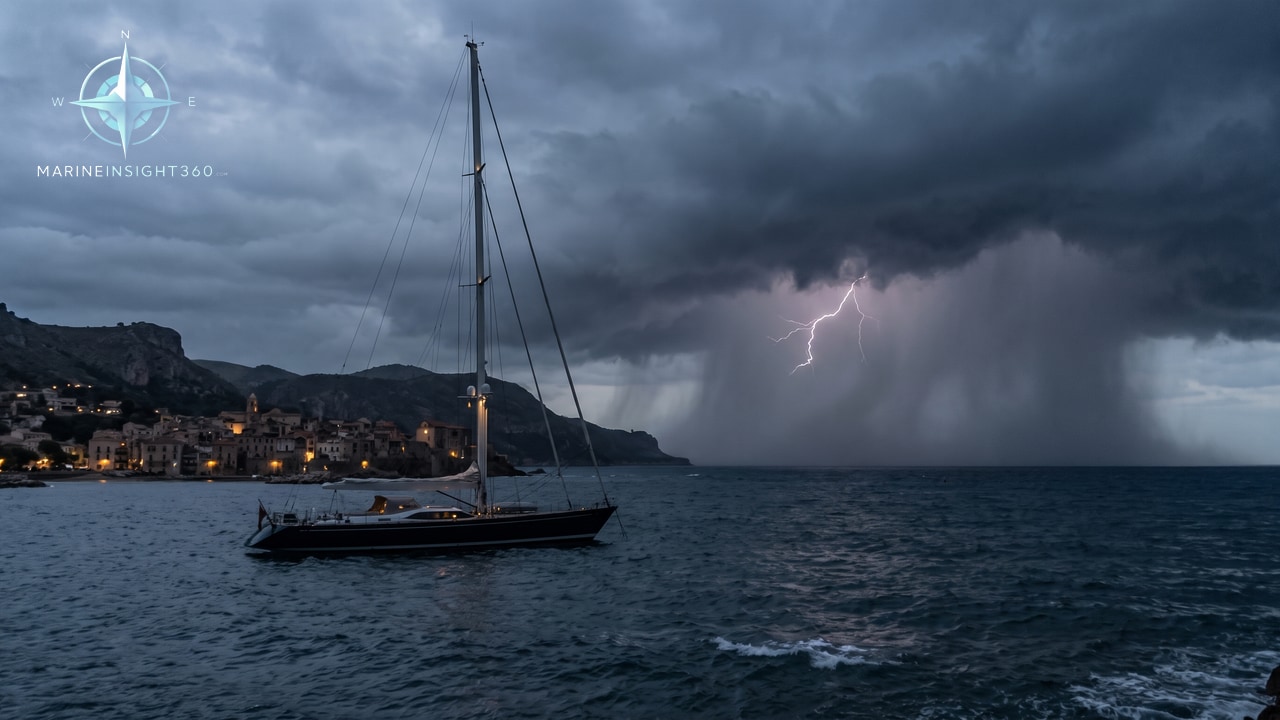
The UK Marine Accident Investigation Branch (MAIB) published its final report on the sinking of the sailing yacht Bayesian on Thursday 19 November, finding that the yacht's vulnerability to high winds with no sails set had never been assessed, so her crew did not know the risk. The 56-metre Perini Navi yacht capsized and sank at anchor off Porticello, Sicily, early on 19 August 2024, killing seven people, among them British technology entrepreneur Mike Lynch and his 18-year-old daughter Hannah.
The other victims were lawyer Chris Morvillo and his wife Neda, banker Jonathan Bloomer and his wife Judy, and the yacht's chef Recaldo Thomas, Reuters reported. Fifteen people survived.
Stability information did not cover the risk
With no sails set, the yacht's windage and stability left her "vulnerable to knockdown in severe winds," the 145-page report says, according to BOAT International. Reuters reported that the 72-metre mast and furled sails added significantly to that risk. Bayesian's stability information book covered her under sail but not at anchor or motoring with the centreboard raised and no sails set, the condition she was in that night. Neither the Large Commercial Yacht Code (LY2), under which she was built in 2008, nor the current Red Ensign Group (REG) Yacht Code required monohull sailing yachts to be assessed in that condition.
Winds rose from about 03:00 and the yacht capsized to starboard at 04:06, The Maritime Executive reported. Within 14 minutes, calm conditions gave way to winds of at least 68 knots, and the yacht was knocked onto her side in under 15 seconds, gCaptain reported. Météo-France and Italy's military weather service had forecast thunderstorms with gusts up to 40% above force five winds, but no forecast warned of downbursts or hurricane-force winds. "The extreme winds that night were also not explicitly forecast, so the crew had no warning of the risk," said Rob Loder, the UK's chief inspector of marine accidents.
None of the liferafts floated free. Their hydrostatic release units worked, but the stowage kept the rafts trapped, and a crew member released one by hand, which kept the survivors afloat until rescue. The report also found the yacht did not meet LY2's minimum downflooding angle, though it classed this as not contributing to the loss. The survivors' safety "relied heavily on the training, experience and initiative of individual crew members," it said.
Recommendations and the Italian inquiry
The MAIB recommends that the REG study the vulnerability of monohull sailing yachts certified under its code and amend the rules, including so that liferafts on yachts at risk of knockdown float free and inflate. It asks the Maritime and Coastguard Agency to add downbursts and severe gusts to yacht master training, the Met Office to raise the forecasting of rare, high-impact weather with the World Meteorological Organization, and the UK Hydrographic Office to update its guidance. The MAIB has also prepared a paper for the IMO and issued a safety flyer for yacht owners, managers and crews.
The report does not determine liability. A criminal investigation by the public prosecutor's office in Termini Imerese, Sicily, is still under way, and The Maritime Executive reported that prosecutors are examining the master's actions with a view to possible manslaughter charges. The Italian Sea Group, which owns Perini Navi, said in 2024 that the sinking resulted from a "chain of human errors."
Sources: gCaptain, Reuters via gCaptain, The Maritime Executive, BOAT International.