
What Are The 6 Major Seaports in Nigeria?
According to the World Bank report, the West African country ports of Nigeria is Africa's largest economy. Its GDPA IN 2021 was $514 billion. Nigeria has…
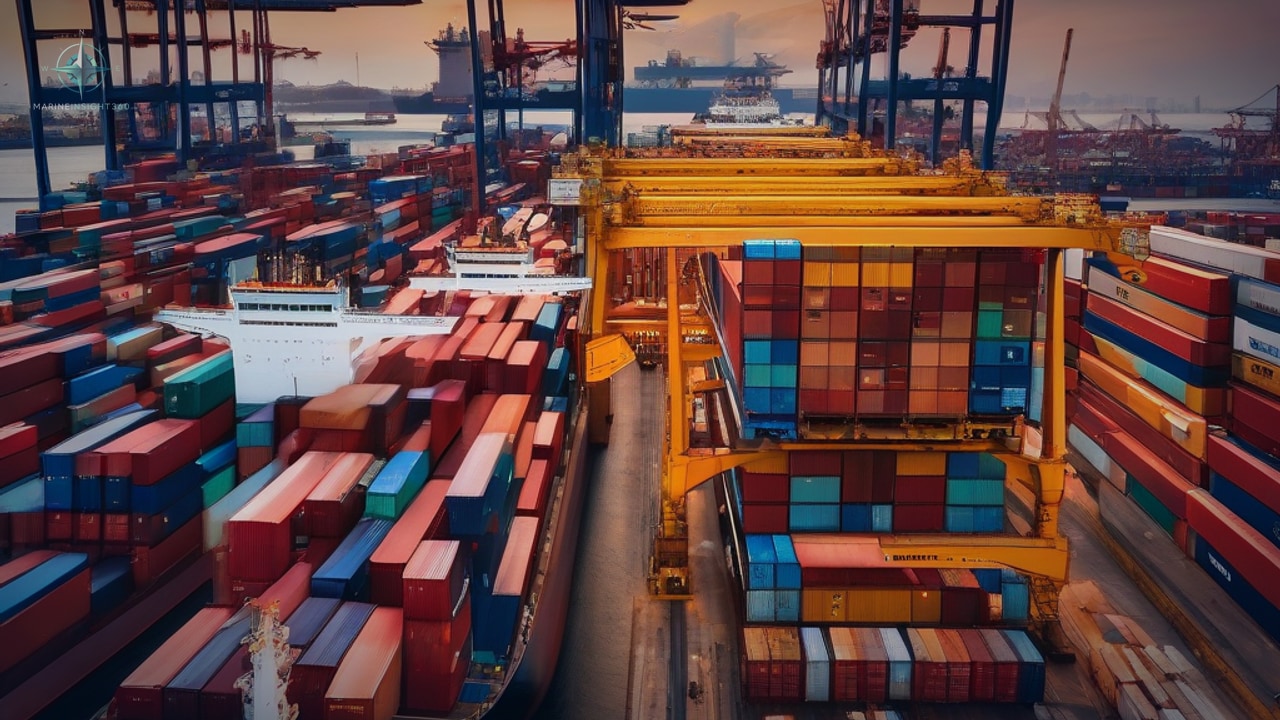
Nigeria's six major seaports are Lagos (Apapa), Tin Can Island, Calabar, Onne, Port Harcourt and Warri, together handling the container, bulk, RoRo and oil traffic along its 853-kilometre Atlantic coastline.
The ports of Nigeria serve a country that was for years Africa's largest economy by GDP. After the naira was devalued in 2023 and 2024, Nigeria fell behind South Africa, Egypt and Algeria in dollar terms, but with more than 200 million people it is still one of the continent's biggest markets. Oil and gas have driven its growth for decades. Nigeria is one of Africa's largest oil producers and exporters, and it also has deposits of natural gas, coal, limestone, gold, tin and bauxite.
Close to half of Nigerians live in rural areas, and farming employs a large share of the workforce. Nigeria grows beans, cassava, groundnuts, cocoa, maize, rice, sorghum and rubber, and cocoa and rubber are among its main non-oil exports. It also has a large financial sector and manufacturing industries producing leather goods, textiles, assembled vehicles, plastics and processed food. Nigeria has 853 kilometres of Atlantic coastline, and its six main ports trade with Brazil, China, India, Japan, the United States and the European Union, among others.
Six Major Ports of Nigeria
1. Lagos Port
Lagos Port lies on the Bight of Benin at Apapa, in Lagos State, Nigeria's main commercial centre. It is also known as the Lagos Port Complex or Apapa Port. It is the country's oldest and largest port by both land area and cargo handled, and well over half of Nigeria's seaborne trade passes through Apapa. It is also a transit port for cargo bound for landlocked neighbours such as Niger and Chad.
Ocean-going ships first gained access to Lagos harbour in 1913, after the entrance was dredged and protected by moles, and the deep-water quays at Apapa were completed in 1926. Since the 2005 concessions, private operators run its terminals with modern cargo-handling equipment.
Port Features
The port covers more than 80 hectares and has wide gates that can take oversized cargo. It has two logistics bases, Eko Support Services Ltd and Lagos Deep Offshore Logistics, with a bonded warehouse and terminal building. The Lagos port complex has five private terminals, run by APM Terminals, ENL Consortium Limited, Apapa Bulk Terminal, Greenview Development Nigeria Ltd and the Lilypond inland container terminal.
Between them these terminals have more than ten berths handling grain, machinery, building materials, perishables, minerals, fertiliser, flour, salt and sugar.
Container Terminal
The port's container terminal covers 55 hectares and has a total quay length of 1,005 metres. It is designed to handle more than 1,000,000 TEU a year and has 298 reefer plugs. Cargo is worked with 13 mobile harbour cranes and 14 rubber-tyred gantry cranes. Storage includes three warehouses totalling 3,025 square metres and an unpaved open yard for temporary storage.
2. Tin Can Island Port
Tin Can Island Port lies west of Apapa, close to the Lagos Port Complex. It is Nigeria's second largest port. It was planned in the mid-1970s, when the oil boom and post-civil war reconstruction sent imports soaring and ships queued for weeks outside Lagos. A second port on Tin Can Island was built to take the overflow. It opened in 1977 with berths for nine ships at a time on about 70 hectares. Today the port covers 79 hectares and offers bunkering and ship repair services for vessels of up to 35,000 DWT. Fresh water is available at all berths from boreholes drilled 250 metres deep.
Port Specifications
Tin Can Island Port handles liquid bulk, dry bulk, containers, RoRo and general cargo at 12 berths with a total length of 1,358 metres and depths alongside of 7 to 11 metres. It can take ships up to 260 metres long. The nearby Kirikiri Lighter Terminal has two berths with a combined length of 700 metres. The port provides pilotage around the clock. The Marine Police and the Nigerian Navy patrol the berths, oil jetties and buoys.
Container Terminal
The container terminal was concessioned to a consortium of Bolloré Ports, China Merchants Holdings International and the China-Africa Development Fund. The operator has invested heavily in the terminal, which employs around 700 people and has direct road links to the main highways and industrial areas. It covers 60 hectares and has a 25-hectare container depot. The quay is 770 metres long with 13 metres of water alongside.
The yard has around 20,000 TEU of ground slots, and the terminal is designed to handle 650,000 TEU a year.
3. Calabar Port
The new Calabar Port was commissioned in 1979 and lies 45 nautical miles upriver from the fairway buoy. It is a multipurpose port owned by the Nigerian Ports Authority, with three terminals run by ECM Terminals Ltd, INTELS Nigeria Ltd and Shoreline Logistics Nigeria Limited. The channel silts up quickly and needs regular dredging. Its working draught has hovered around 6.4 to 7 metres for years, well short of the 10 metres promised when the terminals were concessioned, which keeps larger ships away. Calabar has been a trading port since colonial times and serves southeastern Nigeria, handling containers, general cargo, bagged cement, grain and seafood.
The old port has two conventional berths totalling 450 metres for general cargo ships. The Calabar pilotage district also covers shipyards and four offshore crude oil terminals at Antan, Odudu, Yoho and Qua Iboe. The port has 90,000 square metres of storage and more than 20 reefer points, with a 28,000 square metre area for bagged cargo and a 36,000 square metre container yard. Factories, including a Lafarge cement plant, sit within the port area.
4. Onne Harbour
Onne Port lies on the Bonny River estuary along Ogu Creek. It was set up as a free zone to support the oil and gas industry in Nigeria and the wider West Africa region. The expanded port can take modern ocean-going ships and consists of the Federal Ocean Terminal, with four quays, and the Federal Lighter Terminal, with 11 berths.
Its terminals handle bulk cargo, containers, raw materials, steel, fertiliser, coal and finished goods, and the port can take ships of up to 90,000 DWT. Several terminals are run by private companies.
The Brawal terminal has a straight quay 370 metres long for container ships and conventional cargo ships. A 9,400 m2 paved area is used as an oil supply base, and the terminal has 600 m2 of covered storage. The INTELS terminal is at the heart of the Onne Oil and Gas Free Zone, one of the largest in Africa.
The deep-water facility has a channel draught of about 15 metres and 160,680 m2 of storage area for containers and break bulk.
5. Port of Harcourt
Port Harcourt Port, part of the Rivers Port Complex, lies up the Bonny River from the Gulf of Guinea. The entrance channel has to be dredged regularly to hold its depth. The port was originally built to export coal from the Enugu mines and is linked to the railway, and it has also handled transit cargo for Niger and Chad. Its 1,300 metres of quay can berth eight ocean-going ships at once.
It has 16 tanks with a capacity of 3,050 tonnes for oil and petroleum products. The main storage area includes seven storage yards totalling 12,400 square metres and four warehouses with 10,500 square metres of space.
There is also a shipyard for electrical, marine and engineering work. The port acts as the mother port for many smaller jetties in the area, and it sits in the middle of the Niger Delta, one of the world's major crude oil producing regions. The container terminal handles only container ships, not general cargo ships, and has 100 reefer points and four warehouses. The BUA terminal handles frozen fish, bagged rice, cement, project cargo and steel pipes at seven quays.
6. Warri Port
Warri Port serves the western Niger Delta and the oil companies working there. The old port was taken over from the trading firm John Holt in the late 1960s, and the Warri New Port was commissioned in June 1979. Warri lies between Lagos and Onne. The port complex covers 1,530,000 square metres and is split into the new port and the old port, each with two terminals, handling RoRo, containers and general cargo.
It has four container berths and five general cargo berths totalling about 1,600 metres, with a designed draught of 8 metres, although siltation has cut the channel depth well below that at times. A 60,000 square metre yard holds containers, and a 2,500 square metre paved area holds bulk cargo. Equipment includes five cranes, nine forklifts, three trailers and eight terminal trucks. An industrial area next to the port houses factories, processing plants and shipping company offices.
Recommended Reading
Ocean Biome vs. Marine Biome: Major Differences
When discussing the vast expanse of water that covers most of our planet, you might have come across the terms " ocean biome " and " marine biome ." While…
Which Are The Major UAE Ports?
Bordered by Oman and Saudi Arabia, the UAE has become a beacon of development and trade on the Arabian Peninsula. It shares seas with Qatar to the west…
The World's Major Sea Routes: Where Global Trade Actually Sails
The sea routes that carry world trade: Asia-Europe, transpacific, transatlantic and the chokepoints they squeeze through, from Suez to Malacca to Panama.