
7 Major Ports in Egypt and What Each One Handles
Egypt's seven major ports, from Alexandria, Damietta and Port Said to Suez, Adabiya, Ain Sokhna and Safaga: who runs them, what they handle and recent changes.
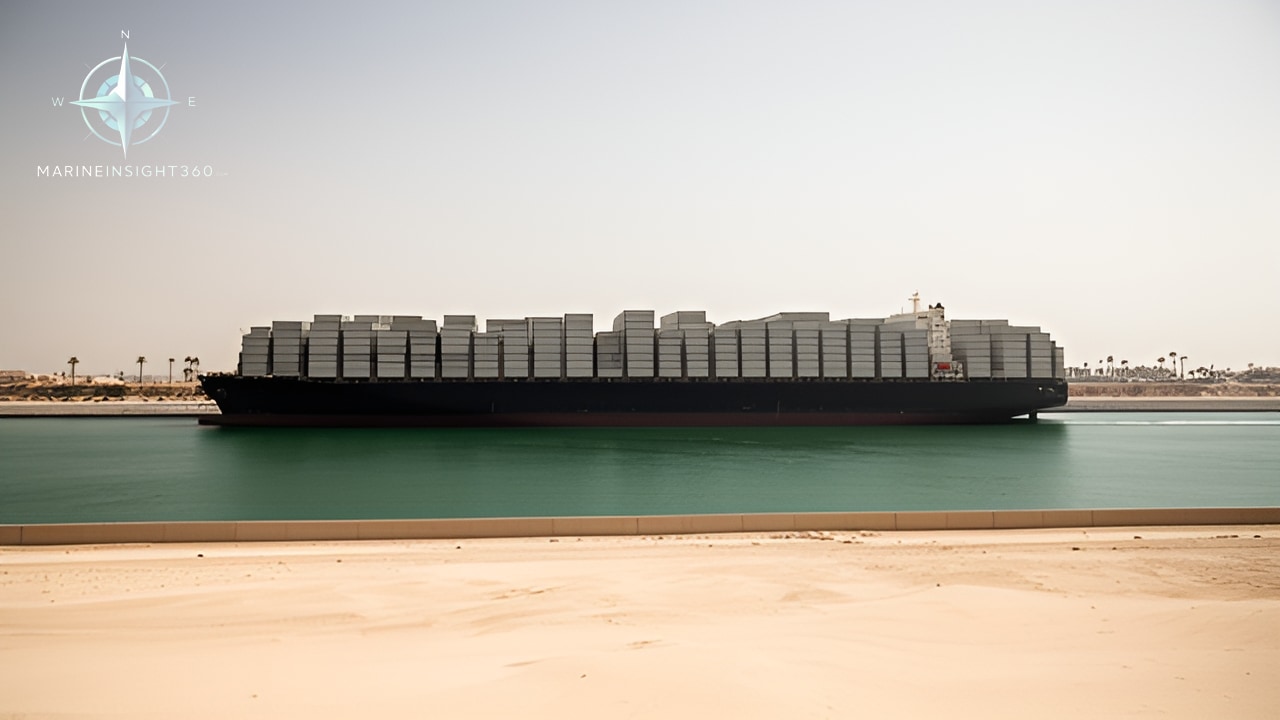
Egypt's seven major commercial ports are Alexandria (with its neighbour El Dekheila), Damietta and Port Said on the Mediterranean, Suez, Adabiya and Ain Sokhna on the Gulf of Suez, and Safaga on the Red Sea. Port Said and Suez sit at the two ends of the Suez Canal, about 190 km apart, which gives Egypt the unusual position of having major ports on two seas linked by one waterway.
The Mediterranean ports handle most of the country's imports and exports, while the canal-zone ports compete for container transhipment on the Asia to Europe route.
Who runs Egypt's ports
Egypt's ports come under the Ministry of Transport but are managed by several separate authorities:
- the Alexandria Port Authority, for Alexandria and El Dekheila;
- the Damietta Port Authority, for Damietta;
- the General Authority for the Suez Canal Economic Zone (SCZone), for West Port Said, East Port Said, Al Arish, Adabiya, Ain Sokhna and El Tor;
- the Red Sea Ports Authority, for Suez, Safaga, Hurghada, Nuweiba, Sharm El Sheikh and the other Red Sea ports.
Container terminals at the main ports are run under concession by private and international operators, which is why names such as Hutchison Ports, APM Terminals and DP World appear below.
Alexandria and El Dekheila
Alexandria, on the western edge of the Nile Delta, is Egypt's oldest and best-known port. The ancient city's harbour was guarded by the Pharos lighthouse, one of the Seven Wonders of the ancient world. The modern port handles a wide mix of trade: containers, grain, general cargo, vehicles and passengers. It is traditionally the gateway for the largest share of Egypt's seaborne foreign trade, served by road and rail links to Cairo and the Delta.
El Dekheila, a few kilometres west, is administered as part of the same port. It has deeper water than the old harbour and handles dry bulk such as iron ore for the neighbouring steelworks, as well as grain and containers. Hutchison Ports runs the container terminals at both Alexandria and El Dekheila, and in 2023 it announced investment in a further container terminal at Alexandria, known as B100.
Damietta
Damietta port lies less than 10 km west of the Damietta branch of the Nile and roughly 70 km west of Port Said. It is a purpose-built modern port, opened in 1986, with a long dredged approach channel. It handles containers, grain, fertilisers, general cargo and liquid bulk, and an LNG export plant stands beside the port.
The biggest recent change is the Damietta Alliance Container Terminal, built by a consortium of Hapag-Lloyd, Eurogate and Contship under a 30-year concession. It is designed for up to 3.3 million TEU a year, mostly transhipment, and began operations in February 2026.
Port Said and East Port Said
Port Said stands at the Mediterranean entrance to the Suez Canal, with the town of Port Fouad facing it across the canal. The older port, now usually called West Port Said, is on the western bank and handles general cargo, containers, ship supplies and bunkering for ships about to transit the canal. Port Said is where northbound convoys leave the canal and southbound ships wait to enter.
East Port Said is a newer port on the Sinai side of the canal. Its Suez Canal Container Terminal (SCCT), which opened in 2004, is majority owned and operated by APM Terminals, with COSCO among the other shareholders. It works mainly as a transhipment hub, where large container ships exchange boxes with feeder ships serving the eastern Mediterranean and Black Sea. SCZone is developing an industrial zone behind the port. For the canal itself, see how long the Suez Canal is.
Suez, Adabiya and Ain Sokhna
Suez
The port of Suez sits at the southern entrance to the canal, at the head of the Gulf of Suez. Its harbours, Port Tawfik at the canal mouth and Port Ibrahim, have long handled passenger traffic, general cargo and supplies for ships waiting to make their transit. The Suez area is a centre for oil refining and petroleum products.
Adabiya
Adabiya lies on the western shore of the Gulf of Suez, a short distance south of Suez city. It is a general cargo and bulk port, now part of SCZone, and has been expanded with new berths and storage.
Ain Sokhna
Ain Sokhna is further south on the western shore of the Gulf of Suez and is the nearest deep-water port to Cairo, a little over 100 km away by road. It began operating in 2002, and DP World took over its operation and development in 2008. It handles containers, bulk and general cargo, and is the main port for the SCZone industrial area around it.
A second container terminal, Red Sea Container Terminals, run by a consortium of Hutchison Ports, CMA CGM and COSCO Shipping, began commercial operations in January 2026. Ain Sokhna is the southern end of the SUMED pipeline, which carries crude oil overland to Sidi Kerir on the Mediterranean near Alexandria, giving tankers too large for the canal a way round it.
Safaga
Safaga is on the Red Sea coast south of Hurghada, in a sheltered bay with deep water. It is Egypt's main export port for phosphate rock, mined inland, and imports alumina for the aluminium smelter at Nag Hammadi on the Nile, as well as grain and general cargo. Passenger ferries run from Safaga to Saudi Arabia, and the port is busy during the Hajj season.
The Red Sea Ports Authority and AD Ports Group of Abu Dhabi have agreed to develop a new multipurpose terminal at the port.
Other Egyptian ports
Several smaller ports serve particular trades. Al Arish, on the north Sinai coast, is a small port that has been used for aid shipments bound for Gaza. Nuweiba, on the Gulf of Aqaba, is a ferry and truck port with links to Aqaba in Jordan. El Tor in southern Sinai, Hurghada and Sharm El Sheikh are small ports used mostly by tourist craft, ferries and supply vessels. Specialised oil terminals such as Sidi Kerir handle tanker traffic.
Effect of the Red Sea crisis
From late 2023, attacks on merchant ships by Yemen's Houthi forces in the southern Red Sea led many container lines to send ships round the Cape of Good Hope instead of through the Suez Canal. Canal transits and revenue fell sharply, and container services that had called at the canal-zone ports were rerouted or suspended. Some container lines began returning to the canal route during 2026, but by October 2026 container capacity passing through the canal was still only around half its level in 2023. Transhipment business at East Port Said and Damietta depends on ships using the canal, so it is tied closely to how far Red Sea traffic returns to normal.
Recommended Reading
Which Are The Major UAE Ports?
Bordered by Oman and Saudi Arabia, the UAE has become a beacon of development and trade on the Arabian Peninsula. It shares seas with Qatar to the west…
What are the 5 major ports of Bahrain?
Bahrain is an island nation near the western coastline of the Arabian Gulf. It comprises 50 natural and 33 artificial islands. Bahrain is the third…
What Are The 10 Major Ports in Mexico?
Mexico is located in the southern part of the North American continent. And also, is the world's 10th most populous country. It is a developing country, classified as an upper-middle-income country by the World Bank.