
How are steel coils loaded onto ships?
Steel coils are loaded onto ships by crane into cleaned, dry cargo holds, lifted from their geometric centre on wire or rope slings, then stowed axially fore and aft on wooden dunnage and secured against rolling.
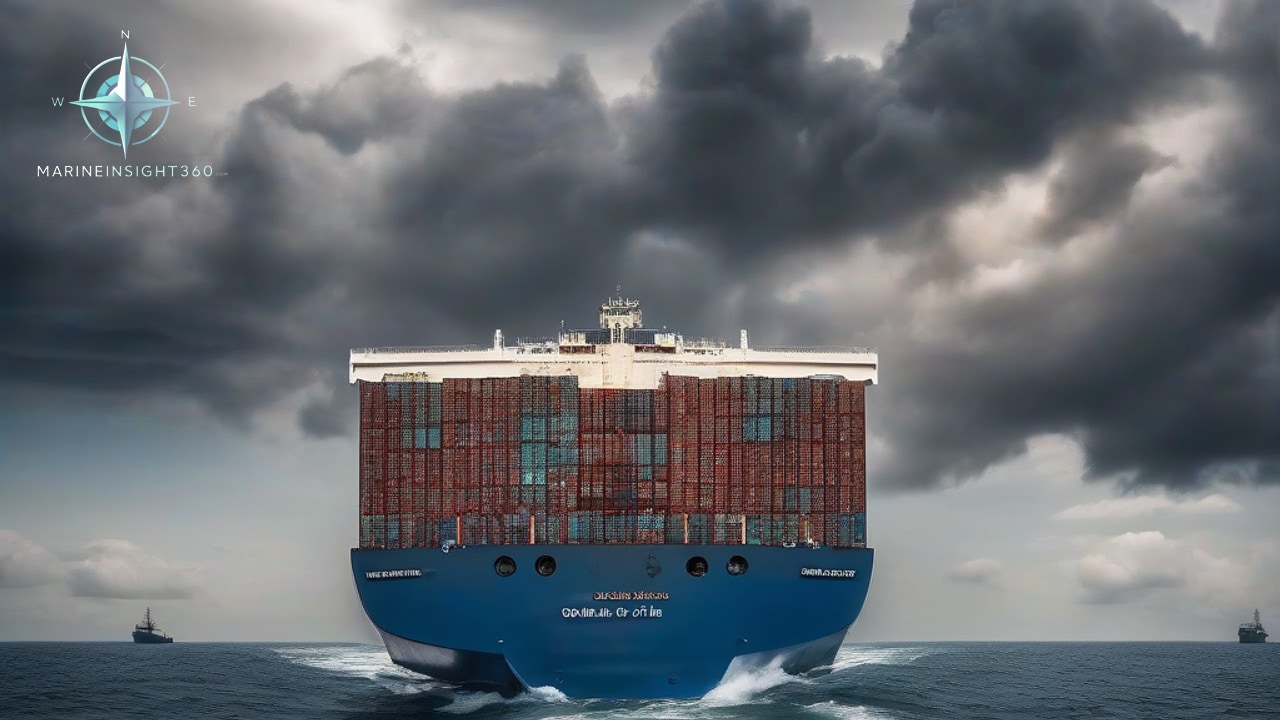
Steel coils are loaded onto ships by crane into clean, dry cargo holds, lifted through the eye on soft slings, wire slings or coil tongs, then stowed with their axis fore and aft on timber dunnage, chocked and lashed so they cannot roll or shift.
How are steel coils loaded onto ships?
Steel is one of the most widely produced and traded materials in the world, and a large share of it moves through the global supply chain by sea.
Steelgoes into almost everything: buildings, bridges, cars, ships, machinery, appliances and farm equipment.
According to the World Steel Association, world crude steel production has grown roughly tenfold since 1950, to almost 1.9 billion tonnes a year.
Most of that growth came from industrialisation and construction, first in Japan and Europe and later, on a much bigger scale, in China. Steel products make up a large part of global trade in break bulk cargo, and coils are one of the most common forms.
Transporting Raw Steel
Iron from the blast furnace is turned into steel in a basic oxygen furnace, or scrap is melted in an electric arc furnace. The liquid steel is then cast, today almost always by continuous casting.
Casting produces semi-finished shapes such as slabs, blooms and billets.
These go to rolling mills, where they are rolled into plates, bars, beams, sections, tubes and sheet to commercial standards.
Flat products such as sheet are rolled in two main ways:
What is the difference between hot rolling and cold rolling?
In hot rolling, the steel is heated until it is red hot, above its recrystallisation temperature, and rolled while hot. Cold rolling is done at or near room temperature on steel that has already been hot rolled and pickled. It gives a thinner gauge, tighter tolerances and a better surface finish, and the steel is usually annealed afterwards to restore its ductility.
Once it leaves the hot strip mill or the cold mill, the sheet is wound into large coils for storage and transport.
Steel Coil Loading Pattern
Steel coils straight from the hot strip mill are called hot rolled coils. Many of them go on to be pickled and cold rolled. Coils that have been cold rolled, and often annealed or coated, are called cold rolled coils.
Cold rolled coils have a finished surface and are cut and formed into products by the buyer. Hot rolled coils are either used as they are, for heavier products, or processed further.
Most coils that cross the sea travel as break bulk on general cargo ships, multipurpose vessels and bulk carriers.
Ashore, the same large cylindrical coils are moved through terminals and carried on trucks and trailers with coil wells.
At sea, their weight and their tendency to roll make them a cargo that needs careful stowage and securing.
How are steel coils loaded onto ships?
Loading of Steel Coils on Ships
Coils are stowed in the cargo holds. A single coil commonly weighs anything from a few tonnes to more than 25 tonnes, so preparation starts well before the first one comes aboard.
The holds must be swept clean, washed with fresh water if salt or a previous cargo calls for it, and thoroughly dried. Loose rust scale, previous cargo residues and anything else that could stain or damage the steel must be removed. Charterers or shippers usually have the holds inspected by a surveyor before loading, and the ship cannot load until they pass.
Inspection of the steel coils before loading is essential.
Check that the hatch covers and their seals are weathertight, that hold ventilation works, that bilge wells are clean and the bilge system is tested, and that the cranes or shore gear are in good order.
Inspect the hold for sharp edges or projections that could damage the coils and mark them.
Prepare a stowage plan and check it against the ship's Cargo Securing Manual, which SOLAS Chapter VI requires for ships carrying cargo units. For coils, the IMO's Code of Safe Practice for Cargo Stowage and Securing (the CSS Code) has a dedicated annex on the stowage and securing of coiled sheet steel, and the master and chief officer use it together with the securing manual.
Loading and unloading procedures
Coils are loaded with ship's cranes, shore cranes or derricks. They are usually lifted through the eye with wire or soft webbing slings, or with coil tongs or a C-hook. Chains are avoided because they mark the steel.
Cold rolled and coated coils need the most care, because any damage to the edges or the surface reduces their value. Forklifts handling coils use a ram or coil boom through the eye, never ordinary flat forks, whose edges damage the coil and can crush the inner wraps.
In the hold, coils are stowed with their axis fore and aft, so they can only roll athwartships, where they can be chocked and lashed.
To stop them rolling and to protect the steel, coils are landed on timber dunnage laid athwartships across the tank top.
Coil Loading
The dunnage keeps the coils off the steel tank top and spreads their weight. It also gives friction that helps stop coils sliding, and it lets condensation drain away underneath.
Dunnage should be dry, because wet timber causes rust on the coils. Once in place, the coils in each row are chocked with timber wedges and lashed with steel bands or wire so that they cannot move during the voyage, and the dynamic loads are passed into the ship's structure.
Coils are carried in the holds, not on deck. The stowage plan should use the space well and avoid uneven or irregular stowage.
The weight of each coil is concentrated on a small area of the tank top, so the chief officer must check the stowage against the permissible tank top loads in the ship's loading manual. Coils are best landed so that their weight bears on the floors and longitudinals of the double bottom, and dunnage helps spread it.
Getting this wrong can overload the tank top locally even when the total cargo in the hold is within limits. In practice, coils are usually carried by bulk carriers and multipurpose ships with tank tops strengthened for heavy cargo.
At discharge, the lashings and chocks are removed and the coils lifted out one at a time, starting from the top tier.
Storage and stabilization
Coils come in many sizes and weights, so the stowage has to be planned around the actual cargo list. They are loaded from the bottom of the hold upwards.
The heaviest coils go in the bottom tier and lighter or smaller ones on top, which keeps the centre of gravity low and protects the bottom coils from excessive weight. Each tier is secured before the next is loaded.
Steel Coils
To fit more coils into a hold, they are stowed in several tiers, the upper coils resting in the hollows between the coils below. Coils in each row are stowed close together, starting from the ship's side and working inboard, and the rows are lashed together so that the block acts as one unit.
The last coil in a row, called the key coil or locking coil, is placed in the upper tier so that it sits between the coils below and locks the row in place.
Lashings are made of steel band tensioned with pneumatic or hand tools, or wire. Any key coils resting on the tier below must be lashed to the coils around them.
A key coil has to sit far enough down between the two coils below it to stay in place. If the gap between them is too wide, it will drop and rest on the dunnage, and if it is too narrow, it will sit high and can be thrown out by the ship's motion. The CSS Code gives the stowage and lashing patterns to follow.
Recommended Reading
How Steel Coils are Safely Loaded onto Ships
Steel coils are safely loaded onto ships by lifting each 40 to 50 ton coil through its centre on braided steel wire slings, then stowing it fore and aft on wooden boards and securing it against rolling.
Diwali at Sea: Far from Home, Together as One Crew
What Diwali looks like on a merchant ship: a crew of different faiths and nationalities celebrating together, thousands of miles from home.
Ramadan at Sea: Fasting, Prayer and Watchkeeping for Muslim Seafarers
A practical guide to Ramadan on board: fasting and watchkeeping, rest hours, suhoor and iftar timings across time zones, galley, prayer and Eid.