
Namibia Coast Oil Discovery: What the Orange Basin Means for Shipping
Namibia's Orange Basin holds an estimated 20 billion barrels of oil equivalent. What Venus and Mopane mean for offshore vessels, ports and tanker trades.
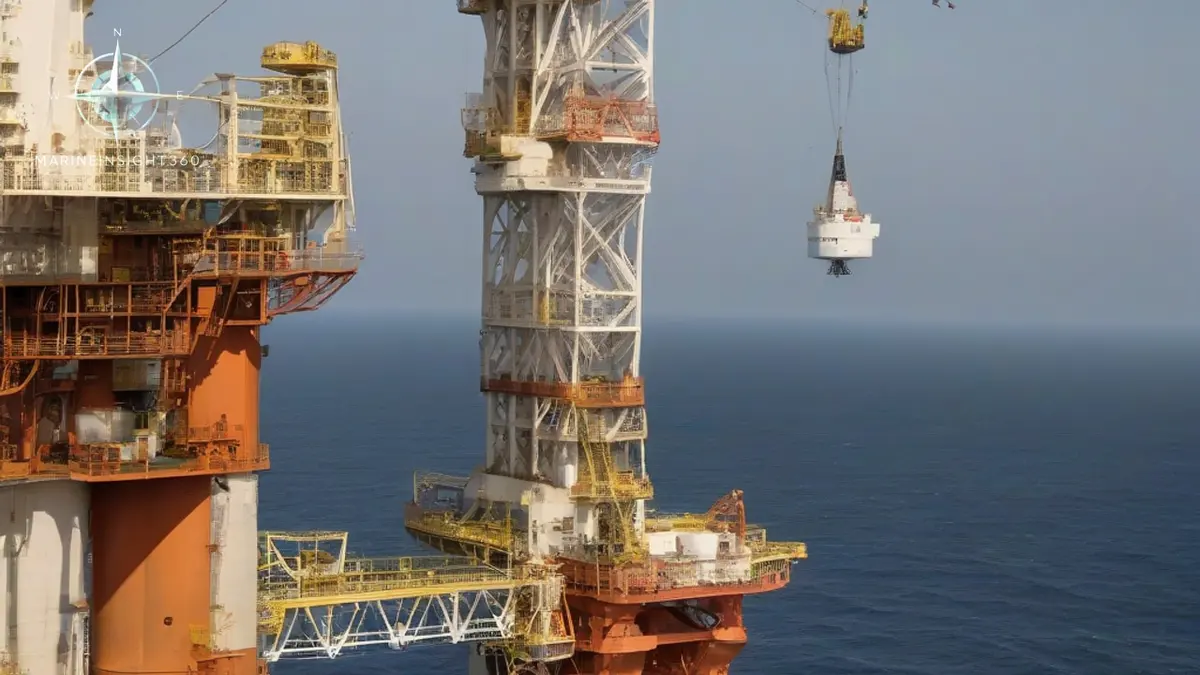
The Namibia coast oil discovery story is really a sequence of finds in the Orange Basin, a deepwater province straddling the maritime border between Namibia and South Africa that is now estimated to hold more than 20 billion barrels of oil equivalent. Since 2022 around 14 oil and gas fields have been discovered in the Namibian deepwater section, led by TotalEnergies at Venus and Galp at Mopane.
For shipping the consequence is a new offshore support market on the South Atlantic and, from about 2030, a new crude export trade.
What has actually been found
Three discoveries define the province. Shell's Graff well opened the play in early 2022. TotalEnergies followed with Venus, and Galp Energia then drilled Mopane.
Venus-1X is estimated to hold around 1.5 billion barrels of light crude along with 4.8 trillion cubic feet of gas. The development now targets an initial production capacity of roughly 150,000 barrels per day, with first oil aimed at 2030.
Mopane is the larger prize on paper. Galp has put in-place hydrocarbons at 10 billion barrels of oil equivalent or higher, and Wood Mackenzie ranked it among its discoveries of the year. In-place volumes are not recoverable volumes, and the gap between the two is where deepwater projects usually succeed or fail.
Venus and Mopane under one operator
Namibia's Ministry of Industries, Mines and Energy approved an asset swap between TotalEnergies and Galp in mid-July 2026, giving TotalEnergies operatorship of both Venus and Mopane.
That consolidation is the most important commercial development so far. Two adjacent deepwater projects developed separately need two sets of floating production units, two export systems and two support fleets. Under one operator a single hub strategy becomes possible, which lowers the barrel cost that makes the project viable.
Why 3,000 meters of water changes the vessel requirement
The Orange Basin wells sit in water depths approaching 3,000 meters (9,800 ft). That depth sets the entire marine logistics problem.
- Drilling units. Only sixth and seventh generation dynamically positioned drillships can work these depths, and that fleet is small and globally mobile.
- Support vessels. Platform supply vessels and anchor handlers need long endurance because the fields are far offshore and the nearest well-equipped base is limited.
- Subsea construction. Heavy lift and flexlay vessels with deepwater ROV spreads are specialist tonnage, booked years ahead.
- Production. Development at this depth means a floating production storage and offloading unit rather than a fixed platform, with export by shuttle tanker.
Sea conditions add to the cost. The South Atlantic off Namibia carries persistent swell, which narrows weather windows for subsea installation and offloading.
What it means for Namibian ports
Walvis Bay is the country's main commercial port and the obvious base, with Luderitz sitting closer to the Orange Basin acreage. Neither was built for a deepwater oil supply chain.
A functioning supply base needs pipe and casing laydown areas, bulk mud and cement plants, quayside water depth for large supply vessels, and cold and bonded storage. Building that is a multi-year port project in its own right, and it is the practical constraint on how fast field development can move.
The alternative is running support from Cape Town, which adds sea time and cost and removes the local content benefit Namibia is negotiating for.
New tanker miles on the Atlantic
Namibian crude is expected to be light and sweet, which suits European and Asian refineries. Both destinations are long voyages from the South Atlantic, so this production adds ton-mile demand rather than simply relocating it.
Position helps. Namibia sits on the Cape of Good Hope route, which has carried substantially more traffic since Red Sea diversions began. Bunkering and ship supply demand at Walvis Bay has grown for that reason alone, independent of oil.
The fisheries and environment problem
The Benguela Current runs along this coast and drives one of the most productive upwelling systems in the world. Namibian hake and horse mackerel fisheries are a major export earner and a large domestic employer.
Deepwater drilling next to that system raises a spill response question that Namibia has limited capacity to answer alone. Response equipment, trained personnel and a tested national contingency plan are the things to look for, and their absence is a genuine risk to the project timeline as well as to the coast.
What to watch before first oil
Four milestones will tell you whether 2030 is realistic: a final investment decision on the combined Venus and Mopane hub, an FPSO contract award, a firm port development commitment at Walvis Bay or Luderitz, and long-term charters for supply and subsea construction tonnage.
Offshore operators and crewing managers should track the second and fourth of those, because they are what convert a discovery into vessel days and jobs. Marine Insight 360's Ports section follows the port and terminal side of new offshore provinces.
The verification chain on a deepwater project is where paper becomes capability. A floating production unit is classed by a society such as DNV, ABS or Lloyd's Register, and its mooring and riser systems are certified against those rules. Drilling units mobilising to the basin carry the same class certificates and a port state control record that follows them between countries.
Spill response is the part with no shortcut. Planning in this region is built on the IMO's oil pollution preparedness and response framework. The practical test is whether tiered equipment, trained responders and a rehearsed national plan exist within reach of the field. Offloading in persistent swell is also a dynamic positioning operation with a hose connected, where drive off and hose damage are the recorded failures.
Sources and further reading
- Namibia approves TotalEnergies' takeover of Mopane operatorship (Offshore Magazine)
- Mopane oil find offshore Namibia could be a supergiant (Offshore Magazine)
- The Orange Basin: An Underexplored Oil Giant? (TGS)
- How Namibia Pulled Ahead In Africa's Hottest Offshore Oil Basin (OilPrice)
What to read next
Recommended Reading
NEOM Oxagon, the World's Largest Floating City: What It Means for Shipping
NEOM Oxagon is planned as a floating industrial city on the Red Sea with a 3.5 million TEU port. What is real, what is untested, and what to watch.
Strait of Hormuz: What a War Ending Without a Reopening Means for Shipping
The Strait of Hormuz stays shut because war risk and P&I cover, not politics, gate transits. What the closure means for tankers, bunkers and crews.
What the US Maritime Blockade of Iranian Ports Means for Merchant Shipping
The US naval blockade of Iranian ports, the Hormuz closure and war risk premiums explained for shipowners, charterers and crews planning Gulf transits.