
What Does OOG Mean In Shipping?
OOG stands for out of gauge, and in shipping it means cargo too long, wide or tall for a standard box, so it moves on flat rack or open top containers instead.
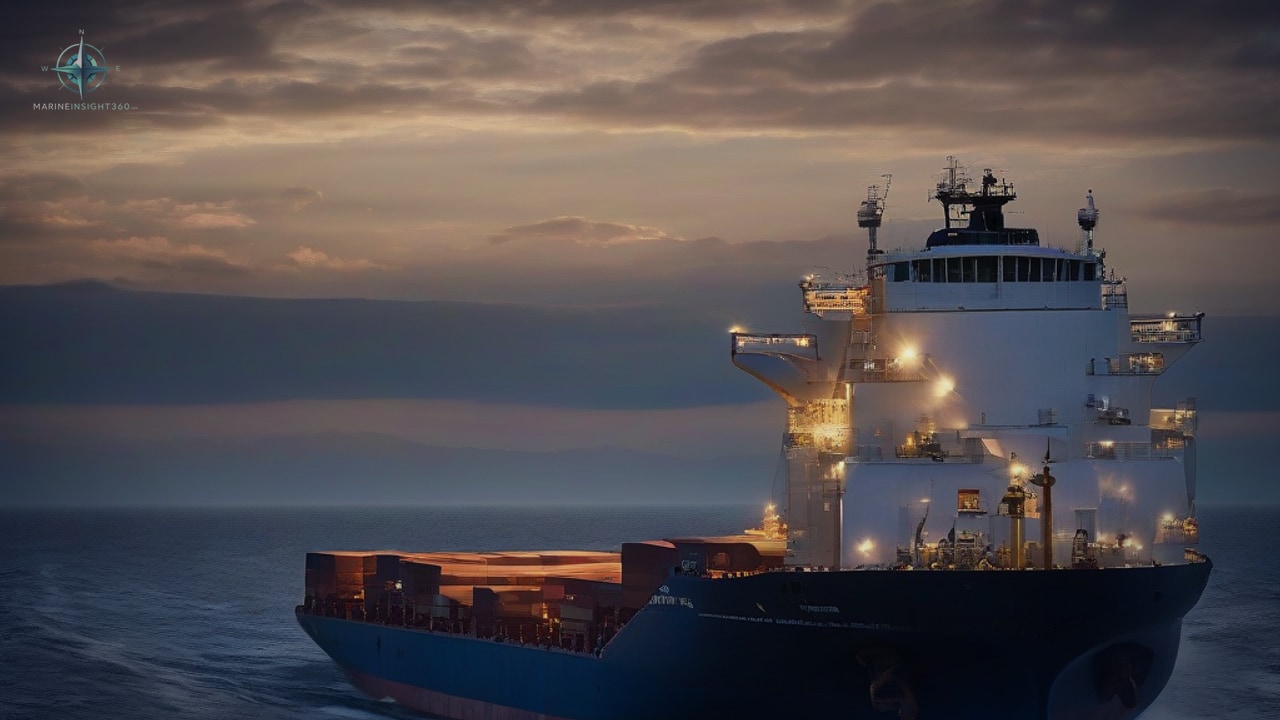
OOG stands for out of gauge, and in shipping it means cargo too long, wide or tall for a standard box, so it moves on flat rack or open top containers instead.
Cargo that is very large, or has awkward outriggers or parts sticking out so it won't fit inside a standard shipping container, is called out-of-gauge or oversized cargo, and the containers it travels in are often called OOG containers. The range of OOG container cargo is wide: buses and other large vehicles, trailers, aircraft parts, wind turbine components, construction equipment and large power generation machinery. All of these are too big, or too heavy, for a standard closed box such as a 20-foot container (TEU) or a 40-foot container (FEU), and so they need special containers.
Costs of Shipping Excess Cargo
Shipping OOG cargo costs more than shipping a standard box because it takes up space that could have carried other cargo. When an over-width load sits on deck or in the hold, the slots next to it often can't be used, and nothing can be stacked on top of an over-height load. Carriers charge extra to make up for these unusable slots, which are known as lost slots or "dead space".
OG Planning and Execution
Oversized cargo that isn't properly secured can break loose and damage other cargo around it. Its position on the ship also needs careful planning, usually on the top tier on deck or at the top of a hold, so it can be loaded and discharged without moving other containers and with enough clearance around it.
Planning doesn't stop at the ship: the road or rail move from the factory or storage yard to the loading port, often needing special trailers, permits and escorts, has to be organised as well.
Facilities
The most common equipment for OOG cargo is the flat rack or the open-top container. A flat rack has a strong floor and end walls, usually collapsible, but no side walls and no roof. Cargo can be loaded onto it from the side or from above, with a large forklift from the side or with a crane from above. The load is normally placed in the centre of the flat rack so the weight is spread evenly.
An open-top container is different. It has solid side walls and doors at one end like a standard container, but no fixed roof: the top is covered by a removable tarpaulin on roof bows, or on some types by a removable hard roof lifted off by crane. Since the sides are solid, it can't be loaded from the side, only through the doors with a forklift or from above with a crane.
On some open-top containers the header beam above the doors can be swung out or removed, which makes it easier to load tall cargo through the doors. Once the cargo is in, it is lashed to the lashing points in the floor and walls. The top is then covered with the tarpaulin or the hard roof, unless the cargo stands higher than the walls.
Flat Rack Containers
Flat racks come in 20-foot and 40-foot lengths. Cargo can be loaded from the side with a large forklift or lowered on from above by crane, which makes them a good fit for oddly shaped machinery, boats, long pipes and steel structures.
A 40-foot flat rack has the same outside dimensions as a standard box, 40 ft x 8 ft x 8 ft 6 in, with the height measured to the top of the end walls. A load that is too long for one flat rack can sometimes be carried across two or more flat racks placed together.
A 20-foot flat rack measures 20 ft x 8 ft x 8 ft 6 in (end wall height) and typically carries around 30 tonnes, depending on the series. Flat racks with collapsible end walls can be folded flat and stacked when empty, which saves space when they are repositioned.
Open Top Containers
Open-top containers also come in 20-foot and 40-foot sizes, and custom units are built for special cargo. A 40-foot open top measures 40 ft x 8 ft x 8 ft 6 in and can carry up to about 26 tonnes. A 20-foot open top measures 20 ft x 8 ft x 8 ft 6 in and can carry about 28 tonnes. Exact dimensions and payloads depend on the manufacturer and the container series.
Flatbed Or Platform Containers
Platform containers, sometimes called flatbeds, are just a floor with corner fittings, with no walls or roof. Size is less of a constraint, so the main limit is weight. A typical 20-foot platform can carry about 31 tonnes and a 40-foot platform about 39 tonnes. Like collapsible flat racks, empty platforms can be stacked on top of each other for storage and transport.
Payload
Why doesn't a 40-foot container carry twice what a 20-foot one does? If a 20-foot open top carries 28 tonnes, you might expect a 40-foot one to carry 56. The reason is that a container's limit is set by its maximum gross weight rating, and many 40-foot boxes are rated for about the same gross weight as 20-foot ones. The 40-foot box is also heavier when empty, so its payload ends up lower.
Overloading a container beyond its rating can make the floor sag or the structure fail, damaging the cargo and putting people at risk. Road and rail weight limits also differ from country to country. Cargo too heavy for any available container is often taken apart, shipped in pieces and reassembled at its destination.
Safe Container Convention 1972 (CSC 1972 )
The International Convention for Safe Containers (CSC), 1972, came out of a conference convened by the United Nations with the International Maritime Organization (then IMCO). It sets uniform international safety requirements for containers so that each country does not have its own rules. The CSC applies to containers above a minimum size that have corner fittings for handling and securing. Every container covered by it must carry a Safety Approval Plate showing its approval details and its maximum gross weight. The convention has been amended several times since 1972 to tighten the safety requirements, including the rules for inspecting containers in service.
Types of Cargo
Ships carry dry bulk (ores, grain and so on), general cargo (machinery, drums, project cargo), liquid bulk (crude oil, vegetable oils and so on), containers, and ro-ro cargo, which means vehicles driven on and off the ship. Some loads are too big or too heavy even for flat racks, open tops and platforms. Those are shipped as break bulk: lifted directly into the hold or onto the deck of the ship and secured there, with attention to the safety of the cargo, the ship and the containers around it.
Monitoring Out Of Gauge Cargo Onboard Ships
On board, the chief officer and the officer on duty supervise loading and discharge according to the stowage plan, while the lashing gang secures the cargo. The planners leave the slots next to an over-width unit empty. If the cargo goes below deck, the clearance under the hatch cover has to be checked to avoid damage to the cargo and the ship. Very heavy units also affect stability, so the loading sequence and ballast have to be planned to keep the ship upright and within its stress limits, and the duty officer needs a good understanding of ballast operations. The flat rack or platform is locked to the stack below with twist locks, and the cargo itself is lashed to the container with chains, wires or straps. Lashings can work loose in heavy weather, so the crew check OOG units regularly during the voyage.
Out of Gauge Rate
To quote an out-of-gauge rate, the carrier needs the following from the shipper:
- Description
- Dimension (longest length x broadest width x tallest height)
- Weight in kilograms
- Loading point
- Discharge point
- Photos
- Point of lifting
- Special instructions
OOG shipments need specialist handling at every stage, so complete and accurate information at the booking stage saves delays later.
Recommended Reading

ETA and ETD in Shipping: What the Dates Mean and Why They Slip
What ETA and ETD mean in shipping, who sets the dates, why they slip, and how importers should actually read an estimated arrival against free time and fees.
Shipping Freight Rates Explained: Container, Dry Bulk and Tanker Markets
What moves container, dry bulk and tanker freight rates, how to read the Drewry WCI, SCFI, Baltic Dry Index and Worldscale, and what drove the shipping market in 2026.
Shipping Decarbonisation Rules: IMO Targets, CII, EEXI, EU ETS and FuelEU Explained
The IMO's net-zero targets, EEXI and CII ratings, the delayed Net-Zero Framework, EU ETS and FuelEU Maritime: what each rule requires, when, and what it means on board.