
The $20 Billion US Plan to Reinsure Maritime Losses in the Gulf, Explained
The US will reinsure maritime losses in the Gulf up to about $20 billion. How the DFC facility works, what it covers, and why owners are still holding back.
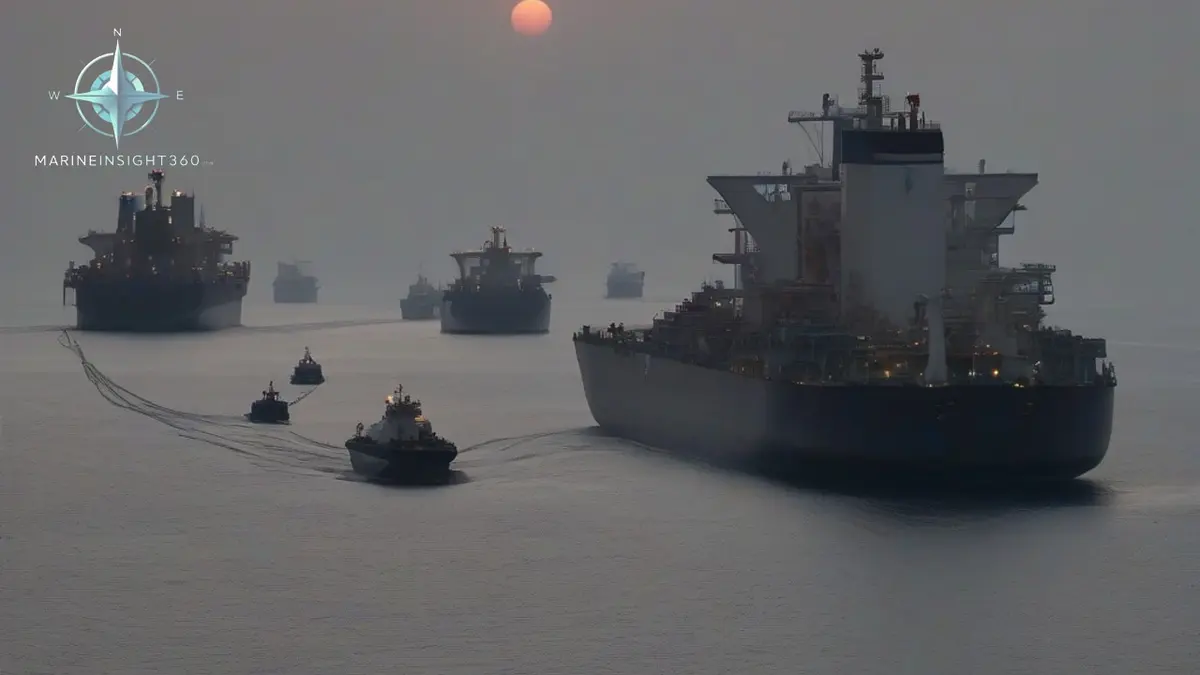
Marine war risk insurance for the Persian Gulf is the constraint that stopped tankers sailing. The United States has answered with a reinsurance backstop of about $20 billion. It is a capacity measure rather than a peace deal, and what it leaves uncovered matters as much as what it covers.
What the United States is offering and what it covers
The US International Development Finance Corporation will reinsure maritime losses in the Persian Gulf up to about $20 billion, with Chubb Ltd as lead insurer. Cover is written on a rolling basis and focuses initially on hull and machinery and cargo. The aim is to restore enough confidence for oil and LNG shippers to move again after tanker transits through the Strait of Hormuz ground to a halt.
The mechanism is worth understanding. This is not a government insuring ships directly. It is a state balance sheet standing behind commercial underwriters so they can keep writing a risk that had become uninsurable at any price the market would pay. A capacity problem is being solved with sovereign capital.
Why a government backstop became necessary
Roughly a quarter of the world's seaborne oil moves through Hormuz on a normal day. Once that route carried a shooting risk, war risk additional premiums moved faster than freight could absorb, and underwriters cut or withdrew capacity rather than reprice it. Moody's estimated marine insurers could face losses of as much as $40 billion if disruption in the region intensified, which explains the withdrawal better than any account of appetite.
An owner cannot simply trade uninsured. Mortgage covenants require cover, charterparties warrant it, and no responsible board sends a laden VLCC into a war zone without a hull policy. Absent cover, ships stop. That is precisely what happened.
How marine war risk cover normally works
The gap the facility fills only makes sense against the layers it sits on.
- Hull and machinery covers physical damage from ordinary marine perils and specifically excludes war, strikes and terrorism.
- War risks is a separate policy written on war and strikes clauses, covering the excluded perils, with a cancellation provision allowing underwriters to give short notice, commonly seven days, on any area.
- Listed Areas are the regions the market's joint war committee designates as high risk. Entering one triggers a notice requirement and an additional premium, usually quoted as a percentage of insured hull value per transit or per seven days.
- P&I war risk covers third-party liabilities arising from war perils, including pollution, wreck removal and crew injury or death, and is written separately again.
- Loss of hire and crew war bonuses sit alongside, the second driven by collective agreements rather than by insurance.
The gap owners keep pointing at
Hull and cargo cover answers the value of the ship and the value of the barrel. It does not answer what a laden tanker casualty in a confined strait actually costs: pollution response, wreck removal from a shipping lane, third-party property damage, and crew death and injury claims. Those sit on the liability side, and market commentary since the announcement has made the point plainly, that a plan without liability cover is unlikely on its own to restart Gulf shipping.
For a chartering desk that becomes a specific question before every fixture. Confirm which layers are actually in place for the intended transit window, not which layers exist in principle.
What charterers and operators should check now
- The war risk clause. Standard clauses give owners a right to refuse a voyage into a dangerous area and to recover additional premium. Establish who pays the premium and on what basis before the ship is fixed, not after.
- Notice periods. A seven-day cancellation on the war risks policy can strand a vessel mid-voyage. Build the notice window into the voyage plan.
- Eligibility. A government-supported facility carries conditions. Check how ownership, flag, trade and cargo affect access before assuming a ship qualifies.
- Crew consent. High risk area provisions in collective agreements give seafarers a right to refuse and an entitlement to bonus and doubled compensation. Document consent in advance.
- Cargo interests. Cargo underwriters maintain their own war listings, and alignment between the hull and cargo positions is not automatic.
Why it matters
State reinsurance of a commercial shipping risk on this scale is unusual, and it signals that the alternative on the table was an accepted energy shortfall. For operators the work is unglamorous: confirm the layers, price the premium into the voyage calculation, and treat any Gulf fixture as a decision that needs the insurance position settled first. The Ports and Shipping coverage on Marine Insight 360 tracks how the facility and the war risk listings develop.
The terms are readable rather than a matter of trust. The mutuals in the International Group each publish their rules and war risk cover, so an owner can check what a P&I club actually pays for before fixing. UKMTO issues the transit advisories underwriters watch, and the IMO circulates incident reports. None of those bodies sets the premium, but all three move it.
The gap the facility leaves sits on the liability side, and that is where the money is. A laden tanker casualty in a confined strait produces wreck removal, pollution response and crew death claims that dwarf hull value. Those fall to the P&I club and its war risk cover, not to hull and cargo underwriters, so confirm both positions before fixing.
Sources and further reading
- US to reinsure maritime losses in Gulf up to $20 billion
- US $20B Reinsurance Plan Unlikely to Restart Gulf Shipping Without Liability Cover
- Washington Moves to Break Hormuz Shipping Paralysis With $20B Maritime Insurance Plan
- U.S. to Reinsure Maritime Losses in Gulf Up to $20B
What to read next
Recommended Reading
The Gulf of Oman: Geography, Shipping Lanes and What Transiting Crews Plan For
The Gulf of Oman links the Strait of Hormuz to the Arabian Sea. Here is its geography, traffic separation scheme, ports and the transit risks crews plan for.
For Gulf States, Strait of Hormuz Uncertainty Casts a Long Shadow Over Every Transit Decision
Transit counts, war risk premiums and GPS jamming in the Strait of Hormuz, and how owners and masters weigh a passage against a diversion.
Why Gulf of Guinea Pirates Switched From Kidnapping Seafarers to Stealing Oil
The UN reports that Nigerian criminal networks moved from kidnapping seafarers to oil theft. What drove the shift and what ships trading the region should do.