
Top 7 Ports of Russia
Russia is a nation that spans eleven time zones and encompasses a vast tapestry of landscapes. It is not only a continental giant but also a maritime…
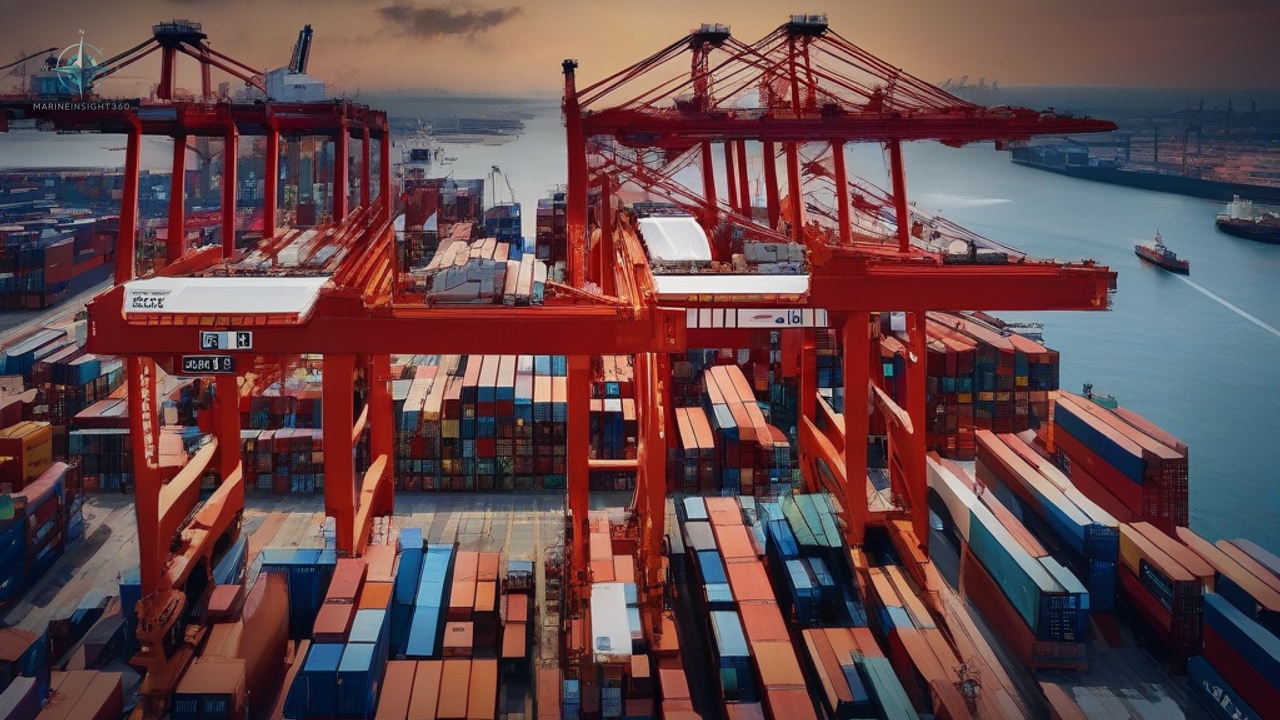
Ports of Russia: Gateways to a Maritime Power
Russia spans eleven time zones and has the longest coastline of any country after Canada. Its ports sit on four very different sea areas: the Arctic Ocean in the north, the Pacific in the east, the Baltic in the north-west and the Black Sea and Sea of Azov in the south-west, plus the landlocked Caspian. Much of that coast is frozen for part of the year, which is one reason the ice-free ports matter so much.
Russia's ports carry the bulk of its exports of crude oil, oil products, coal, grain and fertiliser, and bring in manufactured goods, machinery and consumer products. Each port has its own specialities, set largely by its location and the railways and pipelines that feed it.
Since 2022, Western sanctions, the EU ban on most Russian oil imports and the G7 price cap have changed the pattern of trade. Exports that once went to Europe now go mainly to Asia, much of the crude is carried by older tankers outside the Western insurance system, and container traffic through the Baltic has fallen while the Far East ports have grown busier.
List of Ports Of Russia
Here are seven of Russia's most important ports, with what each one handles and why it matters.
1. Novorossiysk: The Black Sea's Cargo Colossus
On the Black Sea coast, Novorossiysk has long been one of Russia's two busiest ports by tonnage and its main southern outlet in Russia's maritime trade. It is above all an energy port. The Sheskharis terminal loads Russian crude and oil products, and the nearby Caspian Pipeline Consortium (CPC) terminal ships crude from Kazakhstan.
Novorossiysk also handles large volumes of grain, as well as cement, metals and other bulk cargo, and it has a container terminal. It sits on the shipping route from the Black Sea through the Turkish Straits to the Mediterranean, and it is also a base for the Black Sea Fleet.
2. Ust-Luga: The Baltic's Rising Star
Ust-Luga, on the Gulf of Finland close to the Estonian border, was built from scratch from the late 1990s to reduce Russia's dependence on ports in the Baltic states. It is now one of the country's largest ports by tonnage, with deep-water berths that take large bulk carriers and tankers.
Coal, oil products, gas condensate, fertilisers, timber and containers pass through Ust-Luga, along with rail ferries to Kaliningrad. The port's growth shows how Russia has shifted its Baltic exports to its own territory.
3. St. Petersburg: A Historic Port with a Modern Pulse
The Port of St. Petersburg, founded alongside the city by Peter the Great in the early 18th century, is Russia's main Baltic container port and was for years the country's largest container port overall. Its terminals take container ships, bulk carriers, ro-ro vessels and ferries, and the Marine Facade terminal was built for large cruise ships.
Before 2022 the port handled much of Russia's container trade with Europe, and the city's museums and palaces drew hundreds of thousands of cruise passengers each summer. Western cruise lines stopped calling in 2022, and container traffic now depends more on feeder services and lines from Asia and the Middle East.
4. Primorsk: Russia's Oil Export Powerhouse
Primorsk, on the Gulf of Finland north-west of St. Petersburg, is a specialised oil port at the end of the Baltic Pipeline System. It is one of Russia's largest crude oil export terminals, and Primorsk also exports diesel brought by pipeline. Most of the crude leaves in Aframax tankers, the largest size that can comfortably make the passage through the shallow Danish straits.
Its storage tanks and loading berths are built for high-volume exports, and its traffic is closely watched by governments enforcing the oil price cap and by navies and coastguards concerned about the condition of the tankers using it.
5. Murmansk: The Arctic's Ice-Free Haven
Murmansk, on the Kola Bay off the Barents Sea, is Russia's largest port above the Arctic Circle. The warm North Atlantic Current, the extension of the Gulf Stream, keeps it ice-free all year. That makes it the main base for Arctic shipping, including the nuclear icebreaker fleet run by Atomflot, and for coal exports, fishing and offshore oil and gas work.
Fishing fleets, research ships, icebreakers and offshore supply vessels all use the port, and the Northern Fleet is based nearby. Its importance is expected to grow as the Northern Sea Route and Arctic oil and gas projects develop, though ice still restricts most Arctic shipping routes for much of the year.
6. Vladivostok: Russia's Pacific Gateway
Vladivostok lies on the Golden Horn Bay in the Sea of Japan. It is the largest city in the Russian Far East and its main container port, and it is the eastern end of the Trans-Siberian Railway, which makes it a key link for trade with China, South Korea and Japan.
The port handles containers, imported cars, timber and fish. It is also the headquarters of the Pacific Fleet and a centre for shipbuilding and ship repair.
Since 2022 container traffic through Vladivostok has risen sharply as Russia's trade has turned towards Asia.
7. Vostochny: Coal Export Giant in the Far East
Vostochny, on Nakhodka Bay east of Vladivostok, is one of Russia's largest ports by tonnage and its biggest coal export port.
Coal from the Kuzbass in Siberia arrives by rail after a journey of several thousand kilometres and is loaded onto bulk carriers bound mainly for China, Japan, South Korea and other Asian markets. The port also has one of the biggest container terminals in the Russian Far East.
Railway capacity to the Far East has long been the main limit on Vostochny's growth, and the government has spent heavily on upgrading the Trans-Siberian and Baikal-Amur lines to move more coal east.
Russia's Ports: A Vital Link in the Global Supply Chain
Taken together, Russia's ports are a major part of world trade in energy, grain and fertiliser. They connect the country's mines, oilfields and farms with buyers in Asia, the Middle East, Africa and, to a smaller extent than before, Europe.
Russia has invested in new terminals and deeper berths, particularly in the Baltic, the Black Sea and the Far East, and in the railways that serve them, to increase capacity and reduce its reliance on foreign ports.
The Future of Russian Ports: Innovation and Sustainability
Like ports elsewhere, Russian ports are introducing automated cargo handling and digital systems for port clearance and logistics, and some are investing in shore power and dust and spill controls.
Their future depends mostly on trade politics and on railways. Sanctions, the shift of trade to Asia and the capacity of the rail links to the Far East and the Arctic will decide which ports grow and which decline over the coming years.
Recommended Reading
10 Largest Ports In The East Coast
Ports are vital in international trade and serve as gateways for goods and commodities worldwide. It’s fascinating to imagine which ports will lead the…
Which Are The Major UAE Ports?
Bordered by Oman and Saudi Arabia, the UAE has become a beacon of development and trade on the Arabian Peninsula. It shares seas with Qatar to the west…
Top 5 Ports in Canada - Most Famous & Largest Ones
Canada is one of the leading destinations for both air and seaborne trade. Stretching from the Atlantic to the Pacific, this North American country has…