
What are the 7 Major Ports in the UK?
The UK has the oldest and most diverse merchant fleet, dating back to the 15th century. Shipping of goods began in the 17th century, also to colonial…
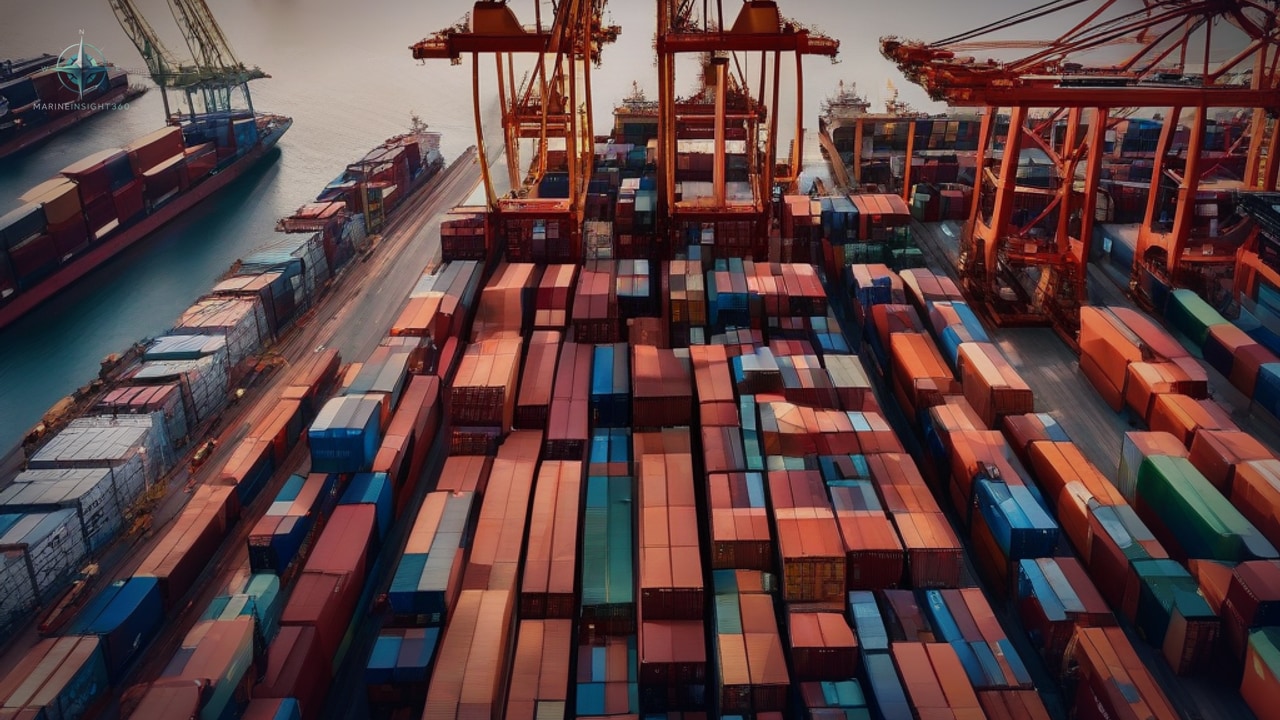
The UK's seven major ports covered here are Immingham, Felixstowe, Tees, London, Liverpool, Milford Haven and Southampton. By total tonnage, London is now the busiest UK port, with Grimsby and Immingham second and Milford Haven third.
Britain has been a seafaring trading nation for centuries, and its ports have had to adapt to every change in shipping, from sail to steam to the container. London major ports such as Tilbury and London Gateway show how far that has gone. Even the term "Merchant Navy" has a history: King George V granted the title to the British merchant fleet in recognition of its service in the First World War. The UK-registered fleet is much smaller than it was and sits well down the world fleet rankings, but its ports still handle the great majority of the country's trade.
Around 95% of UK trade in goods by volume moves by sea. In 2025 UK ports handled 428.3 million tonnes of freight, of which 419.5 million tonnes went through the major ports. Imports far outweigh exports: of 336.1 million tonnes of international traffic at the major ports, 237.5 million tonnes were imports. The ten largest ports handled 73% of major port traffic.
Short-sea routes to and from Europe make up most of the UK's international tonnage, about two thirds of it in 2024. Total UK port traffic peaked before the 2008 financial crisis and has never fully recovered, partly because North Sea oil and coal imports have declined. The seven ports below are the ones that matter most strategically.
Port of Immingham
Immingham, on the south bank of the Humber, is the busiest port in the Associated British Ports (ABP) group and, together with neighbouring Grimsby, the second busiest port in the UK. ABP runs it alongside the other Humber ports of Hull and Goole. The dock opened in 1912, built by the Great Central Railway to export coal.
Cargo Handling
In 2019 Grimsby and Immingham handled about 54 million tonnes, falling to around 46 million tonnes by 2025. Much of that is energy cargo: crude and refined oil for the two Humber refineries next door, coal in the past, and now biomass for power stations. In 2025 the complex was also the UK's second largest dry bulk port and second largest ro-ro port, with 16.3 million tonnes of ro-ro traffic.
Network and Layout
Immingham trades with Europe, Scandinavia and the Baltic, and with deep-sea suppliers in Asia, Africa and the Americas. Besides the enclosed dock behind its lock, it has deep-water jetties out in the Humber where the largest bulk carriers and tankers berth. It has long been one of the UK's busiest ports for rail freight, moving coal, biomass, oil and steel inland by train.
Port of Felixstowe
Felixstowe is Britain's biggest container port and one of the busiest in Europe, handling about 4 million TEU a year. It takes many of the largest ships carrying containers to the UK, and in 2025 it handled 19.3 million tonnes of containerised cargo, second only to London. The Felixstowe Railway and Pier Company was set up in 1875, the first dock opened in 1886, and the port began handling containers in 1967, when it became one of the pioneers of container shipping in Britain.
Cargo Throughput
Felixstowe is overwhelmingly an import port for consumer and industrial goods from Asia, which then move inland to distribution centres in the Midlands and the north. Its berths are worked by large ship-to-shore gantry cranes able to reach across the widest container ships afloat, with rubber-tyred gantries working the stacks behind them.
Network and Layout
The port has three rail terminals and moves more containers by rail than any other port in Britain, around a million TEU a year, with dozens of trains a day. It was also one of the first UK ports to trial 5G for port operations, a project with its parent company Hutchison Ports.
Tees Harbour
The Tees, run by PD Ports from Teesport, is one of England's main ports on the North Sea coast and handles a wide mix of cargo, from bulk to containers and ro-ro. PD Ports and its partners have invested heavily in the port over the past decade, and the Teesside Freeport, around the river mouth, is now one of the UK's largest freeports.
Tees and Hartlepool together usually rank among the ten busiest UK ports by tonnage.
Cargo Handling
For decades Teesport's deep-water bulk terminal imported millions of tonnes of iron ore and coal for the Redcar steelworks. That trade ended when the steelworks closed in 2015, and the port has since shifted towards containers, steel products, chemicals, oil and, increasingly, offshore wind components. Liquid bulk for the Teesside chemical industry is still a large part of its traffic.
Network and Layout
Teesport has its own container terminal, rail-connected quays and ro-ro berths serving North Sea routes to Europe and Scandinavia, and the river is lined with private wharves serving the chemical and steel industries.
Port of London
London has been a trading port since the Romans founded Londinium in the first century. The old enclosed docks near the city closed in the 1960s to 1980s, and the modern port lies downstream on the Thames, at terminals such as Tilbury and DP World London Gateway, which opened in 2013. The Port of London Authority manages the tidal Thames. London is now the UK's largest port facility by tonnage, with 13% of major port traffic in 2025, roughly 54 million tonnes.
Cargo Handling
London handles almost every kind of cargo. In 2025 it was the UK's largest port for containerised cargo (19.6 million tonnes) and for dry bulk (12.4 million tonnes), along with large volumes of oil products, aggregates, forest products and food. London Gateway's deep-water berths can take the largest container ships, and its container capacity has been expanding.
Network and Layout
Dozens of terminals line the Thames, and the river itself carries a lot of barge and coastal ship traffic, especially aggregates and waste. The port supports tens of thousands of jobs and has rail links into the national freight network, including from London Gateway's logistics park.
Port of Liverpool
The Port of Liverpool, owned by Peel Ports, stretches for miles along the Mersey. Its first commercial wet dock, the Old Dock, opened in 1715, and the modern container port is centred on the Royal Seaforth Dock, opened in 1972.
In 2016 Peel Ports opened Liverpool2, a £400 million deep-water container terminal on the river side of Royal Seaforth that can take the largest largest container ships trading to the UK without waiting for the tide. Liverpool is one of the UK's main container ports for transatlantic trade and the main one for the north of England.
Cargo Throughput
Liverpool handles containers, dry and liquid bulk, forest products, ro-ro freight to Ireland and the Isle of Man, and cruise ships. Liverpool2 is worked by ship-to-shore cranes and cantilever rail-mounted gantry cranes (CRMGs) that handle the stacks automatically.
Network and Layout
The Merseyside port has extensive rail links, a cruise terminal at the Pier Head, and access to the Manchester Ship Canal, also owned by Peel Ports, which takes ships inland towards Manchester.
Port of Milford Haven
Milford Haven, in Pembrokeshire, is the largest port in Wales and the UK's biggest energy port. The town was founded in the 1790s, and the deep natural harbour became a major oil port from the 1960s, when refineries were built along its shores. In 2025 it overtook Southampton to become the UK's third busiest port by tonnage, and it was by far the largest for liquid bulk, at 37.5 million tonnes.
Cargo Handling
Most of that is energy: crude oil and refined products through the Valero refinery and oil terminals, and liquefied natural gas through the South Hook and Dragon LNG terminals, which together can supply a large share of the UK's gas demand. The harbour's deep water lets it take very large tankers and the biggest LNG carriers.
Network and Layout
The Milford Haven Port Authority manages the waterway and runs Pembroke Dock, which handles ferries to Ireland and general cargo, and the port is a base for floating offshore wind projects in the Celtic Sea.
Port of Southampton
Southampton, another ABP port, has handled shipping for centuries and was the departure point of the Titanic in 1912. Today it is the UK's leading cruise port, with hundreds of cruise calls and a couple of million passengers a year, and one of its leading ports for cars and containers.
Cargo Throughput
Southampton is the UK's busiest vehicle-handling port, shipping hundreds of thousands of new cars a year for export and import, and it is a large exporter to markets outside the EU. The DP World Southampton container terminal is the UK's second largest container port after Felixstowe, with deep-water berths for the biggest Asia to Europe container ships.
Network and Layout
The port has several cruise terminals in the Eastern and Western Docks and a container terminal on the Western Docks extension, with strong rail links to the Midlands and the north. Its double high water, a feature of the Solent tides, gives ships a longer window to enter and leave the port.
Recommended Reading
Which Are The Major UAE Ports?
Bordered by Oman and Saudi Arabia, the UAE has become a beacon of development and trade on the Arabian Peninsula. It shares seas with Qatar to the west…
What are the 5 major ports of Bahrain?
Bahrain is an island nation near the western coastline of the Arabian Gulf. It comprises 50 natural and 33 artificial islands. Bahrain is the third…
What Are The 10 Major Ports in Mexico?
Mexico is located in the southern part of the North American continent. And also, is the world's 10th most populous country. It is a developing country, classified as an upper-middle-income country by the World Bank.