
Container Loading and Unloading: How Boxes Move Between Ship, Yard and Warehouse
How container loading and unloading actually works: stowage plans and cut-off dates, ship-to-shore cranes, yard handling, and stuffing at the warehouse.

Container loading and unloading is the chain of moves that puts cargo into a box, the box onto a ship, and both off again at the other end. Container unloading at a terminal runs in a strict sequence: ship-to-shore cranes lift boxes off by bay, yard machines stack them, and trucks or trains carry them out.
Most of the world's manufactured trade rides in intermodal containers, so the speed of this choreography sets the speed of global commerce. A large ship exchanges thousands of boxes in a port stay measured in hours, and every move is planned before the vessel arrives.
Before the Ship: Stuffing, Cut-Offs and the Stowage Plan
Loading starts at the warehouse, where empty containers arrive on the agreed schedule and get inspected for damage, cleanliness and door seals before cargo goes in. Packing the box, called stuffing, follows its own discipline. Heavy items go low and spread out. Weight stays within limits. Cargo is blocked and braced so nothing shifts at sea. Since the SOLAS verified gross mass rule, every packed export box needs a documented weight before it can be loaded.
Ports publish stowage or receiving dates for each vessel, typically a window of two to five days, and a box that misses its cut-off misses the sailing. Meanwhile the carrier's planners build the stowage plan: which container sits in which bay, row and tier. The plan balances ship stability, port rotation, reefer plug positions and dangerous goods segregation.
At the Quay: How Container Unloading Works
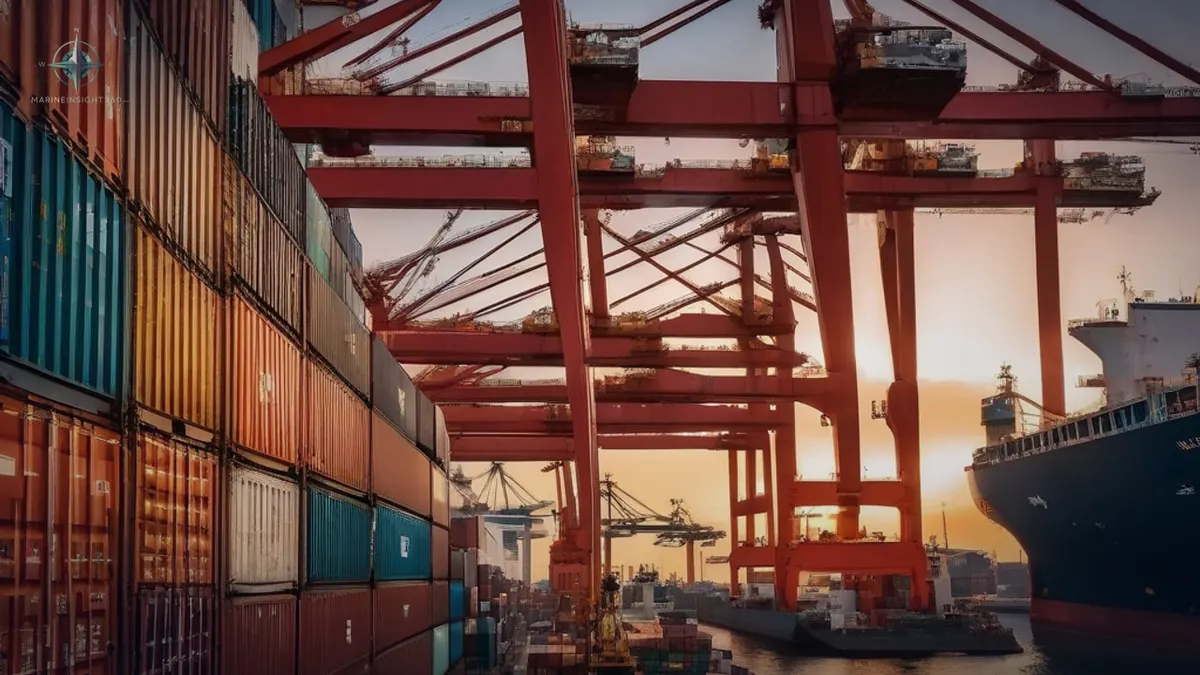
- Ship-to-shore gantry cranes work the vessel bay by bay, following the discharge sequence in the plan.
- The crane's spreader locks into the container's corner castings, lifts the box clear, and lands it on a terminal tractor or straight onto a stack.
- Lashing gangs release the twist-locks and lashing rods that held deck containers rigid at sea, staying one step ahead of the crane.
- Clerks and terminal systems tally every move, so the yard knows where each box landed within meters.
Loading is the same ballet reversed, and on a big exchange the crane alternates discharge and load moves in the same cycle to save time. Crane productivity, measured in moves per hour, is the number terminals compete on.
Below deck, containers slide into cell guides that hold them without lashings; on deck, stacks stand on hatch covers and depend on twist-locks and lashing bridges for their strength. That difference is why deck cargo gets the most attention during heavy-weather planning, and why the lashing gang's work is checked before sailing.
At transhipment hubs the same box may cross the quay twice without ever leaving the port, discharged from one vessel, stacked, and loaded to a connecting service days later.
In the Yard: Stacking, Storage and Delivery
Between ship and gate, boxes live in the container yard. Rubber-tired and rail-mounted gantry cranes, straddle carriers and reach stackers shuffle the stacks. Import boxes stay accessible for pickup and export boxes get marshaled for the next vessel. Reefers stay on power, and dangerous goods sit in their segregated block.
From the yard, cargo leaves by truck, rail or barge, or the box goes to a warehouse for unstuffing, where the receiving team checks seals and counts cargo against the packing list.
The gate is its own checkpoint. Cameras read container numbers and truck plates as vehicles pass, and the system matches each box against its release. An interchange record captures visible damage, fixing responsibility at the moment of handover. A box that leaves clean and comes back dented is a paid repair, and the record decides who pays.
Where It Goes Wrong
- Badly stuffed boxes: shifted cargo damages goods, and misdeclared weight endangers the ship and the stack.
- Missed cut-offs: the box waits for the next sailing and the sale waits with it.
- Stow plan conflicts: a box buried under later-port cargo forces expensive restows.
- Paper mismatches: seals, weights or dangerous goods declarations that do not match reality stop everything.
The fixes are unglamorous: pack and secure to the container packing code, declare weights honestly, book realistic windows, and treat the cut-off as the real deadline it is.
Verified gross mass was supposed to end misdeclared weight, and it has not. The rule is universal since SOLAS made it mandatory; the enforcement is not, and how rigorously a terminal checks a declared figure still varies by port and by carrier. If you are the one signing the VGM, you are signing something the stack above you depends on, whatever the terminal does or does not verify at the gate. The same boxes move differently on ships where cargo drives aboard, and sit inside a wider fleet built around them.
Recommended Reading

Container Tracking: How Shippers Actually Follow a Box Across the Ocean
How container tracking works, from free carrier lookups to visibility platforms: what each tool layer does, what it costs, and how to pick for your volume.
Container Tracking Systems: A Comprehensive Guide
Container Tracking Systems: A Comprehensive Guide: ports, trade and shipping-market context for US, UK, Canada, Australia, Singapore and European...
Container Ship: How the Box Boat Runs World Trade
What a container ship is and how it works: TEU sizes from feeder to 24,000-box giants, who crews them, how fast they sail, and why they carry your shopping.