Drone strikes hit Russian ships in the Gulf of Finland and at Benghazi
Russian cargo ship Sparta II burned after a drone strike off Finland on 21 November. A day later drones hit a Russian corvette and cargo ship at Benghazi, which Ukraine claimed.
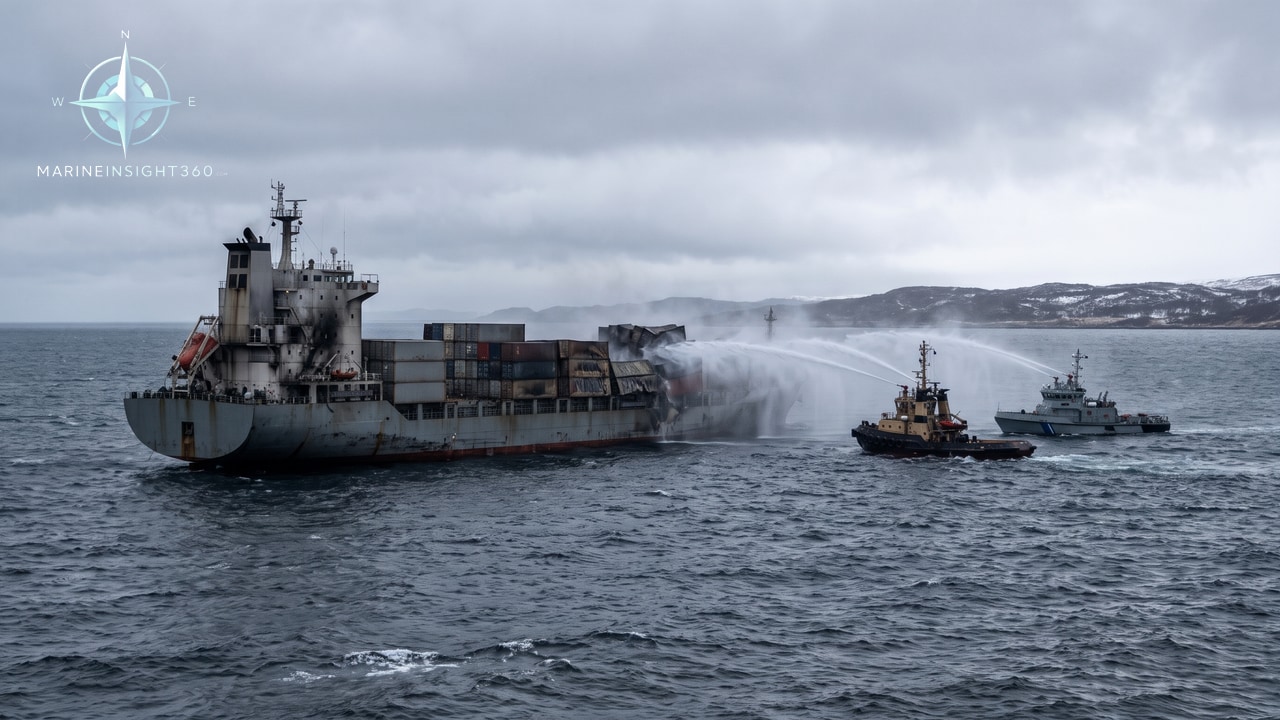
Drones struck Russian vessels in two seas over a single weekend. On 21 November the Russian cargo ship Sparta II caught fire after a drone strike in the Gulf of Finland, and on 22 November drones hit a Russian corvette and a cargo ship at Benghazi in eastern Libya, an attack Ukraine's President Zelenskiy has since claimed.
Fire and tow in the Gulf of Finland
The 121-metre, Russian-flagged Sparta II was sailing from St Petersburg to Kaliningrad when drones hit it in international waters west of Gogland Island, Reuters reported. Its owner, Oboronlogistika, provides logistics for the Russian Defence Ministry and is under US sanctions. The fire left it unable to manoeuvre, and it drifted into Finnish territorial waters near Loviisa. All 16 crew were moved to a nearby Russian ship. One suffered minor injuries.
The Finnish military said Ukraine was likely behind the strike. Kyiv has not claimed it. Kremlin spokesman Dmitry Peskov described a "dangerous trend of increasing terrorist activity" in the Baltic Sea.
Finland's National Enforcement Authority found that the ship belonged to a company on the EU sanctions list and imposed a temporary measure at 8 p.m. on 21 November barring its release, with exceptions for rescue, safety and environmental risk, gCaptain reported. Finnish, Estonian and Russian vessels fought the fire, and the Russian rescue vessel Murman began towing the ship on 22 November. President Alexander Stubb said the ship had left Finnish territorial waters and that, in its condition, it "posed a serious danger in the Gulf of Finland".
Corvette and cargo ship hit at Benghazi
On 22 November Libya's eastern-based government reported an explosion aboard a Russian ship at the Benghazi naval base and said a preliminary investigation pointed to a drone attack, according to Reuters. It said the vessel had stopped to refuel and resupply on its way back to Russia. Two medical sources said there were injuries but no deaths.
A day later Zelenskiy said Ukraine had used seven naval drones to sink the corvette Merkury (spelled Mercury by Reuters) at Benghazi, destroying a Ka-27 helicopter with it. He said the drones also hit the dry cargo ship Angara , which he said Russia used to carry weapons. It was Kyiv's first official acknowledgement of an attack in Libya, Reuters reported. ABC News tied the Libyan government's statement about the docked ship to the same attack. Ukraine's SBU security service said the drones were launched from a "mother ship" and called both vessels legitimate military targets. The extent of damage to Angara has not been reported.
Russia's Defence Ministry had not commented. Eastern Libya's prime minister, Osama Hamad, asked the UN to investigate suspicions that the boats were launched from western Libya. The UN Support Mission in Libya called for an "immediate, independent and transparent" investigation, CNBC reported.
Earlier strikes on Russian ships
The Institute for the Study of War said the Merkury had been escorting Russian cargo ships. In March, Russia's Transport Ministry said Ukrainian naval drones launched from Libya attacked the Arctic Metagaz , which was carrying LNG from Murmansk. Libya's maritime agency said the ship caught fire and sank between Libya and Malta.
The week before the Sparta II strike, the Finnish military said it had detected a strike on a Russian warship in the same area. Estonian Navy Commander Ivo Vark told public broadcaster ERR that further attacks in the Gulf of Finland cannot be ruled out.
Sources: Reuters via gCaptain, gCaptain, Reuters via gCaptain, Reuters via gCaptain, ABC News, CNBC.