Spain to ban scrubber washwater discharges in ports and anchorages from July 2027
A Spanish royal decree approved on 17 November bans washwater discharges from open-loop, closed-loop and hybrid scrubbers in ports, internal waters and anchorages from 1 July 2027.
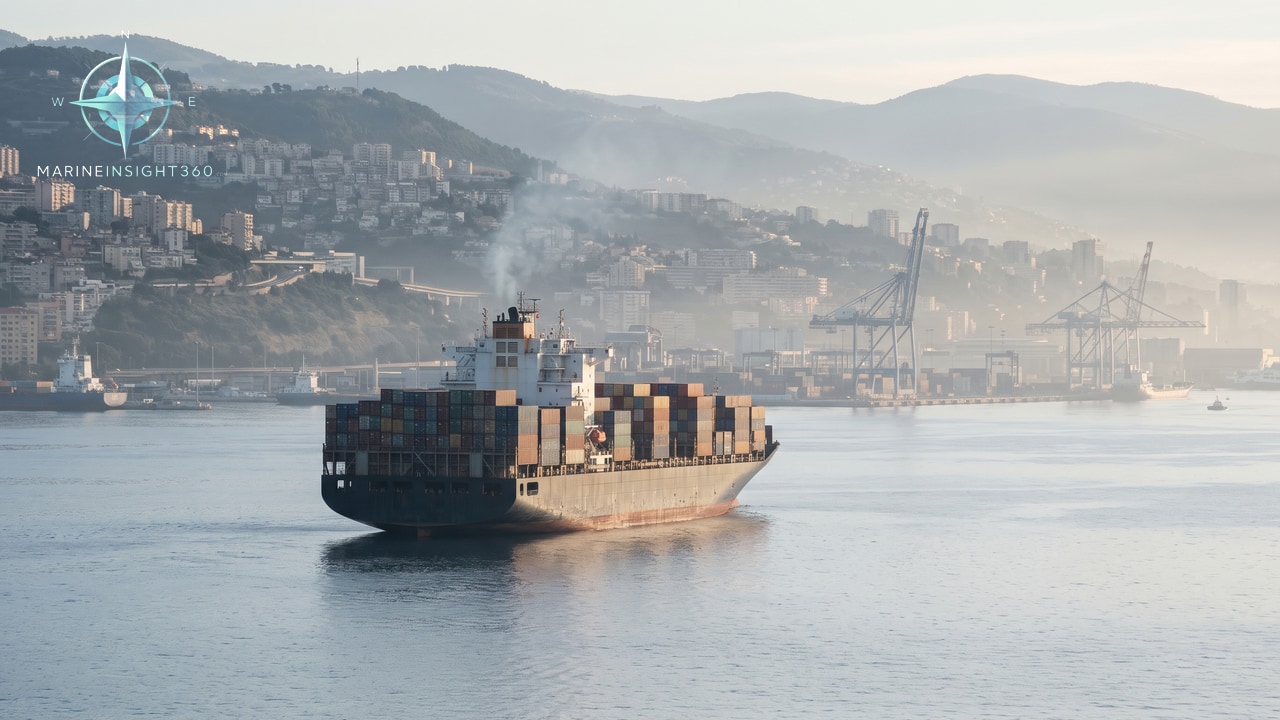
Spain will prohibit ships from discharging scrubber washwater in its ports, internal waters and designated anchorages from 1 July 2027. The Council of Ministers approved the royal decree, promoted by the Ministry of Transport and Sustainable Mobility, on 17 November 2026, according to El Estrecho Digital.
The ban applies to all civilian ships fitted with exhaust gas cleaning systems, whatever their flag, and covers open-loop, closed-loop and hybrid scrubbers alike. gCaptain identifies the measure as Royal Decree 1006/2026, published in the Boletín Oficial del Estado on 20 November.
What the decree covers
The prohibition covers Spain's internal maritime waters, the waters of port service areas, and anchorage and holding areas designated within the territorial sea. According to gCaptain, it does not extend to all Spanish territorial waters and does not ban the use of scrubbers.
Owners will not have to remove or replace their systems. Depending on the equipment fitted, a ship can switch to compliant low-sulphur fuel in the regulated areas or keep washwater on board and deliver it in port, ENGINE reported in a story republished by Hellenic Shipping News. gCaptain adds that scrubber-equipped ships must notify Spanish authorities of their systems at least 24 hours before arrival, or on departure from the previous port for shorter voyages, and that inspectors may examine fuel changeover records and scrubber operating logs. El Estrecho Digital says Harbour Masters' Offices, which report to the Directorate-General of the Merchant Marine, will check compliance. None of the reports describe penalties or exemptions.
The ministry says the discharge water can contain polluting substances and contribute to acidification of the marine environment, and that one national framework gives operators more legal certainty and makes inspection simpler. The decree replaces local restrictions already in force at Algeciras, Almería, Barcelona, Cartagena, Huelva and Valencia, according to El Estrecho Digital and ENGINE. gCaptain lists four of those ports and leaves out Almería and Huelva.
Ahead of the OSPAR timetable
The decree implements OSPAR Decision 2025/01, under which parties to the North-East Atlantic convention must ban open-loop discharges in ports and internal waters by 1 July 2027 and discharges from scrubbers in any mode by 1 July 2029. When the decision was agreed, DNV said that contracting parties could delay implementation by three years and that the Mediterranean lay outside OSPAR, so any extension there was a matter for Spain and France.
Spain has brought the closed-loop and hybrid deadline forward by two years and applied the rules to its Mediterranean ports as well. Denmark, Sweden and Finland have restricted open-loop discharges in their territorial waters since 1 July 2025, DNV reported. El Estrecho Digital cites the ministry as saying more than forty countries have adopted local restrictions on scrubber discharges.
Shipowner objections and fleet exposure
The Spanish shipowners' association ANAVE criticised the accelerated timetable and the wider geographic scope, gCaptain reports. The association questioned whether the restrictions rest on environmental risk assessments, raised concerns about port reception facilities for closed-loop washwater, and called for closer alignment with IMO guidelines.
Scrubbers remain an accepted means of meeting IMO sulphur limits. For ships calling at Spanish ports, the decree means burning low-sulphur fuel or retaining washwater for the duration of each port stay and anchorage. DNV figures cited by ENGINE put the scrubber-fitted fleet at 7,230 ships, a number expected to reach 7,612 by 2029.
Sources: gCaptain, El Estrecho Digital, Hellenic Shipping News (ENGINE), DNV.