UN briefing puts Black Sea grain ship traffic down 63% as attacks spread
WFP told the UN Security Council on 23 November that Bosphorus grain vessel traffic fell 63%; the UN verified 21 vessel workers killed, and the EU backs a EUR 50m Black Sea hub.
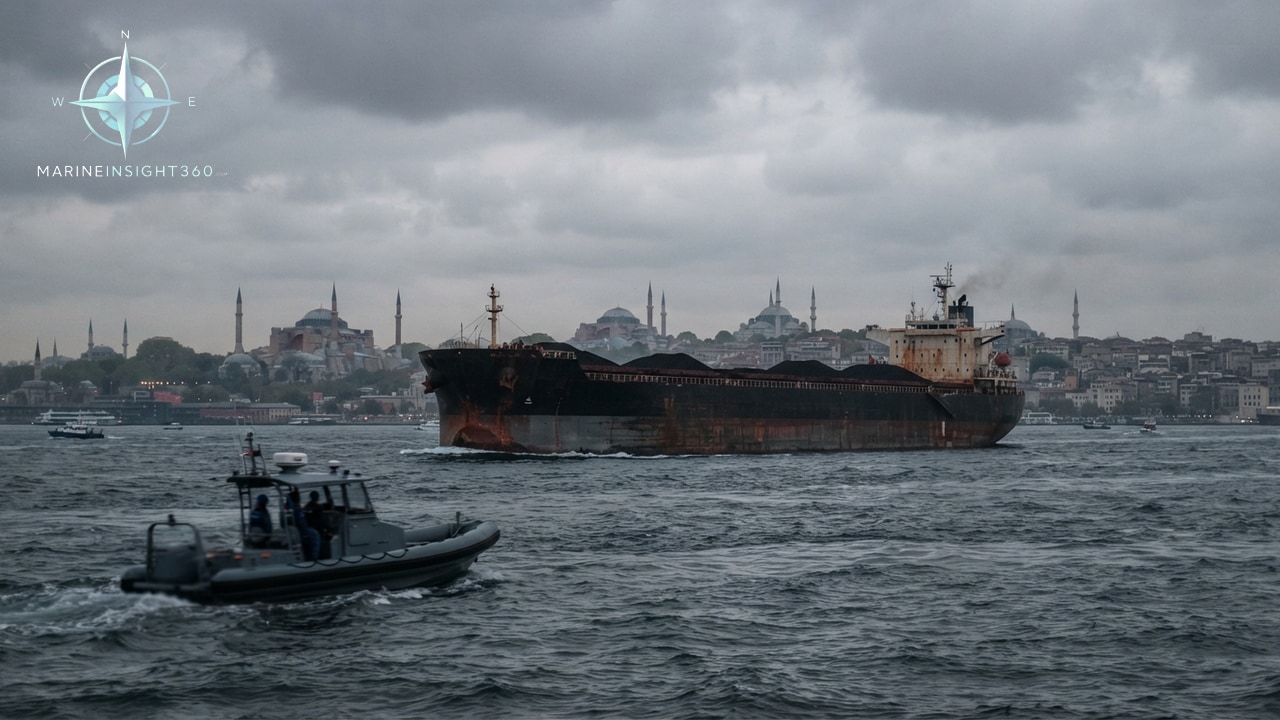
The number of wheat and maize vessels moving through the Bosphorus was 63 percent lower in mid-October than a year earlier, the head of the World Food Programme told the UN Security Council on 23 November. At the same meeting, the UN's political affairs chief said attacks on commercial ships linked to the war in Ukraine were spreading into Bulgarian and Romanian waters, and the EU pointed to a Black Sea Maritime Security Hub that Brussels has offered EUR 50m to speed up.
What the UN told the council
WFP executive director Luke Lindberg said around 10 million tonnes of Russian and Ukrainian wheat may not reach global markets this year, which he put at enough to feed 44 million people. "Grain is available, but it is not reaching the people who need it," he said. He called the Black Sea "the deadliest maritime route in 2026", with more than 300 attacks recorded and at least 40 people killed, and said that for crews the route "has become a life-or-death risk" (WFP). WFP also said wheat prices were almost 10 percent higher than in January (WFP).
Lindberg offered WFP's help to move humanitarian grain cargoes from both Russia and Ukraine through what he called "a strictly humanitarian mechanism". Russia's representative told the council Moscow would not accept any new grain deal, according to the UN meeting summary.
Rosemary DiCarlo, under-secretary-general for political and peacebuilding affairs, said the UN human rights office (OHCHR) recorded reports of 164 attacks on commercial vessels in Ukraine's Odesa and Mykolaiv regions and in the Black Sea between June and October 2026. OHCHR has verified 15 of them, in which at least 21 vessel workers were killed and 43 injured. She said the UN was alarmed by attacks reaching Bulgaria's exclusive economic zone and Romania's coast (DPPA).
Russia's representative, citing her country's defence ministry, said more than 200 commercial vessels, many carrying fuel, had been attacked in the Mediterranean, Caspian and Baltic seas this year, killing 2 seafarers and wounding 12 (UN).
The EU security hub
EU ambassador Stavros Lambrinidis told the council the Black Sea "is now the deadliest maritime route in the world". Splash247 reported that he said work on the hub had been accelerated, with EUR 50m proposed. The UN summary attributes the hub reference to Bulgaria's representative, who said Sofia is working with Romania to set it up.
Commission president Ursula von der Leyen announced the EUR 50m during a visit to Romania and Bulgaria on 9 and 10 November, along with a further EUR 10m for search and rescue (The Maritime Executive). The hub will have offices in Constanta and Varna and is meant to protect critical infrastructure, share information between the two countries and support trade, Euronews reported. Reports differ on timing: The Maritime Executive said it was expected to be ready by the end of 2026, while Euronews said it could become operational in the first half of 2027.
Effect on Black Sea trade
Bulgaria told the council that no overland route for Ukrainian grain matches the efficiency of sea transport. Panama said vessels under its flag had been damaged in Ukrainian ports, in the Black Sea and in surrounding areas. On 23 November von der Leyen also unveiled a proposed 22nd sanctions package against Russia, which would blacklist more than 70 additional ships, Splash247 reported.
Sources: WFP, UN DPPA, UN Meetings Coverage, Splash247, The Maritime Executive, Euronews.