
What are Hydrostatic Release Units?
Somewhere between 1.5 metres and 4 metres below the surface, the lashing lets go by itself.
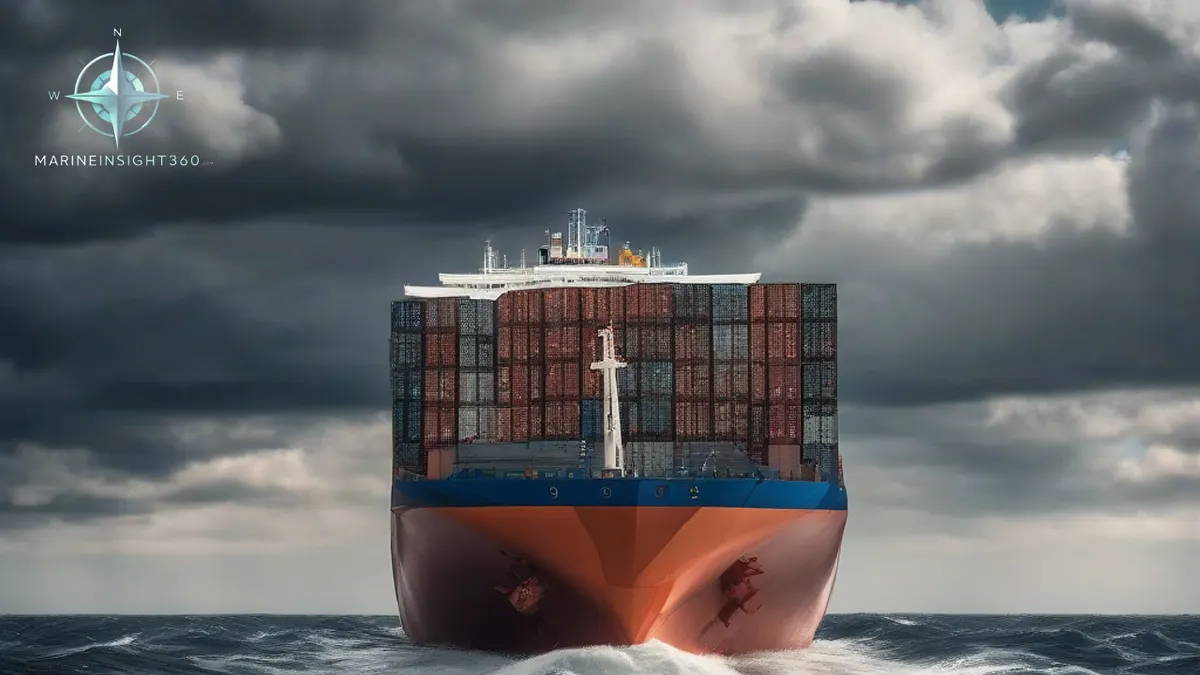
Somewhere between 1.5 metres and 4 metres below the surface, the lashing lets go by itself. That band is the job of a hydrostatic release unit: a pressure-triggered device that automatically frees a ship's liferaft as the vessel sinks, cutting the lashing once water pressure builds at a set depth. Nobody has to be standing at the cradle for it to happen.
The release cannot wait for a crew member
Every lifesaving appliance on a modern ship has to release with minimal human input; the aim is to minimise human intervention at the moment of crisis. Liferafts manage it with Hydrostatic Release Units (HRUs), and one of the primary advantages of a liferaft is its ease and rapid release in emergencies. That makes rafts a reliable means of lifesaving, as the International Convention for the Safety of Life at Sea (SOLAS) requires of any seagoing vessel.
Lifeboats and liferafts differ in availability, characteristics and how they are used to save lives at sea. Lifeboats are usually large and can take a large number of passengers when a ship is going down. Liferafts, on the other hand, are smaller, mostly inflatable and portable, and carry fewer people. The speed with which a raft can be released makes it an essential part of the lifesaving appliances (LSAs), which are indispensable equipment for ships.
For practical purposes, automation has been widely used to meet that need. Where manual intervention would be tedious and time-consuming, some mechanism has to activate the equipment quickly, and the equipment has to be immediately ready and available the moment the situation requires it. Launch is the most critical part of any lifesaving appliance, and for a raft the launch belongs to a device called a hydrostatic launch unit (HRU).
The unit works like a hydrostatic switch
Informally you will hear it called a "hydrostatic lifesaver", and the principle behind it is very simple. It behaves like a hydrostatic switch, activating the release mechanism that retracts the life raft and suspends it so it can be freely thrown into the water.
Rising water pressure throws the switch
As the ship sinks, increasing water pressure activates the hydrostatic release unit switch. The device is connected to the liferaft's stowage device; it disconnects the lanyard or carabiner and releases the raft into the water.
If you want the everyday version, it works like the oxygen mask on an airplane: a drop in cabin pressure drops the mask over the seat, and the passengers or crew can breathe. The trigger there is air pressure. On deck it is hydrostatic pressure, which is water.
How To Inspect And Maintain Ship Busbars?
Difference Between Merchant Navy & Defense Navy
How To Inspect And Maintain Ship Busbars?
The hydrostatic release deviceis typically located at a specific position on the hull, usually within a sealed enclosure. When the ship begins to sink, rapid changes in draft or waterline, which manifest as changes in hydrostatic pressure, trigger the release device.
Now the question crews actually ask: at what depth does such a device work? Design and ease of use vary from ship to ship. Still, for practical purposes, hydrostatic release units are designed to operate once the unit is between 1.5 metres and 4 metres below the surface.
Fire does not beat it. The unit is well protected within its enclosure and will remain intact even in extreme situations such as fire.
Sequence of operation can be briefly explained like this.
How does a hydrostatic release unit sense that a ship is sinking?
Take the ship below a certain depth and the liferaft's umbilical activation switch detects the change in hydrostatic pressure caused by water in contact with its membrane. That activates the umbilical activation unit, the HRU. Pressure is then transmitted mechanically, and sometimes electronically, to the life raft storage unit, where the rigging and safety belts are disconnected along with the lanyards.
What the saved minutes are actually for
Rafts are usually launched after inflating automatically in the inflatable raft compartment. That saves time and effort, and it saves crew deployment: the crew usually rescues and assists other people on board instead, usually those missing or incapacitated.
HRU designs must meet specific mandatory standards and are usually tested as part of the safety checklist before sailing. In practice, ships must replace them in a maximum of 4 to 5 years.
Recommended Reading
Iran retaliates with missiles and drones, defying Trump’s warning
Answer: Iran’s recent launch of ballistic missiles toward Jordan and drones toward Bahrain, Kuwait and the United Arab Emirates creates an immediate…
Hapag-Lloyd Invests in APM Terminals Rotterdam to Drive Growth
Hapag‑Lloyd’s new stake in APM Terminals Rotterdam aims to expand capacity, improve hinterland links and enhance crew efficiency in Europe’s busiest port.
Saildrone Completes Missile Launch Test Aboard its Sail-Powered Surveyor
Saildrone’s autonomous vessel successfully launched a missile‑type payload, showing new possibilities for armed surveyors and implications for shipping operator