
Boiling Liquid Expanding Vapor Explosion (BLEVE)
Boiling Liquid Expanding Vapor Explosion (BLEVE): safety, training and compliance context for US, UK, Canada, Australia, Singapore and European...
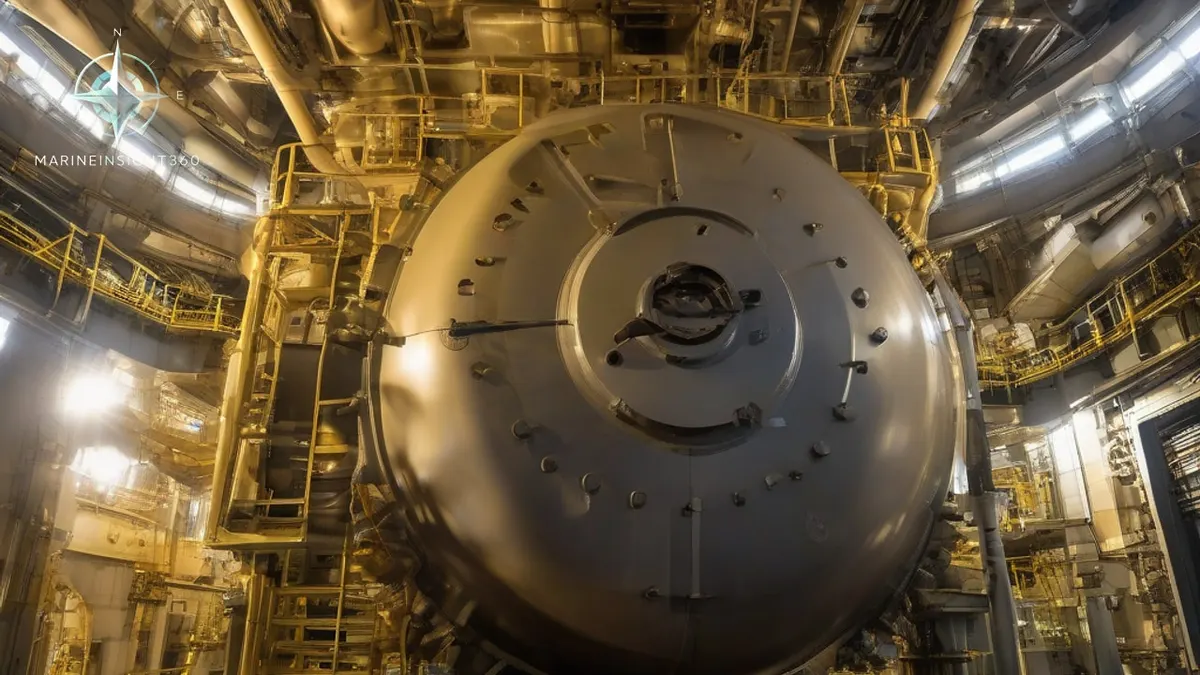
What is a Boiling Liquid Expanding Vapor Explosion (BLEVE) on an LNG carrier?
LNG carriers use airlocks between the deck and the cargo compressor engines. These safety systems sit between the deck, a hazardous area, and the cargo compressor engines, a gas-free area. Cargo holds on LNG carriers are equipped in the same spirit. They carry various safety measures to prevent cargo from coming into contact with the atmosphere and overpressurization.
LNG carrier cargo holds are specially constructed using high-strength, low-thermal-coefficient materials. They are also equipped with insulation and safety systems. A key safety feature in these holds is the pressure relief valve. It helps prevent overpressurization and rupture.
On LNG carriers, the most dangerous component is often vapor, not liquid, which evaporates at extremely low temperatures. This can lead to a BLEVE.
What is a Boiling Liquid Expanding Vapor Explosion (BLEVE)?
A boiling-expanding steam explosion (BLEVE) is a type of steam explosion. It can occur when a tank structure fails catastrophically. That failure causes the liquid cargo inside to exceed its boiling point at nominal atmospheric pressure.
Cargo in gas carriers is typically part liquid and part vapor. However, when the tank structure collapses, vapor attempts to escape or leaks through openings. That escape causes a drop in pressure inside the tank. The sudden drop in pressure inside the cargo hold makes the liquid boil rapidly. It also increases vapor formation.
Boiling-Expanding Steam Explosion
The escaping vapor's pressure rises rapidly and generates a shock wave. In the presence of an ignition source, it generates an explosion instead. That explosion can destroy the entire tank structure and the surrounding area.
The extent of a BLEVE depends entirely on the container or cargo hold. Its size, volume, and weight all set the scale. The amount of liquid cargo remaining in the tank also matters. That quantity, measured at the time of a BLEVE, affects the scale of the explosion.
Note that a BLEVE can occur even in the absence of flammable materials. Liquid cargoes stored at extremely low temperatures can experience similar conditions. Liquid helium and other refrigerants or coolants are examples. Those conditions arise during a boiling liquid vapor explosion (BLEVE). However, these are not generally considered chemical explosions. If the substance or cargo used in a BLEVE is toxic, it can contaminate a large area.
A fireball can form during a BLEVE, but only if the substance used is flammable. The effect is similar to a fuel-air explosion, also known as a vapor cloud explosion (VCE).
- World’s First Cargo Of Bauxite Using LNG-Powered Ship
- Water Sprinkler and Water Mist Fire Extinguishing Systems
- Different Types of Fire Extinguisher Used on Ships
- Fire-Damaged Grimaldi Conro Is Towed To Port
Common Scenarios of a BLEVE
A BLEVE does not occur immediately. It can occur under certain conditions, such as when warning signals are ignored. The following are necessary conditions for a boiling liquid vapor explosion to occur:
Liquid cargo: Vapor alone cannot cause a vapor explosion. The liquid cargo must be present in the tank for a vapor explosion to occur. Even water can cause a vapor explosion. Water is non-flammable, so it does not cause a fire.
Pressure vessel: Liquid cargo must be contained in sealed containers or cargo holds. Even in a well ventilated container, a vapor explosion can occur only if the ventilation system fails. That failure causes the tank pressure to build up.
Temperatures above the boiling point: A sealed liquid cargo must be heated above its boiling point at atmospheric pressure. Only then can a vapor explosion follow. When a pressurized cargo hold or tank is heated, vapor pressure increases. This increase in boiling point is accompanied by an increase in vapor pressure. Structural failure: The liquid needs a path to escape from a pressurized cargo hold and convert to vapor.
This can only occur if there is a structural failure in the hold or tank.
Common Causes of BLEVEs
The most common causeof a BLEVE is a fire near a cargo hold. That hold contains a gas cargo such as propane. Due to the high ambient temperature, the cargo hold begins to heat up. Excessive pressure then builds up inside it. High pressure within the tank is typically relieved via a pressure relief valve.
However, the pressure can increase rapidly because of the high ambient temperature and the high rate of heating. In that case the tank's weakest point can collapse. The collapse exposes the pressurized flammable vapor to an open flame. The expanding liquid vapor then explodes.
- How Many Types Of Mountings Are There In A Boiler?
- How do the Marine Boilers Works?
- Selection Of Marine Boilers During Ship Design
- How Are Ship Fenders Used for Berthing?
Causes of Tank Structural Failure
- Improper Tank Maintenance.
- Corrosion of the Tank Structural Structure.
- Faulty or Blocked Tank Safety Valve.
- Mechanical Damage to the Tank.
- Physical Failure.
- Severe Tank Structural Exposure, Flames, or Fire.
Different Stages of a BLEVE
As previously mentioned, a BLEVE does not occur suddenly. Nor does it occur in the absence of any of the aforementioned elements. The following are the steps that may lead to a BLEVE:
Tank Failure/Sealing: Tank failure can occur for a variety of reasons. These include increased internal pressure and failure of the weakest component.
Phase Change: When a tank fails, the pressure of the liquefied gas suddenly drops. The liquid-gas mixture is thermodynamically saturated above its boiling point, so it superheats. The initial pressure within the tank/storage vessel drops to atmospheric pressure within milliseconds. Liquid-Vapor Splash: When the superheat limit (SLT) temperature is exceeded, rapid gas bubble formation begins within the tank. That bubble formation causes the liquid-gas mixture to violently erupt into the atmosphere.
Explosion: The pressure drop is accompanied by a violent phase change in the superheated state. That change causes the liquid to boil, followed by gas bubble formation. The sequence ultimately leads to an explosion. BLEVE warning signs:
- Buzzing sound from the metal frame.
- Discoloration of the tank.
- Small metal parts falling off.
- Blisters or bulges on the tank surface.
- Sudden increase in tank pressure.
- Preventative measures to avoid BLEVE.
- Maintain cargo holds regularly.
- Always ensure the pressure relief valve is in proper working order.
- The pressure relief valve to be installed must be sized in accordance with the International Gas Code.
- Emergency preparedness for all ship personnel.
- During gas cargo transfers, avoid handling normal cargo, stores, and compressed gases near the gas loading process.
- No refueling or lubrication operations are allowed during or prior to loading.
- Continuously check mooring lines to ensure the vessel is securely moored to the berth/pier.
- A liquefied petroleum gas (LPG) detector must be available for berth use.
- Any cargo transfer operations must be conducted at night or during dark hours. Adequate lighting is needed both in port and on board.
- Connection areas, stop valves and similar fittings must be clearly visible. Firefighting equipment must be available and easily accessible at all times during transfers. Adequate warning signs must be posted. All personnel, both shore and on board, must then be aware of cargo loading and unloading procedures and necessary precautions.
- Safety is always our top priority.
Recommended Reading
What is a Bulk Liquid Terminal?
What is a Bulk Liquid Terminal?: ports, trade and shipping-market context for US, UK, Canada, Australia, Singapore and European maritime readers.
Iran retaliates with missiles and drones, defying Trump’s warning
Learn iran with practical maritime context, safety checks, operational guidance and related resources for global shipping readers.
Hapag-Lloyd Invests in APM Terminals Rotterdam to Drive Growth
Hapag‑Lloyd’s new stake in APM Terminals Rotterdam aims to expand capacity, improve hinterland links and enhance crew efficiency in Europe’s busiest port.