
What Are Very Large Gas Carriers (VLGC)
VLGCs are the largest common class of LPG carrier, typically 80,000–90,000 m³, carrying propane and butane fully refrigerated; many newer ones can also carry ammonia.
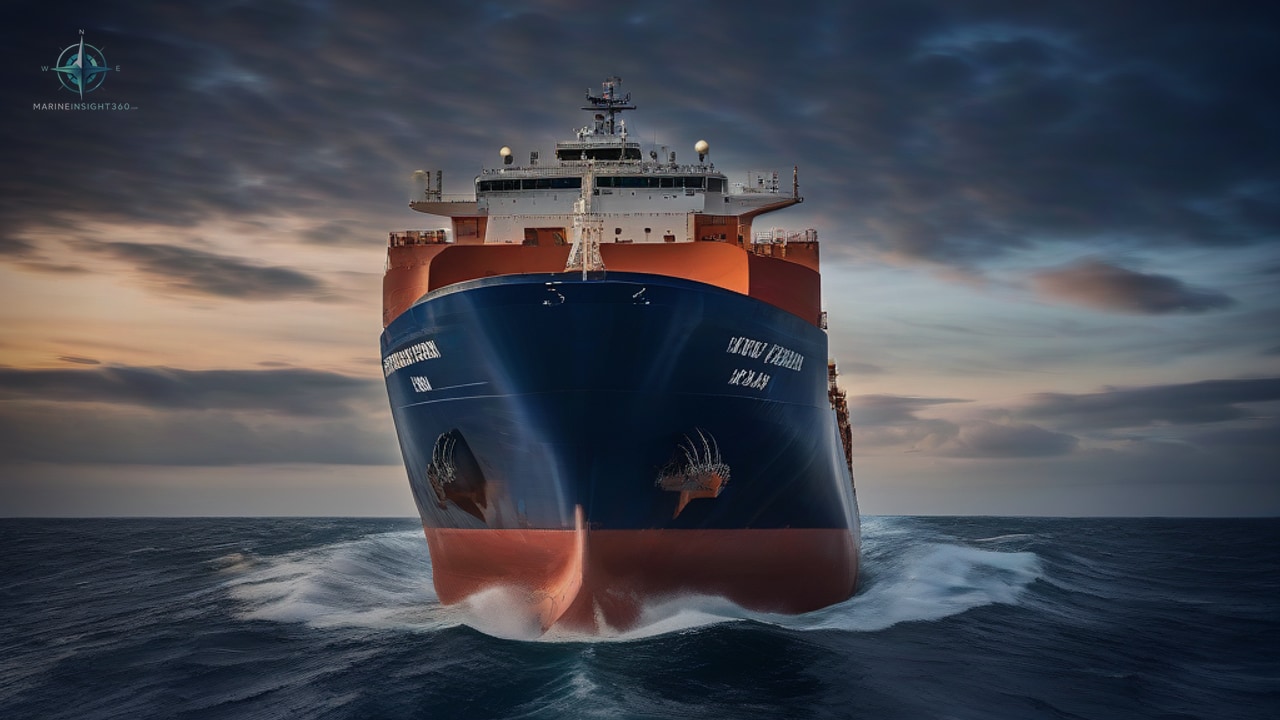
A Very Large Gas Carrier (VLGC) is the largest common class of ship built to carry liquefied petroleum gas (LPG), mainly propane and butane, and many newer ones can also carry ammonia. They are not LNG carriers: liquefied natural gas is a different cargo, carried much colder in a different type of ship. VLGCs move LPG from export terminals, for example in the US Gulf and the Middle East, to importing countries, many of them in Asia, and they make it possible to transport that gas in large parcels rather than many small ones.
Very Large Gas Carriers are a sub-group of the wider family of gas carriers, defined by size. A typical VLGC has a cargo capacity of around 80,000 to 90,000 cubic metres and is roughly 225 to 230 metres long. Smaller gas carriers, including fully refrigerated mid-size ships and semi-refrigerated or pressurised ships, serve shorter routes and smaller ports.
In this article we look at how a VLGC is built, how its cargo is loaded and discharged, and the main safety points.
Construction of VLGC Vessels
A VLGC carries its cargo fully refrigerated at close to atmospheric pressure. Each cargo is kept close to its own boiling point: propane boils at about −42 °C, so a propane cargo is carried at around that temperature, while butane and ammonia are carried near their own, higher, boiling points. The tanks must be insulated and built from steel that stays tough in the cold.
The cargo is usually held in four independent prismatic tanks, known as IMO Type A tanks, set along the centreline of the ship. Because Type A tanks need a full secondary barrier, the surrounding hull structure is designed to contain a leak. The design and equipment of these ships are governed by the IMO's International Code for the Construction and Equipment of Ships Carrying Liquefied Gases in Bulk (the IGC Code).
A VLGC has a double bottom structure and water ballast tanks in the double bottom and along the sides (hopper and topside tanks). Together with the space between the cargo tanks and the hull, these keep the tanks set back from the shell plating, as the IGC Code requires, to limit damage in a collision or grounding.
Loading and Unloading Operations
Each cargo tank usually has two main cargo pumps, deepwell or submerged pumps that sit near the bottom of the tank and discharge the cargo through the tank top. Gas detection, temperature, pressure and level gauges are fitted so that the crew can monitor every tank throughout the operation.
Some of the cargo inevitably warms and boils off during the voyage. On a VLGC this boil-off gas is normally drawn off by a reliquefaction plant, which turns it back into liquid and returns it to the tanks, so the cargo pressure stays within limits. Many newer VLGCs are also built with dual-fuel marine engines that can burn LPG as fuel.
Preparing the tanks for cargo
Cargo loading and discharging are carried out in a fixed sequence of steps, because the cargo is flammable and, in the case of ammonia, toxic, and the safety rules for each step have to be followed.
When the tanks contain air, for example after a dry-docking, they are first dried and, for LPG, inerted to bring the oxygen content down, so that a flammable mixture cannot form when cargo vapour is introduced. Ammonia tanks are not inerted with combustion-generated inert gas, because its carbon dioxide reacts with ammonia. The inert gas is then replaced with cargo vapour, a step known as gassing-up.
The mixture displaced from the tanks is vented or returned to the terminal, depending on how much cargo vapour it contains and on the terminal's rules.
The next step is cooling-down. Cargo liquid, supplied from the terminal or from cargo kept on board, is sprayed into the tanks through spray lines until the tanks reach a temperature at which they can safely take the cold cargo without damaging thermal stress.
Common Cargo and Safety Precautions for VLGC
Most VLGCs trade on long routes between a few large export terminals and many import terminals, which gives the shipping companies that operate them an important place in energy logistics.
On many routes the return voyage is made in ballast, with no paying cargo on board, often only a small heel kept to hold the tanks cold, and so no freight earned. An empty ship sits high in the water and relies on its ballast system to stay stable and keep the propeller properly immersed. Operators therefore try to arrange cargoes for both legs of a voyage where they can.
VLGC protocols
The main hazards of these cargoes are fire and explosion, because LPG is highly flammable, and exposure to toxic cargo such as ammonia, which can cause serious harm even at low concentrations. Crews are trained in gas detection, the use of breathing apparatus and emergency procedures, and access to cargo spaces is strictly controlled.
Gas carriers have a good overall safety record, and large cargo releases from them are rare. The risks that crews manage day to day are leaks of flammable or toxic vapour, and the low temperatures involved in handling the cargo.
Recommended Reading
15 Best Aircraft Carriers in the World
The World's biggest aircraft carrier is more than just a warship. Given endless territorial disputes, the biggest aircraft carriers are symbols of…
Diwali at Sea: Far from Home, Together as One Crew
What Diwali looks like on a merchant ship: a crew of different faiths and nationalities celebrating together, thousands of miles from home.
Ramadan at Sea: Fasting, Prayer and Watchkeeping for Muslim Seafarers
A practical guide to Ramadan on board: fasting and watchkeeping, rest hours, suhoor and iftar timings across time zones, galley, prayer and Eid.