
Boiler Mountings on Ships: Types and What Each One Does
The mountings fitted to a marine boiler, from safety valves and gauge glasses to stop, feed check and blowdown valves, and what each one does.
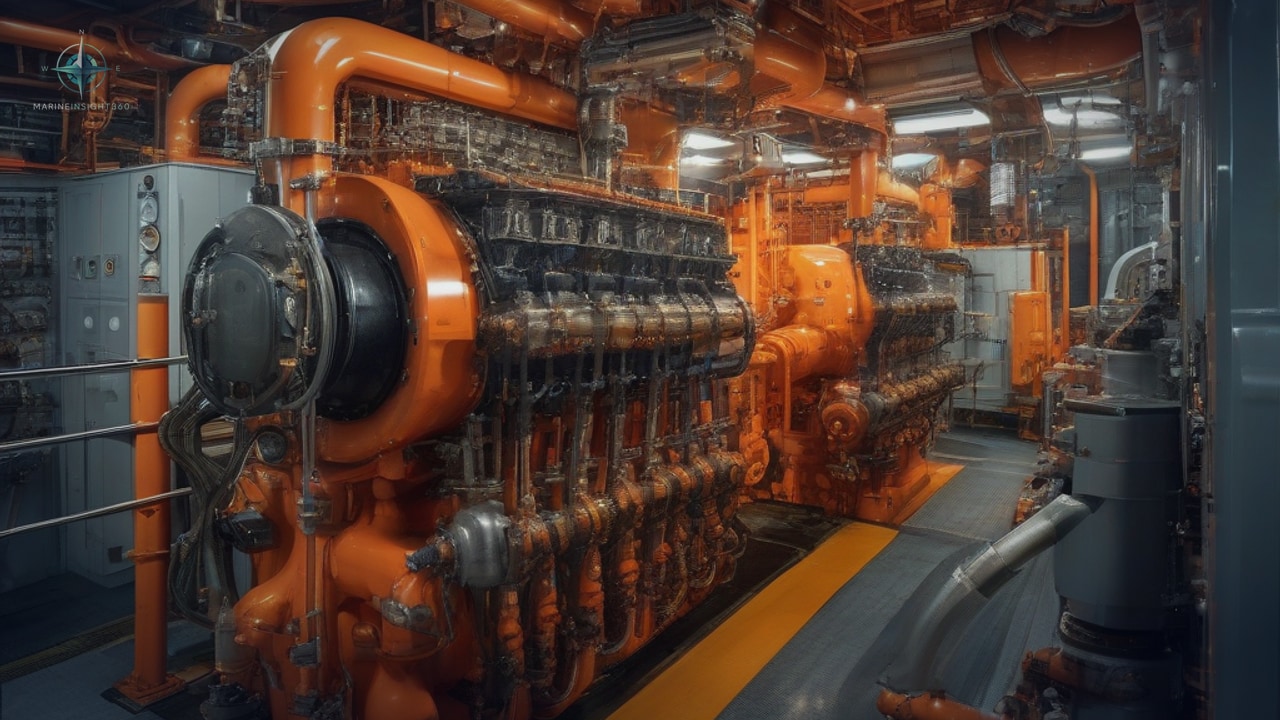
Boiler mountings are the valves, gauges and fittings mounted directly on a boiler to keep it safe and under control: they let steam out, let feed water in, show the water level and pressure, and protect the boiler against overpressure and low water. They are different from boiler accessories such as economisers, superheaters and air preheaters, which improve efficiency but are not needed for the boiler to operate safely.
There is no fixed number of mountings; the list depends on the boiler's type, size and pressure, but most marine auxiliary boilers carry the fittings described below.
Safety valves
Safety valves are the most important mountings. They open automatically to release steam if the pressure rises above the set limit, so the boiler cannot be overpressurised. SOLAS requires at least two on each boiler unless the flag Administration accepts one as adequate, and they are often fitted in a single valve chest.
They are set at or below the boiler's maximum allowable working pressure, set and sealed in the presence of a classification society surveyor, and must be able to discharge all the steam the boiler can produce without the pressure rising more than 10 per cent above that limit. Easing gear lets the engineers lift the valves by hand from a safe position.
Where a superheater is fitted, its safety valve is set to lift before the drum valves, so that steam keeps flowing through the superheater and it does not overheat.
Water level gauges
Every boiler has at least two independent means of showing the water level. The traditional fitting is a gauge glass: a tubular glass on low-pressure boilers, or a reflex or plate-type glass on higher-pressure ones. One of the two may be a remote level indicator in the control room, but at least one is normally a direct-reading gauge glass.
Gauge glasses are blown through regularly to check that their connections to the boiler are clear, because a glass with a blocked connection can show a false level.
Main and auxiliary steam stop valves
The main steam stop valve connects the boiler to the steam system. It is usually a screw-down non-return valve, so that if two boilers share a steam line, steam from the working boiler cannot flow back into one that is shut down or has lost pressure. A smaller auxiliary steam stop valve supplies auxiliary services separately.
Feed check valves
Feed water enters the boiler through feed check valves, also screw-down non-return valves, so that boiler water cannot flow back into the feed line if the feed pump stops. Boilers usually have a main and an auxiliary feed check valve, so feeding can continue if one line fails, and a feed stop valve on the shell lets each line be isolated.
Blowdown valves
The bottom blowdown valve is at the lowest point of the boiler. It is used mainly to remove sludge that settles at the bottom, and to drain the boiler completely for maintenance. The blowdown goes overboard through a second valve on the ship's side, so there are two valves in series. On water-tube boilers it is done at low load or with the boiler shut down, because blowing down can disturb the water circulation.
The scum or surface blowdown valve is connected to a shallow scum pan at the normal water level. It removes oil, foam and floating impurities from the water surface, which would otherwise cause priming, where water is carried over with the steam.
Air vent
An air vent valve at the top of the boiler is kept open while the boiler is filled and while it is first fired, so that air can escape, and is closed once steam issues freely. It is opened again when the boiler is shut down and cooling, so that a vacuum does not form inside as the steam condenses.
Pressure gauge
A pressure gauge connected to the steam space through a siphon shows the working pressure. A connection for a test gauge allows the surveyor to check it.
Sampling connection
A sampling cock with a small cooler lets the engineers draw a boiler water sample at any time for testing. Regular tests for chlorides, alkalinity and treatment chemical levels show whether the feed water is being contaminated, for example by sea water, and whether the water treatment is correct.
Low water alarm and burner trip
Low water level is one of the most dangerous conditions in a boiler, because uncovered tubes or furnace surfaces overheat and can fail. A low level alarm warns the watchkeeper, and a low-low level switch shuts down the burner automatically before the level becomes dangerous. Many boilers also have a high water level alarm, because too much water causes carry-over into the steam system.
Feed water regulator
An automatic feed water regulator keeps the water level steady as steam demand changes. Boilers with high evaporation rates use multi-element control, which measures steam flow and feed flow as well as the level.
Other fittings
- Manholes give access to the steam and water drums for inspection and cleaning. Manhole doors are elliptical and fitted from the inside, so that the pressure in the boiler holds them shut.
- A whistle valve supplies steam directly to the ship's steam whistle, where one is fitted.
- A mud box or sludge pocket at the bottom of the water drum collects sludge so that it can be removed by blowdown.
- Soot blowers, operated by steam or compressed air, clean soot from the tube surfaces on the gas side. Strictly they are accessories rather than mountings.
- A dissolved solids (TDS) sensor on many modern boilers monitors the water continuously and alarms if the level rises, prompting a blowdown.
For how the whole boiler works, see how marine boilers work, and for a hazard every boiler steam line has to manage, water hammer.
Recommended Reading
Cargo Barges: Every Major Type and What Each One Carries
The main types of cargo barges, hopper, deck, tank, crane and more, what each carries, and how tug-and-tow economics move bulk freight on inland waterways.

Ramadan at Sea: Fasting, Prayer and Watchkeeping for Muslim Seafarers
A practical guide to Ramadan on board: fasting and watchkeeping, rest hours, suhoor and iftar timings across time zones, galley, prayer and Eid.
Ship Earthing Systems: Insulated Networks, Bonding and Earth-Fault Monitoring
Why ships use insulated electrical systems, how earth faults are found, high-voltage resistance earthing, bonding, tanker rules and shore power.